










When it comes to choosing between vaping and smoking, many factors influence the decision, such as health concerns, lifestyle, and, of course, cost. While both options can have financial implications, it’s important to understand the cost differences between vaping and smoking. In this article, we’ll break down the costs associated with each, helping you make a more informed decision based on your budget.
1. The Cost of Smoking
Smoking has long been considered an expensive habit, with the cost varying depending on location, brand, and frequency. Below are the main cost factors associated with smoking:
Cigarette Prices
The price of a pack of cigarettes can vary widely depending on where you live. In the U.S., for instance, a pack of cigarettes can range from $5 to $15, with some states imposing hefty taxes on tobacco products. For smokers who go through a pack a day, this cost can quickly add up.
Annual Smoking Cost Calculation:
- Low-end estimate: $5 per pack × 365 days = $1,825 per year
- High-end estimate: $15 per pack × 365 days = $5,475 per year
Clearly, smoking can become a significant financial burden, especially for daily smokers.
Additional Costs of Smoking
In addition to the price of cigarettes, smokers often incur additional costs, such as:
- Lighters and matches: While the cost of a lighter is relatively low, it’s a recurring expense. A basic disposable lighter costs around $1, and smokers may go through several each year.
- Health-related costs: Smoking is linked to a range of serious health issues, including lung disease, cancer, and heart problems. This can result in higher medical expenses and insurance premiums.
2. The Cost of Vaping
Vaping has become a popular alternative to smoking, with many people turning to it as a way to reduce the financial burden of cigarettes. However, the cost of vaping can also vary depending on the type of device and frequency of use.
Initial Investment in Vaping Equipment
Vaping typically requires an initial investment in equipment, including a vape pen or mod, as well as e-liquids or vape juice. Here’s a breakdown of the main costs involved:
- Vape Pen/Mod: The price of a vape pen or mod can range from $20 to $100, depending on the brand and features. High-end mods can cost even more.
- E-liquids: A 30ml bottle of e-liquid typically costs between $10 and $20. This amount of e-liquid can last anywhere from a few days to a week, depending on usage.
Initial Vaping Cost Calculation:
- Vape Pen/Mod (one-time cost): $30 (mid-range device)
- E-liquid (monthly cost): $20 per bottle × 12 bottles per year = $240 annually
This results in an initial investment of about $30 for the vape pen and an annual cost of $240 for e-liquids, totaling around $270 per year for a moderate vaper.
Ongoing Vaping Costs
Unlike smoking, the ongoing costs of vaping are generally lower. However, as vaping habits evolve, some users may find themselves upgrading their devices, trying new e-liquids, or purchasing additional accessories. While these costs still tend to be lower than the annual cost of smoking, they can add up over time.
Potential Health Savings
One of the main reasons many smokers switch to vaping is the potential for improved health outcomes. Although vaping is not without risks, many studies suggest that it is less harmful than smoking. Over time, this may result in fewer health-related costs, such as doctor visits, medications, and hospitalization.
Vaping vs. Smoking: The Final Cost Comparison
Cost Comparison for the First Year:
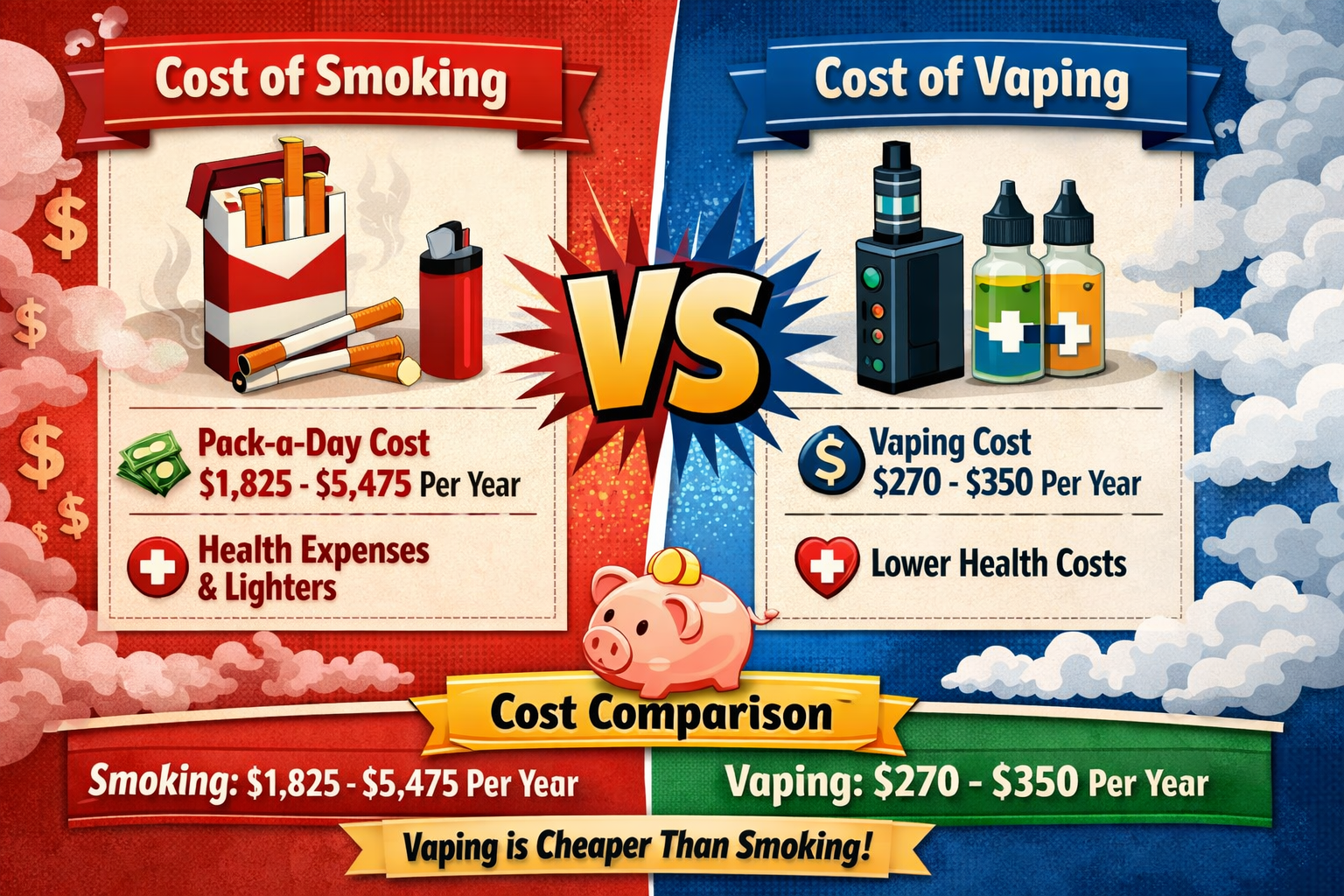
- Smoking (Pack-a-day smoker): $1,825 to $5,475 per year
- Vaping (Moderate vaper): Around $270 to $350 per year (for equipment and e-liquids)
As you can see, the first-year cost of vaping is substantially lower than smoking, especially when considering the high price of cigarettes. While smoking may have lower initial costs, the cumulative expense over time becomes much higher.
Long-Term Cost Considerations
The long-term costs are also important to consider. A smoker’s cost can escalate year after year due to price increases, taxes, and potential health-related expenses. Vaping, on the other hand, generally has a more predictable and manageable cost, especially if you don’t frequently upgrade your vaping equipment.
Additionally, long-term smokers are at a greater risk of serious health conditions, which can lead to higher healthcare costs over time.
Health Savings
The cost of smoking extends beyond the price of cigarettes—healthcare costs associated with smoking-related diseases, such as lung cancer and heart disease, can be astronomical. Vaping, while not risk-free, has been shown to be less harmful in many studies. Therefore, switching to vaping could reduce your healthcare costs in the long run.
Conclusion: Which Is Cheaper—Vaping or Smoking?
In terms of sheer financial cost, vaping is the more affordable option when compared to smoking. Smokers face higher ongoing expenses, especially for daily smokers, and are more likely to encounter significant healthcare costs down the road. On the other hand, vaping has a much lower annual cost, with initial investments in equipment being far less expensive than the recurring cost of buying cigarettes.
However, it’s essential to consider that the choice between smoking and vaping is not just about finances. Health risks, long-term well-being, and personal preferences all play significant roles in the decision-making process.
Ultimately, if you’re looking to save money and potentially improve your health, vaping could be a more affordable and sensible option. But remember, quitting both smoking and vaping altogether will be the best option for your finances and health in the long run.