









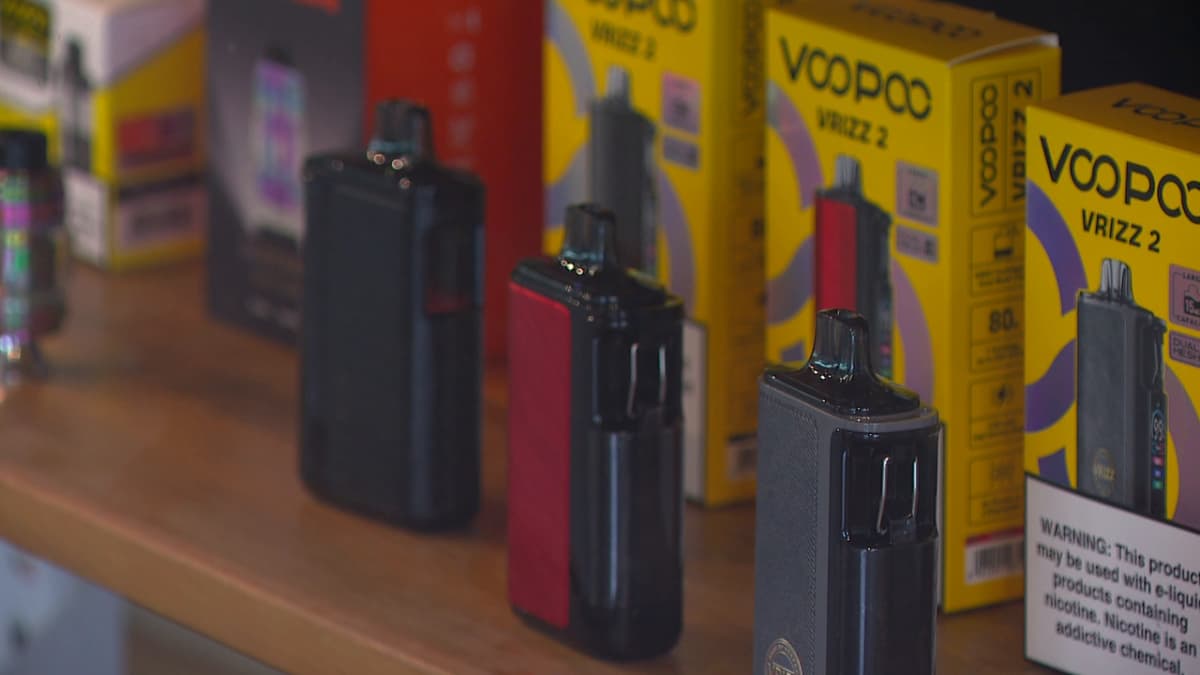
The U.S. state of North Carolina has introduced new regulations governing the retail sale of e-cigarettes as part of its 2026–2027 state budget, adding a new tax on vape retailers and strengthening age verification requirements for customers.
The measures reflect a broader trend across the United States, where state governments are increasingly focusing not only on the products themselves but also on how vaping products are sold and distributed. The new rules are intended to enhance retail compliance, discourage underage access, and strengthen oversight of the state’s vaping market.
$1,000 Annual Tax for Vape Retailers
One of the most notable provisions in North Carolina’s newly approved $34.4 billion state budget is the introduction of a $1,000 annual tax on e-cigarette retail stores.
The tax is expected to increase operating costs for businesses that specialize in vaping products.
Local vape shop owner Jeremy Ridgeway said the additional tax could eventually contribute to higher prices for consumers, although he indicated that businesses would comply with the new requirements as long as the regulatory burden remains manageable.
Supporters of the measure argue that the tax will help fund regulatory oversight while encouraging greater accountability within the retail sector.
Mandatory Verification of Customers Aged 21 and Over
The new legislation also strengthens age verification requirements for all e-cigarette purchases.
Under the updated rules, retailers must verify that customers are at least 21 years old before completing a sale, reinforcing the federal minimum age established under U.S. tobacco regulations.
According to Ridgeway, his business has voluntarily enforced a 21-and-over sales policy since 2018. However, he noted that compliance has not always been consistent across all retailers.
He believes standardized age verification requirements will help create a more level playing field while reducing youth access to nicotine products.
Calls for Broader Nicotine Regulation
While the new measures focus primarily on vaping products, some public health advocates believe the regulatory framework should extend further.
Local high school student and tobacco control advocate Will Hopper has argued that similar retail regulations should also apply to other nicotine products, including:
- Traditional cigarettes
- Cigars
- Nicotine pouches
- Other smokeless tobacco products
Hopper also supports proposed legislation known as “Solly’s Law,” which would further strengthen tobacco regulation through additional licensing requirements for retailers and other measures aimed at preventing youth access.
A Shift Toward Retail Compliance
North Carolina’s latest policy illustrates an evolving approach to vaping regulation in the United States.
Historically, many regulatory efforts focused on:
- FDA product authorization
- Restrictions on flavored vaping products
- Youth prevention initiatives
- Product safety standards
More recently, however, several states have expanded their focus to include the retail environment by introducing measures such as licensing requirements, retailer taxes, and stricter age verification systems.
This shift reflects growing recognition that retail compliance plays a key role in enforcing existing tobacco and nicotine regulations.
Potential Impact on the Industry
The new rules are expected to affect vape retailers in several ways.
Businesses may face higher operating expenses due to:
- The new annual retailer tax
- Enhanced compliance procedures
- Employee training for age verification
- Administrative and record-keeping requirements
For smaller independent retailers, these additional costs could present operational challenges, while larger chains may be better positioned to absorb the financial impact.
At the same time, consistent statewide age verification standards may improve regulatory certainty and create more uniform enforcement across the industry.
A Broader National Trend
North Carolina’s action highlights a broader trend in U.S. vaping regulation, where policymakers are increasingly shifting from product-focused restrictions toward comprehensive retail oversight.
Rather than relying solely on product approvals or flavor bans, many states are strengthening controls over how vaping products are marketed, sold, and distributed.
As governments continue to balance public health priorities, youth prevention efforts, and industry oversight, retail compliance is becoming an increasingly important component of vaping regulation.
Looking Ahead
The new North Carolina regulations mark another step in the ongoing evolution of U.S. e-cigarette policy. By introducing a dedicated retailer tax and mandatory age verification for customers aged 21 and older, the state is placing greater responsibility on retailers to ensure compliance with tobacco control laws.
Whether additional states adopt similar retail-focused measures will be an important trend to watch, as policymakers across the United States continue to refine their approaches to regulating nicotine and vaping products in an increasingly complex marketplace.