










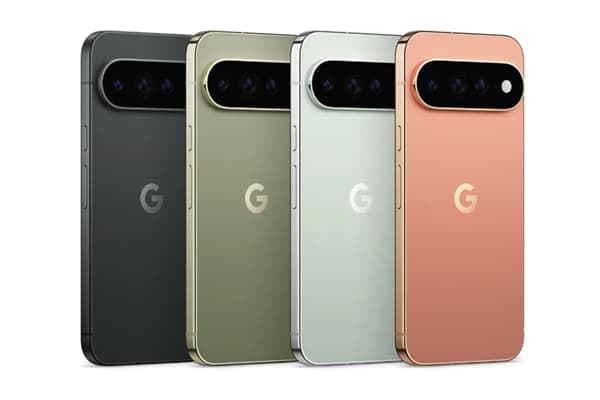
Google has officially introduced its new Pixel 11 series, bringing a major hardware upgrade to its flagship smartphone lineup. The new generation includes the Pixel 11, Pixel 11 Pro, Pixel 11 Pro XL and Pixel 11 Pro Fold, with the conventional Pixel 11 models featuring upgraded displays, cameras, connectivity and Google’s next-generation Tensor G6 platform.
The Pixel 11 series starts at $899 in the United States, with global sales scheduled to begin on August 20. One of the biggest highlights is the Tensor G6, which Google positions as a major leap in performance and efficiency and the first smartphone SoC manufactured using TSMC’s 2nm process, according to the launch information.
Four Models Join the Pixel 11 Family
Google’s new flagship range consists of four models:
- Pixel 11
- Pixel 11 Pro
- Pixel 11 Pro XL
- Pixel 11 Pro Fold
The company has also eliminated the previous 128GB entry-level configuration. The Pixel 11 series now starts with 256GB of storage, while higher-end versions are available with up to 1TB.
For the standard Pixel 11, pricing begins at $899, while the Pro lineup moves further into premium territory.
Familiar Pixel Design With a Thinner Camera Module
The Pixel 11 series retains Google’s distinctive design language while introducing several refinements.
All models reportedly feature a matte aluminum frame, while Google has redesigned the rear camera housing to reduce its overall thickness.
The standard Pixel 11 receives a particularly notable change. Its camera module uses a single-piece glass construction, which reportedly reduces the thickness of the camera area by more than 40% compared with the previous generation.
When combined with Google’s official protective case, the camera module can sit almost flush with the rear panel, creating a cleaner overall appearance.
The Pixel 11 Pro and Pro XL also receive a new visual feature in the camera area: a HiLight RGB ambient light strip. The lighting can reportedly be customized for contact-specific colors, Gemini activity indicators and notification effects.
New Color Options
Google is offering different color combinations across the lineup.
The Pixel 11 is available in:
- Frost White
- Avocado Green
- Hibiscus Pink
- Obsidian Black
The Pixel 11 Pro and Pixel 11 Pro XL are offered in:
- Canyon Orange
- Mist Blue
- Olive Green
- Matte Obsidian Black
The new color palette gives Google’s flagship lineup a more distinctive appearance, particularly with the orange and green options aimed at consumers looking for alternatives to traditional black, white and gray smartphones.
M16 OLED Displays Bring Higher Brightness
All Pixel 11 models reportedly use Google’s new-generation M16 display substrate, with improvements to color accuracy, power efficiency and outdoor brightness.
The displays also support high-frequency PWM dimming across a wide brightness range, designed to provide a more comfortable viewing experience in low-light conditions.
The standard Pixel 11 features a 6.3-inch OLED display with a resolution of 2424 × 1080 pixels. It supports a 60-120Hz adaptive refresh rate and reaches a peak brightness of up to 3,000 nits.
The Pixel 11 Pro uses a 6.3-inch Super Actua LTPO OLED display with a 2856 × 1280 resolution. Its adaptive refresh rate ranges from 1Hz to 120Hz, while peak brightness reaches 3,600 nits.
The larger Pixel 11 Pro XL features a 6.8-inch LTPO OLED display with a resolution of 2992 × 1344 pixels. It also supports 1-120Hz adaptive refresh rates and a peak brightness of up to 3,600 nits.
Tensor G6 Moves to TSMC’s 2nm Process
Performance is one of the biggest upgrades in the Pixel 11 generation.
All models are equipped with Google’s new Tensor G6 processor. According to the supplied launch information, it is the first smartphone SoC built using TSMC’s 2nm manufacturing process.
Google claims that CPU efficiency has improved by 20% compared with the previous-generation Tensor G5.
The new platform is also paired with a Titan M3 security chip, continuing Google’s emphasis on hardware-level security across the Pixel family.
The combination of a more advanced manufacturing process, improved efficiency and a dedicated security processor is expected to help the Pixel 11 series deliver better performance while reducing power consumption.
MediaTek M90 Modem Replaces the Previous Baseband
Another significant change is found in connectivity.
The Pixel 11 series reportedly switches to the MediaTek M90 5G modem, replacing the previous-generation modem solution.
The move is expected to improve both network performance and power efficiency, addressing an area where earlier Pixel generations have faced criticism compared with competing flagship smartphones.
The series also supports Wi-Fi 7, Bluetooth 5.4, dual-SIM 5G connectivity, satellite emergency communications, NFC and UWB.
More Storage and RAM
Google has increased the minimum storage configuration across the lineup.
The Pixel 11 starts with 12GB of LPDDR5X RAM and 256GB of storage, while a 512GB option is also available.
The Pixel 11 Pro starts with 12GB RAM and 256GB storage. Higher-end configurations increase memory to 16GB, with 512GB and 1TB storage options.
This gives the Pro models substantially more storage headroom for high-resolution photography, 8K video and on-device AI applications.
Battery Life Exceeds 30 Hours
Battery capacities for the conventional Pixel 11 models are as follows:
| Model | Battery Capacity |
|---|---|
| Pixel 11 | 4,985mAh |
| Pixel 11 Pro | 4,850mAh |
| Pixel 11 Pro XL | 5,115mAh |
All three models support 30W wired charging, Qi2 wireless charging and reverse wireless emergency charging.
Google says the improved efficiency of the Tensor G6, combined with software optimization, allows the Pixel 11 series to deliver more than 30 hours of battery life.
While the charging speed remains relatively conservative compared with some Chinese flagship competitors, Google’s focus appears to be on balancing battery longevity with power efficiency.
Major Camera Upgrades on the Pro Models
Photography remains one of the Pixel series’ defining features.
The standard Pixel 11 reportedly features a 48MP main camera, a 13MP ultra-wide camera and a 5x telephoto camera. The source material describes the telephoto sensor as 1080MP, which appears inconsistent with conventional smartphone camera specifications and should be treated cautiously until Google publishes the complete camera specifications.
The Pixel 11 Pro and Pro XL receive a more substantial triple-camera system consisting of:
- 50MP main camera
- 48MP ultra-wide camera
- 48MP 5x telephoto camera
The main camera on the Pixel 11 Pro uses a 1/1.56-inch sensor, with Google claiming a 56% improvement in light-gathering capability compared with the previous generation.
The larger telephoto sensor is also designed to improve image quality, particularly when shooting distant subjects and in challenging lighting conditions.
Up to 120x Pro Zoom
Google has expanded the computational photography capabilities of the Pro models.
The Pixel 11 Pro and Pro XL reportedly support up to 120x Pro Zoom, while the Tensor G6’s ISP helps extend the digital zoom capabilities.
Google has also significantly improved Night Sight performance. The company claims that low-light shooting can be up to 4.5 times faster, with average shooting speeds improving by approximately three times.
The Pro models also introduce Pro Stable Video, with support for video recording at up to 8K resolution.
Gemini Becomes More Deeply Integrated
AI is another major focus of the Pixel 11 series.
The phones ship with Android 17 and Google’s latest generation of on-device Gemini capabilities.
Google says Gemini can assist with tasks such as:
- Real-time translation
- Document summarization
- AI-powered photo editing
- Video script generation
- Voice summarization
The emphasis is increasingly on local processing, allowing certain AI functions to operate directly on the device without requiring a constant cloud connection.
The Pixel 11 series also supports seamless device-to-device transfers and deeper integration with Google One cloud storage.
Seven Years of Software Support
Google continues its long-term software commitment with the Pixel 11 series.
The company promises seven years of operating system updates and security patches, giving Pixel owners an extended support period compared with many Android smartphones.
This remains one of the Pixel lineup’s strongest advantages for consumers who plan to keep their phones for many years.
Pixel 11 Series Pricing
The standard Pixel 11 starts at $899 in the United States.
Pixel 11
- 12GB + 256GB: $899
- 12GB + 512GB: $1,019
Pixel 11 Pro
- 12GB + 256GB: $1,099
- 16GB + 512GB: $1,219
- 16GB + 1TB: $1,449
Pixel 11 Pro XL
- 12GB + 256GB: $1,299
- 16GB + 512GB: $1,419
- 16GB + 1TB: $1,649
According to the supplied launch information, global sales are scheduled to begin on August 20.
The pricing of the Pixel 11 Pro Fold was not included in the supplied specifications and should be confirmed separately through Google’s official regional announcements.
Pixel 11 Represents a Major Hardware and AI Upgrade
The Pixel 11 series represents a significant evolution of Google’s flagship smartphone strategy.
The combination of the Tensor G6, TSMC 2nm process, M16 OLED displays, MediaTek M90 modem, upgraded camera hardware and deeper Gemini integration gives the new generation a stronger hardware foundation than its predecessors.
Google is also taking a more aggressive approach to on-device AI, using its custom silicon to process increasingly complex tasks locally.
The biggest question will be how the Tensor G6 performs against competing flagship platforms in sustained performance, gaming and real-world efficiency. Nevertheless, Google’s focus is clearly broader than raw benchmark numbers: the Pixel 11 series is designed around AI, computational photography, software longevity and an integrated Google ecosystem.
With a starting price of $899 and global availability beginning August 20, the Pixel 11 lineup is positioned to compete directly with other premium Android flagships while continuing Google’s strategy of differentiating Pixel through software and artificial intelligence.