









Gaming earbuds are increasingly trying to replace traditional headsets for players who want less weight around their head. The ASUS Adol R23 takes that approach further by combining 13mm drivers, Bluetooth 6.0, spatial audio, a low-latency gaming mode, call noise cancellation, and RGB lighting in a small in-ear design.
The interesting part is not simply the number of features packed into the earbuds. It is how those features work together for different situations. A player who spends most of the day switching between gaming, music, calls, and mobile use may care more about connection stability, comfort, microphone performance, and charging convenience than about headline specifications alone.
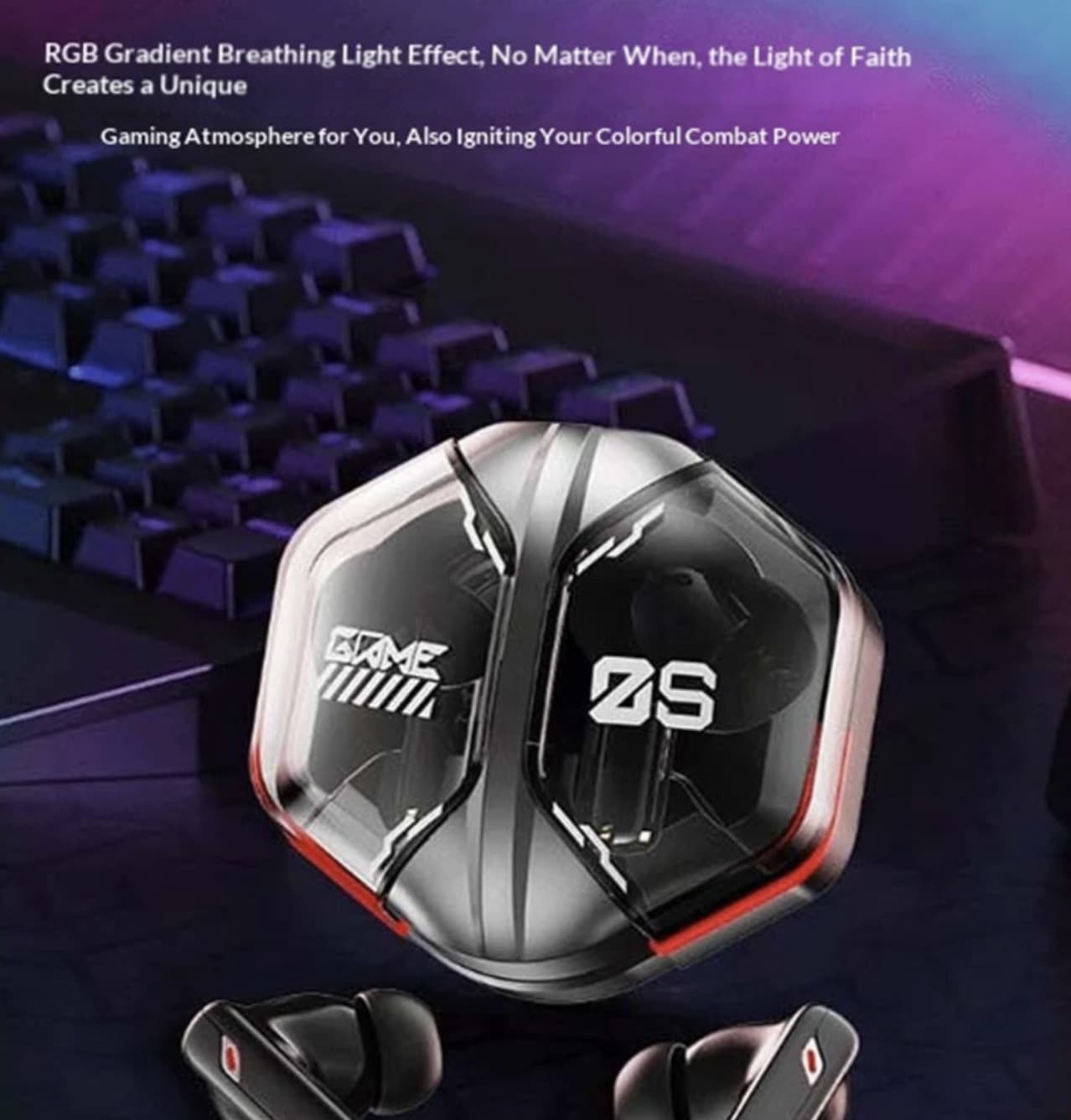
Designed Around Mobility Rather Than a Traditional Headset
The Adol R23 uses an in-ear form factor instead of a conventional over-ear gaming headset. According to the listed specifications, each earbud has a 30mAh battery, while the charging case carries a 230mAh battery. The complete product weighs about 43g, making the setup considerably more compact than a full-size gaming headset.
That makes the R23 particularly interesting for mobile gaming. There is no headband pressing against the top of the head, and there is less hardware to carry when moving between a desk, commute, or gaming session outside the home. Check these wireless gaming earbuds here.
The trade-off is equally important: in-ear gaming earbuds do not provide the same physical isolation or wearing experience as large over-ear headphones. Fit becomes a personal factor, especially during longer sessions.
The 13mm Drivers Have a Different Job Than Just Producing More Bass
The R23 uses 13mm drivers and is listed with a 20Hz–20kHz frequency response.
A larger driver does not automatically mean better sound, but it gives the earbud a hardware platform that can potentially produce a fuller presentation. For gaming, the more useful question is whether dialogue, effects, music, and directional cues remain distinguishable rather than whether the bass is simply powerful.
This matters in games with dense soundtracks. Explosions and low-frequency effects can easily dominate a mix, while footsteps and smaller environmental sounds require clearer separation.
The R23’s advertised 720° surround spatial audio is therefore one of its more interesting features. Rather than treating spatial audio as a simple “more immersive” label, its practical value should be judged by whether it makes directional information easier to interpret during gameplay.
Where Bluetooth 6.0 Fits Into the Gaming Experience
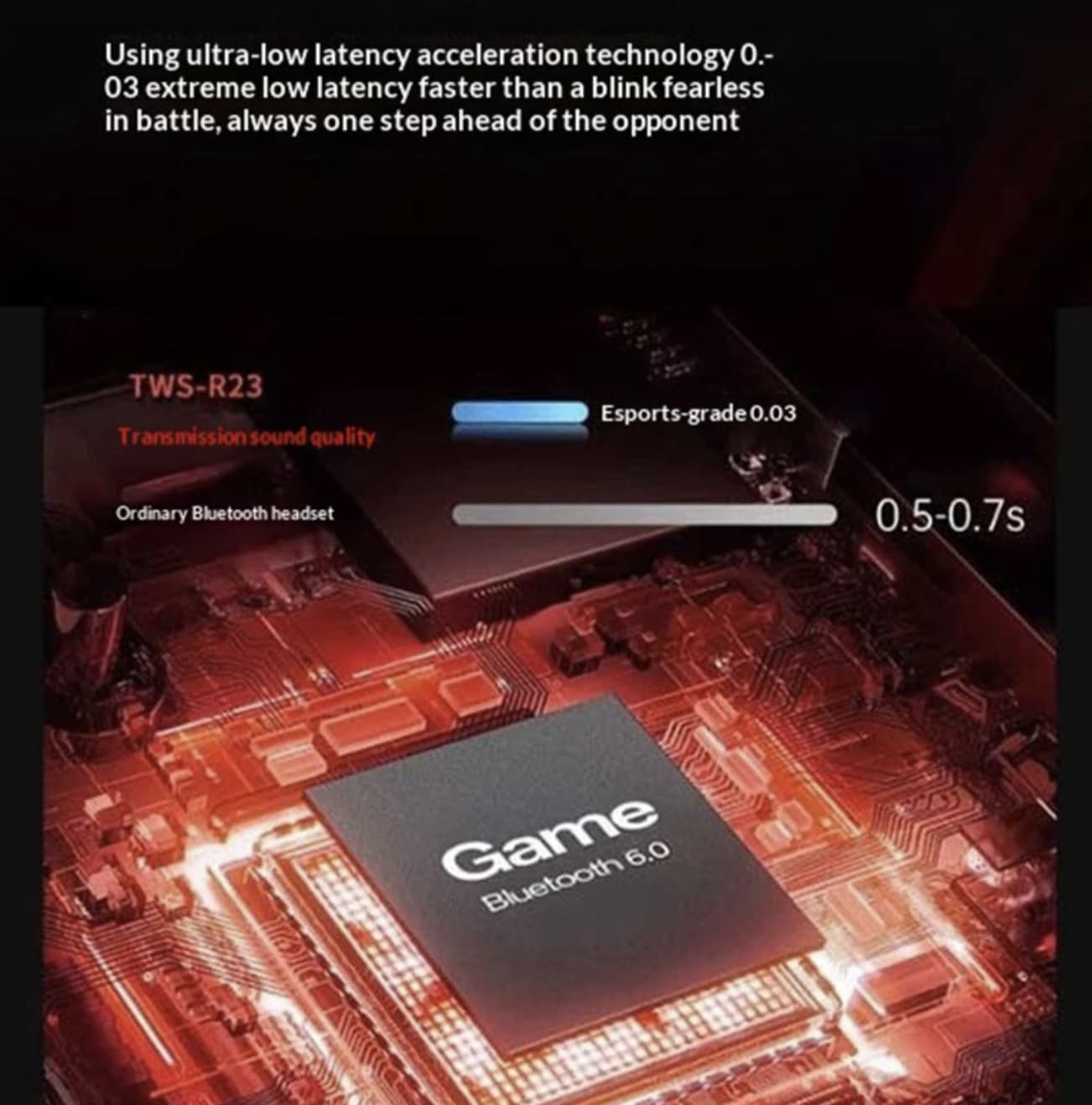
The Adol R23 uses Bluetooth 6.0 technology and supports HSP, HFP, A2DP, and AVRCP profiles, with a listed transmission distance of up to 10 meters.
For everyday listening, Bluetooth stability is usually more important than the version number itself. A stable connection means fewer interruptions when moving around a room, while gaming places an additional demand on synchronization between visual action and sound.
ASUS Adol R23 also provides a dedicated gaming mode with a manufacturer-listed latency of 0.03 seconds.
That figure is worth treating as a specification rather than a promise of identical latency in every phone, game, or wireless environment. Real-world performance can depend on the connected device, software, interference, and the way a particular game handles Bluetooth audio.
Still, the presence of a dedicated low-latency mode makes the R23 more purpose-built for gaming than ordinary wireless earbuds.
| Feature | ASUS Adol R23 | Why It Matters |
|---|---|---|
| Driver | 13mm | Potentially fuller sound |
| Bluetooth | 6.0 | Newer wireless platform |
| Gaming latency | 0.03s claimed | Important for audio/video synchronization |
| Spatial audio | 720° claimed | Designed for directional cues |
| Earbud battery | Up to 5.5h | Individual session runtime |
| Total battery | Up to 36h | Better for multi-day use |
| Water resistance | IPX5 | Better protection from splashes |
| Weight | About 43g | Portable alternative to headsets |
Spatial Audio Could Be More Important Than RGB
The RGB lighting on the charging case is easy to notice, but it is not the feature that determines whether the earbuds are useful for gaming.
The more meaningful addition is the advertised 720° spatial audio system.
For competitive games, spatial processing has a clear purpose: helping players interpret where sounds originate. A useful spatial system should make directional cues easier to distinguish without making the overall soundstage confusing or unnatural.

This is also where expectations should remain realistic. Spatial audio cannot compensate for poor game audio design, bad earbud fit, or limitations in the source device. It is best viewed as an additional layer for interpreting sound rather than a replacement for actual positional information in a game.
Call Noise Cancellation Gives the R23 a Second Use Case
The R23 is not positioned only as a gaming accessory. It also includes an intelligent call noise-cancelling system designed to separate the user’s voice from surrounding noise.
That is useful because gaming earbuds often spend as much time handling voice communication as they do game audio.
For multiplayer users, microphone clarity can be more important than extreme sound effects. A teammate needs to understand short instructions quickly, particularly when there is background noise from a room, keyboard, fan, or nearby activity.
The R23 therefore has a more practical advantage when it can move smoothly between game chat, phone calls, and ordinary media playback.
Battery Life: Understand the Two Numbers
Battery specifications can easily be misunderstood because the R23 has separate figures for the earbuds and the charging case.
The earbuds are rated for up to 5.5 hours of playback on their own, while the complete system is advertised for up to 36 hours with the charging case. The listed charging time is 1.5 hours.
This means the 36-hour figure should not be interpreted as 36 continuous hours from the earbuds themselves.
Instead, the charging case is effectively a portable energy reserve that allows the earbuds to be recharged between sessions. For people who use wireless earbuds throughout the day, that arrangement can be more useful than having a very large battery inside each earbud.
Actual runtime will vary with volume, connection conditions, gaming mode, and other features.
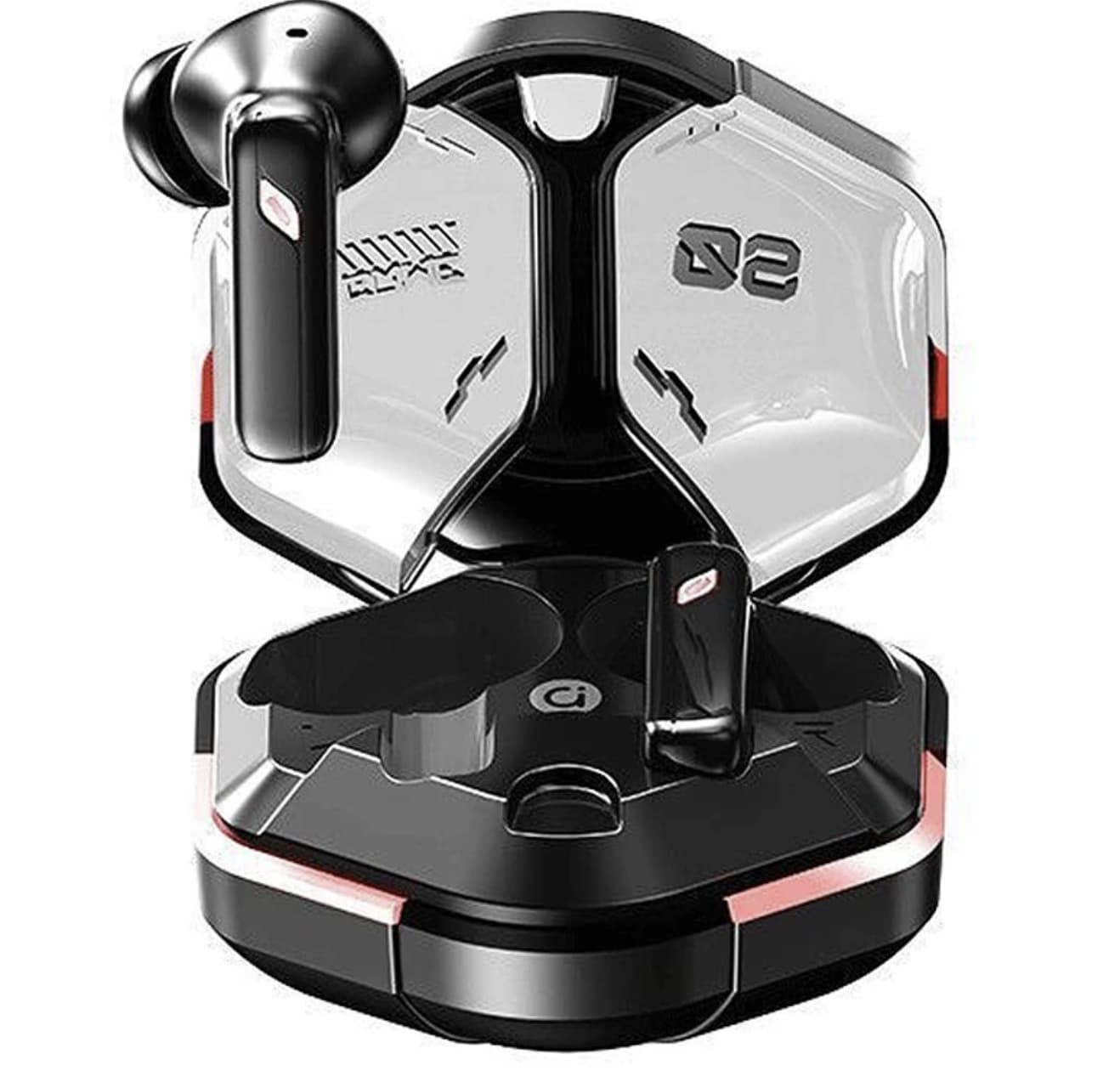
A Few Details That Make the R23 Easier to Place
The R23 is rated IPX5 for water resistance and has a compact listed product size of 50 × 48 × 28mm.
That makes it better suited to active everyday use than earbuds without any stated water-resistance rating. However, IPX5 should not be confused with full waterproofing. The rating does not make the earbuds suitable for submersion.
The in-ear design also gives the R23 a potential advantage for users who dislike the pressure or heat associated with over-ear gaming headphones.
Who Is the ASUS Adol R23 For?
The R23 makes the most sense for users who want one pair of wireless earbuds to cover several activities.
It is particularly interesting for:
- Mobile gamers who want a compact setup
- Players who care about low-latency audio
- Users who regularly participate in voice chat
- People who prefer in-ear headphones to over-ear models
- Commuters who want gaming and everyday listening in the same device
- Users who appreciate gaming-oriented styling without carrying a full headset
It may be less appealing to someone who prioritizes maximum passive isolation, studio-style audio, or the physical comfort of a large over-ear headset.
The More Important Question: Feature List or Balanced Experience?
The ASUS Adol R23 has an unusually dense feature list for a compact TWS gaming product. Bluetooth 6.0, 13mm drivers, spatial audio, call noise cancellation, a gaming mode, RGB lighting, IPX5 resistance, and a charging case with a claimed 36-hour total playback figure all target different parts of the user experience.
But these specifications should not be viewed independently.
The R23’s appeal comes from the combination: a portable in-ear design for mobility, a dedicated low-latency mode for games, spatial processing for directional audio, microphone noise cancellation for communication, and a charging case for longer overall use.
That combination makes it more interesting than simply another pair of Bluetooth earbuds with gaming-style lighting.
Final Thoughts
ASUS Adol R23 is best understood as a compact gaming-oriented TWS system rather than a miniature version of a traditional gaming headset.
Its strongest idea is versatility. It can be carried easily, used for mobile gaming, switched to voice calls, and returned to ordinary music or video playback without requiring a separate headset.
The 13mm drivers and 720° spatial audio target the gaming side, while Bluetooth 6.0, call noise cancellation, IPX5 protection, and the charging case address everyday practicality. The manufacturer also claims 0.03-second latency in gaming mode and up to 36 hours of total playback with the case.
For users who want a lightweight wireless gaming setup without committing to a full-size headset, the Adol R23 presents a compelling feature combination. Its real appeal, however, will depend less on how impressive the specification sheet looks and more on whether its fit, positional audio, microphone performance, and latency meet the user’s particular gaming habits.