










Samsung’s upcoming Galaxy Tab S12 series has appeared in a new batch of leaked promotional materials, giving us a closer look at the Galaxy Tab S12 Ultra and Galaxy Tab S12+ ahead of their expected launch.
According to images shared by technology outlet SammyGuru on September 30, the two tablets are expected to be unveiled on October 7. The leaked retail materials highlight several key features, including long-term Android software support, Galaxy AI tools, Samsung DeX, and expandable storage.
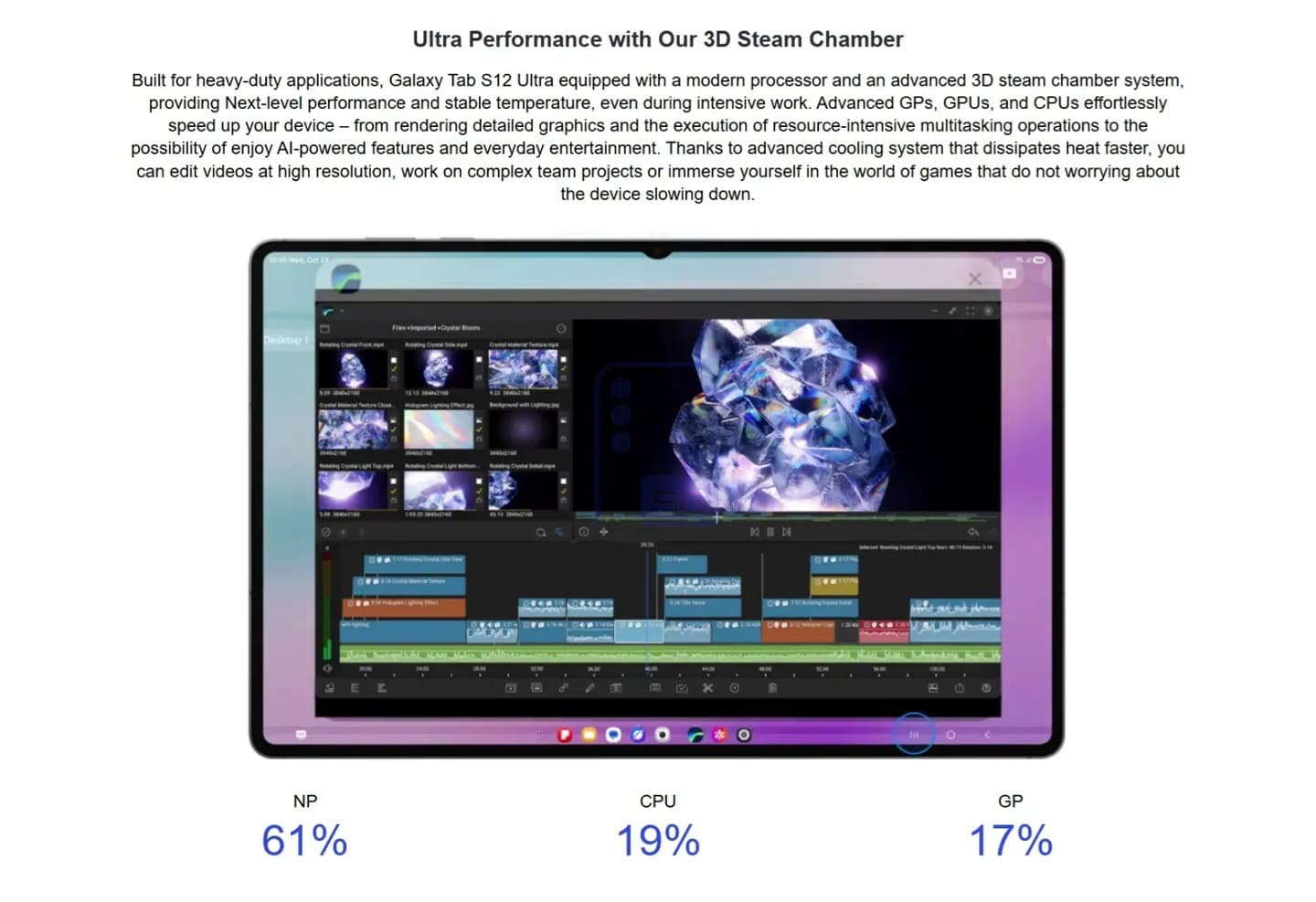
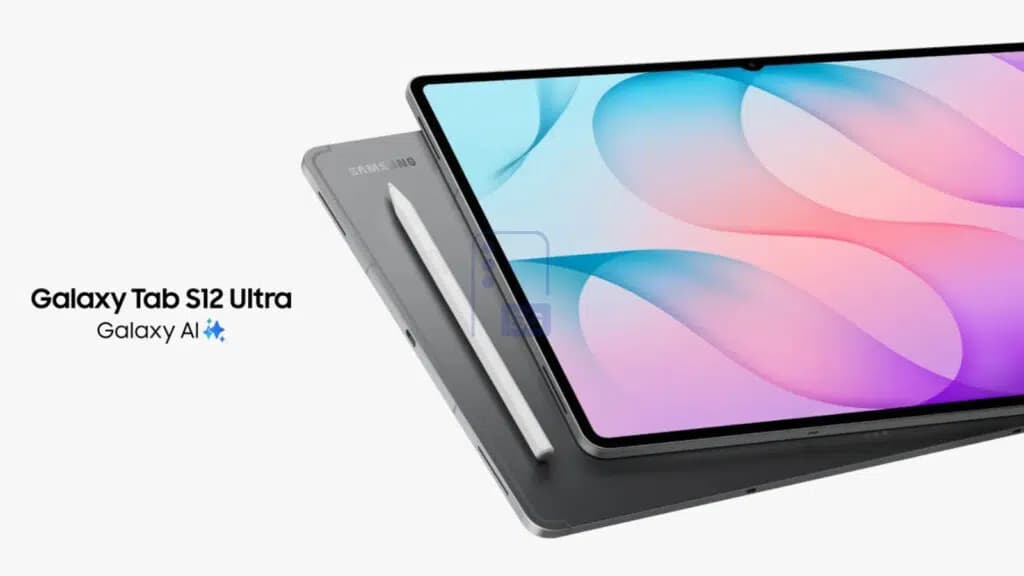
Galaxy Tab S12 Ultra Could Feature a 14.6-Inch 120Hz AMOLED Display
The Galaxy Tab S12 Ultra is reportedly positioned as the flagship model of the series. The leaked specifications point to a 14.6-inch Dynamic AMOLED 2X display with a 2960 × 1848 resolution and a 120Hz refresh rate.
Galaxy Tab S12 Ultra continues Samsung’s focus on large-screen productivity, following the approach seen in previous flagship Galaxy tablets covered in our Samsung Galaxy Tab series.
Under the hood, the tablet is expected to use MediaTek’s Dimensity 9500 chipset. The top configuration could offer up to 16GB of RAM and 1TB of internal storage, giving the Ultra plenty of capacity for demanding apps, multitasking, and creative workloads.
Samsung is also expected to include an S Pen in the box, continuing the Galaxy Tab Ultra series’ focus on productivity and note-taking.
The reported dimensions are 208.5 × 326.3 × 5.1mm, while the tablet is said to weigh approximately 695 grams. An IP68 rating is also listed in the leaked material.
11,600mAh Battery and 45W Charging
The Galaxy Tab S12 Ultra could pack an 11,600mAh battery and support 45W charging.
Other hardware listed in the leaked promotional images includes an in-display fingerprint reader, Wi-Fi 7, and Bluetooth 6.0.
Storage expansion may also be a major feature. The leaked pages reportedly mention support for MicroSD cards up to 2TB, which would give users a substantial amount of additional storage beyond the tablet’s built-in capacity.
Galaxy Tab S12+ Could Offer a Smaller 12.6-Inch Display
The Galaxy Tab S12+ is expected to sit below the Ultra while retaining much of the same hardware and software experience.
Leaked information points to a 12.6-inch display, although Samsung has not yet officially confirmed all of its specifications.
The Tab S12+ could reportedly be available with up to 12GB of RAM and 512GB of internal storage. Its battery is listed at 10,600mAh, with the same 45W charging support.
The connectivity configuration may be slightly different from the Ultra. While the Galaxy Tab S12 Ultra is listed with Wi-Fi 7, the S12+ may use Wi-Fi 6 according to the leaked material.
Like the Ultra, the Plus model is expected to support the S Pen and potentially offer MicroSD expansion of up to 2TB.
Seven Years of Android Updates
One of the more notable details in the leaked promotional material is Samsung’s reported commitment to seven years of Android updates for the Galaxy Tab S12 series.
The tablets are expected to ship with One UI 9, Samsung’s Android-based software interface. If the seven-year support claim is accurate, the Tab S12 series could have an unusually long software-support period for Android tablets.
However, the exact update policy and supported Android versions should be confirmed by Samsung at launch.
Galaxy AI Takes Center Stage
The leaked marketing material also puts considerable emphasis on Galaxy AI features.
Several tools are reportedly highlighted, including Now Nudge, Note Assist, and Multi Window. The tablets are also said to support multiple AI assistants, including Bixby, Google Gemini, and Perplexity.
This suggests Samsung is positioning the Galaxy Tab S12 series not only as large-screen productivity devices but also as platforms for AI-assisted work and information management.
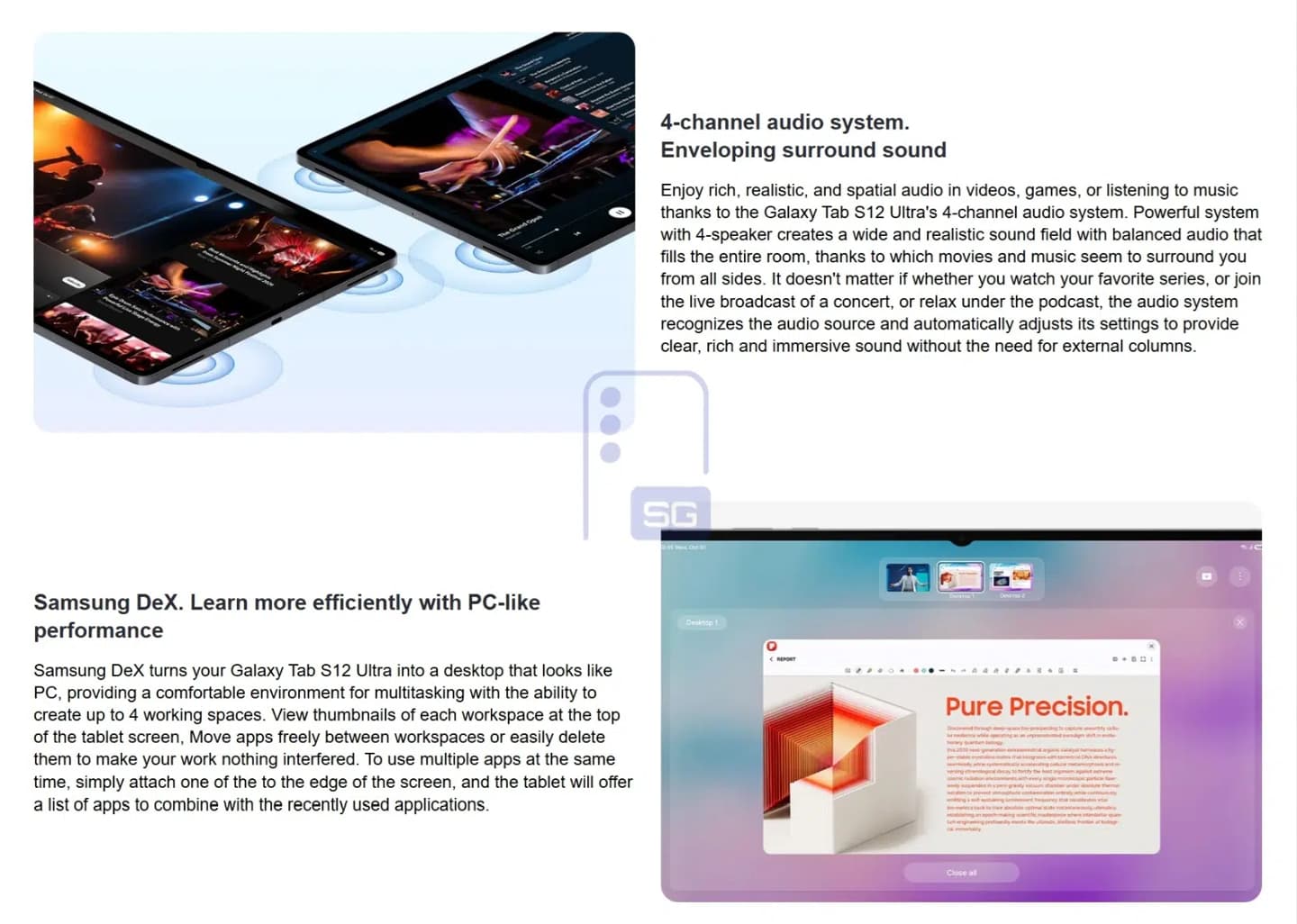
The inclusion of Multi Window should also complement the large AMOLED displays, particularly for users who regularly work with multiple applications simultaneously.
Samsung DeX and Creative Apps
Samsung DeX is another major part of the leaked feature list. The promotional material reportedly states that the tablets can support up to four workspaces, allowing users to organize different tasks and applications across separate desktop-style environments.
For users who want to replace a traditional laptop with a tablet, our Android tablet productivity guide explains which hardware and software features matter most for multitasking and creative work.
The leaked materials also mention a range of popular productivity and creative applications, including Photoshop, Notability, GoodNotes, LumaFusion, Clip Studio Paint, and Notion.
With the large displays, S Pen support, high-end chipset, and DeX functionality, Samsung appears to be targeting users who want a tablet that can handle more than basic media consumption.
Camera Specifications Remain Unclear
The camera information in the leaked materials is less certain.
Some of the pages reportedly list a 13MP rear camera and a 12MP front camera, while previous rumors have suggested that the Galaxy Tab S12 Ultra could feature a 50MP main camera.
Because these specifications conflict, the camera configuration should be treated as unconfirmed until Samsung officially announces the devices.
Galaxy Tab S12 Series: What We Know So Far
Based on the leaked promotional materials, the Galaxy Tab S12 Ultra is expected to combine a 14.6-inch 120Hz Dynamic AMOLED 2X display, Dimensity 9500 processor, up to 16GB of RAM, 1TB storage, an 11,600mAh battery, 45W charging, S Pen support, and IP68 protection.
The Galaxy Tab S12+ could offer a smaller 12.6-inch display, up to 12GB of RAM, 512GB storage, and a 10,600mAh battery while retaining the S Pen, 45W charging, and many of the same software features.
Both tablets are reportedly set to launch with One UI 9 and up to seven years of Android updates, while Galaxy AI, Samsung DeX, and extensive app support appear to be central parts of Samsung’s marketing strategy.
Samsung has not yet officially confirmed all of these leaked specifications, so details such as the cameras, connectivity standards, configurations, and final availability should be treated as provisional until the official launch on October 7.