









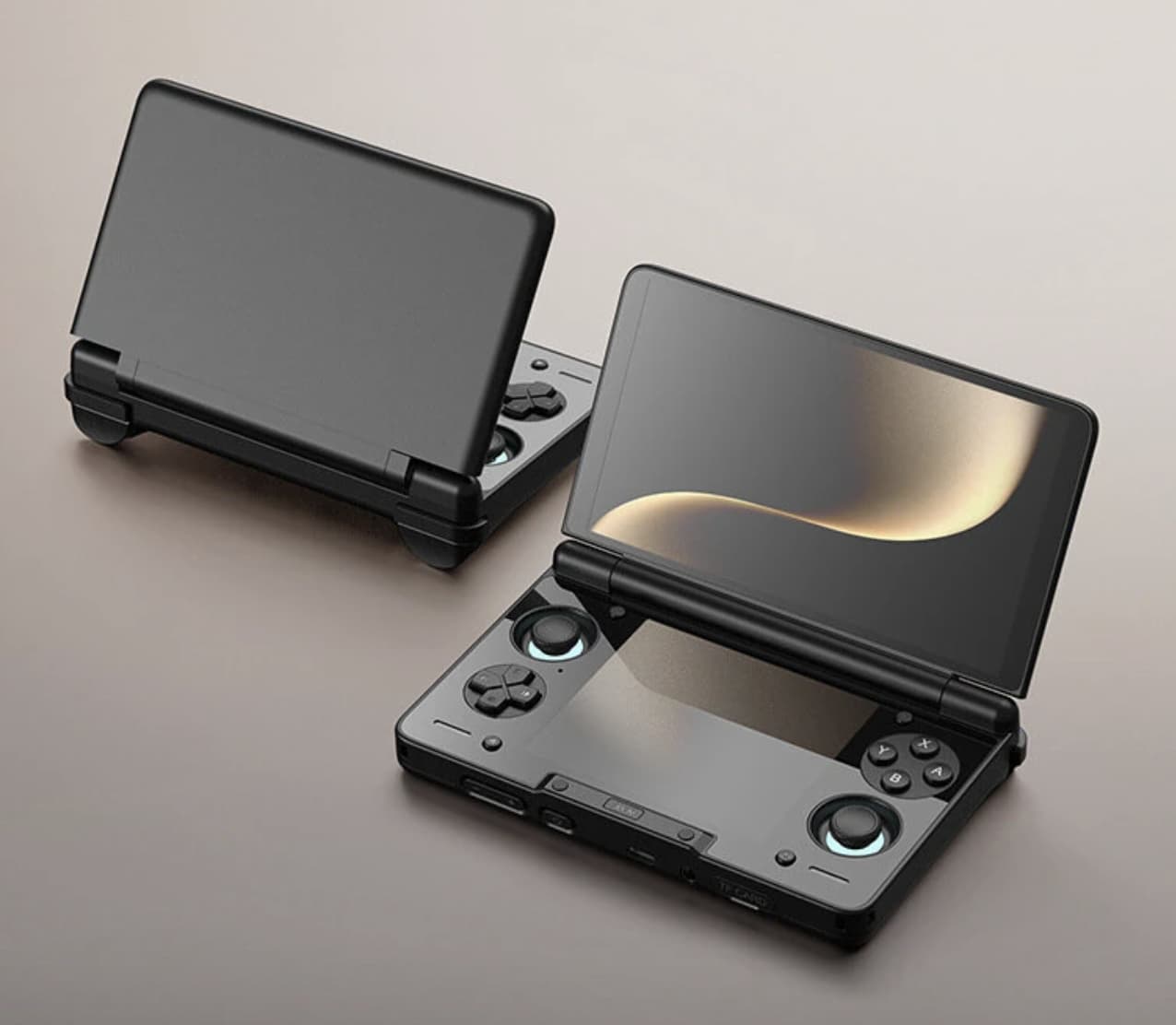
AYN Thor is not trying to win attention simply by putting a faster processor inside a conventional handheld. Its defining feature is the clamshell design: a large 6-inch AMOLED screen sits above a second display, giving the device a layout that is much closer to a portable dual-screen gaming system than a traditional Android game console.
The Banggood configuration covered here pairs the Snapdragon 8 Gen 2 platform with 8GB of RAM and 128GB of storage, while the wider Thor lineup also includes higher-memory versions. AYN’s own current product information lists the standard Snapdragon 8 Gen 2 configurations alongside a 6-inch AMOLED main display, a 3.92-inch secondary AMOLED screen, Android 13 and a 6000mAh battery.
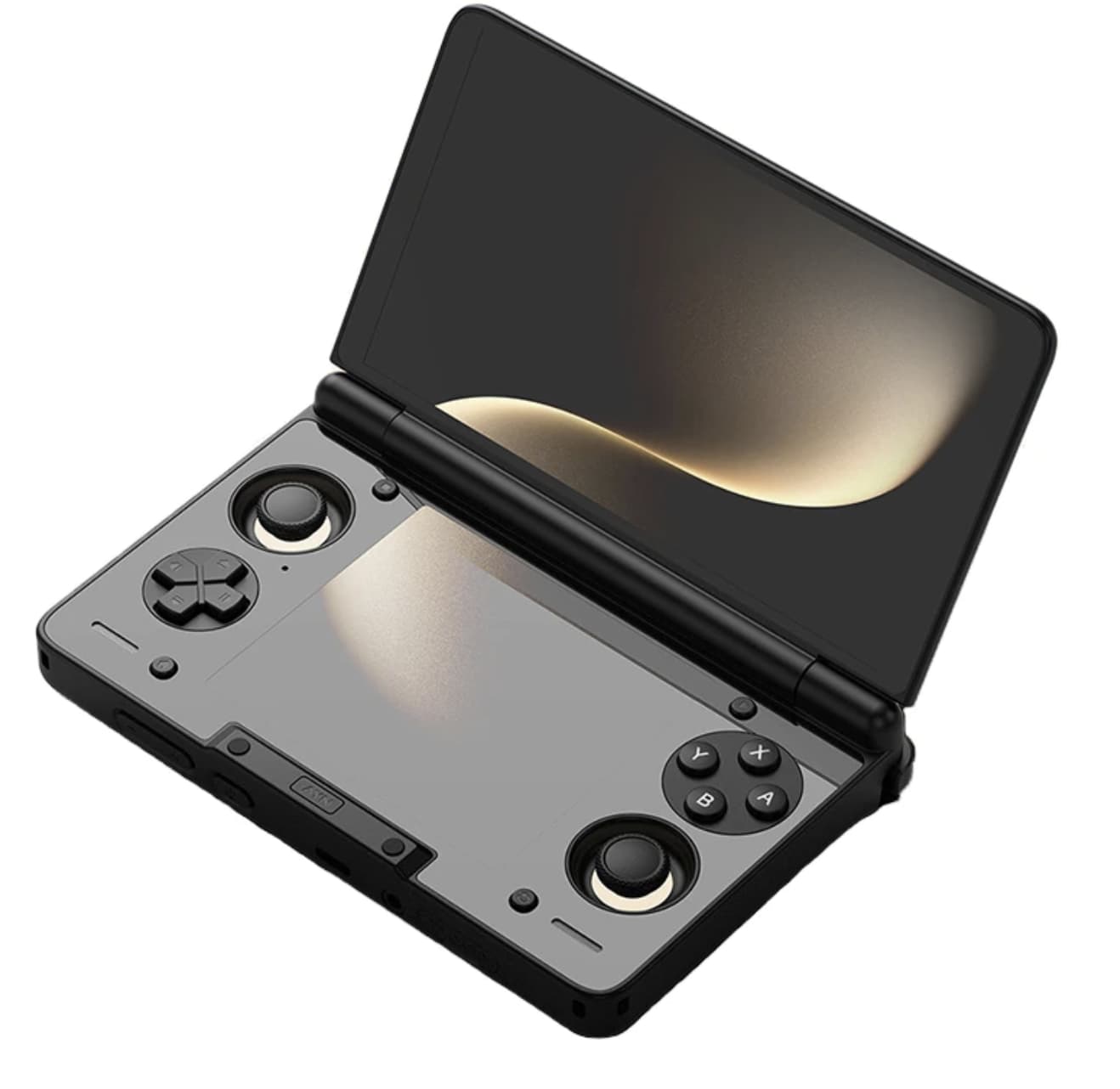
That makes the Thor interesting for a very specific reason: the second screen can change how certain games and emulators are played, rather than merely adding another display to the specification sheet.
The Second Screen Is the Real Story
Most Android gaming handhelds use a single display and place all controls around it. The Thor takes a different route.
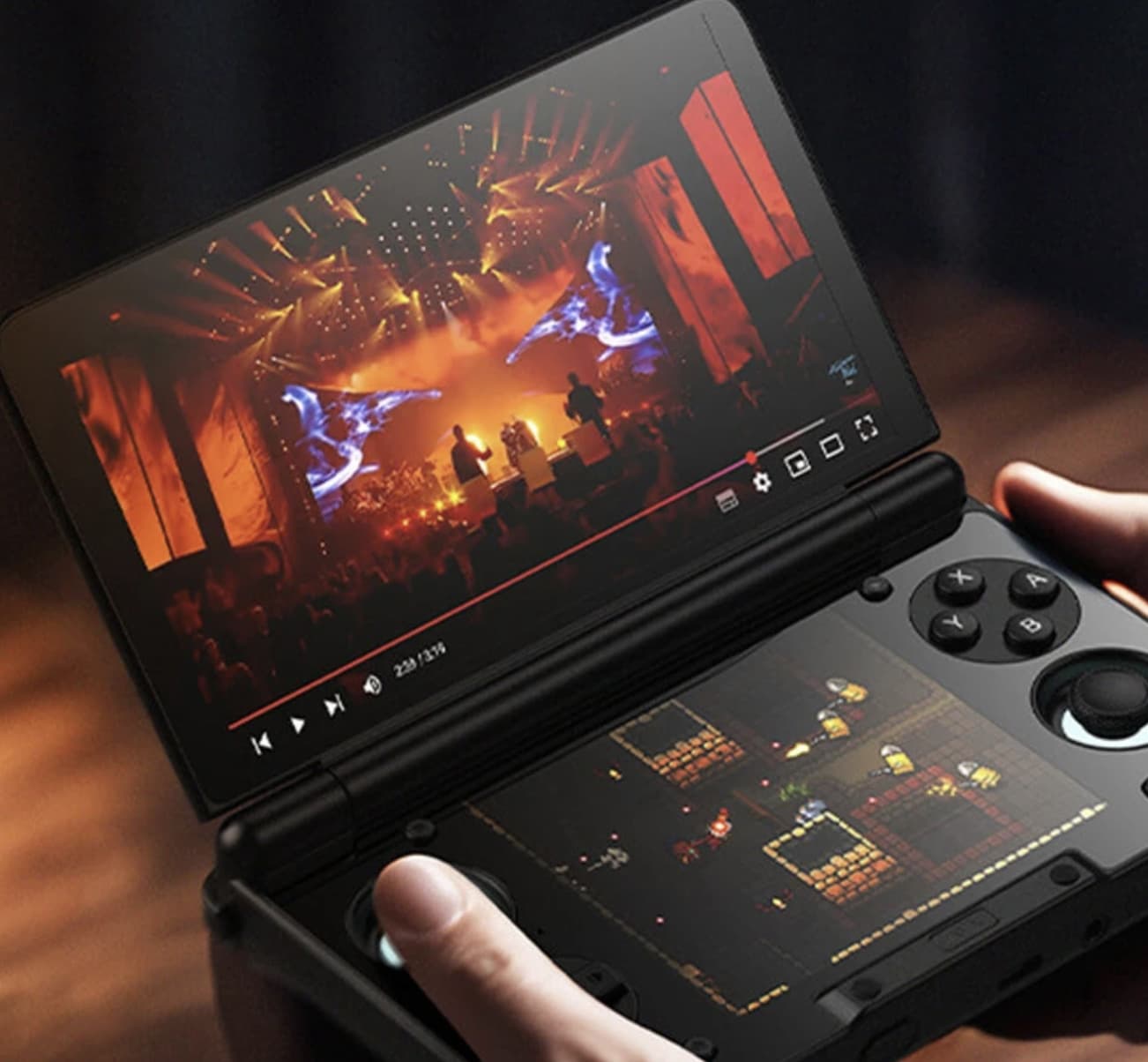
Its upper panel is a 6-inch AMOLED display with a 120Hz refresh rate, while the lower section provides a smaller 3.92-inch AMOLED touchscreen. The primary display runs at 1920 × 1080, while the secondary panel uses a 1080 × 1240 resolution and a 60Hz refresh rate.
The difference in refresh rate is actually useful to understand. The top screen is optimized for the main gaming experience, while the lower screen is better thought of as a companion interface.
That opens up several possibilities. In dual-screen emulation, one display can show the main game while the second handles maps, menus, touch controls or other information. For games designed around two screens, the physical arrangement can also feel considerably more natural than trying to reproduce the same layout on a single panel.
This is where the Thor has a clearer identity than another Android handheld with similar processing hardware.
Snapdragon 8 Gen 2 Gives the Thor Plenty of Headroom
The 8GB/128GB configuration uses Qualcomm’s Snapdragon 8 Gen 2, the same platform used by several other high-performance Android handhelds. AYN’s specifications identify the Snapdragon 8 Gen 2 versions as the Base, Pro and Max models, with RAM and storage increasing depending on configuration.
For the Thor, the processor is less interesting as a headline number than what it enables.
Android gaming, retro emulation and game streaming can all benefit from additional processing headroom, but the dual-screen design is where the hardware becomes more purposeful. The system has to manage two displays and the associated touch input while still maintaining a responsive gaming interface.
The 8GB configuration therefore makes sense as the entry point for users who want the Thor’s unusual hardware without necessarily moving to one of the larger storage variants.
Android 13 Keeps the Platform Flexible
The Thor runs Android 13, which gives it access to the broader Android gaming and emulation ecosystem rather than locking it into a proprietary game library. AYN’s product information also confirms that games are not preinstalled, meaning buyers should think of the device as an Android gaming platform rather than a ready-made retro library.
That distinction matters.
The real value of an Android handheld is often determined by how well its software environment fits the user’s preferred games and emulators. With the Thor, there is an additional consideration: configuring software to take advantage of two physical screens.
For example, a dual-screen setup can be particularly useful for systems and games that were originally designed around separate gameplay and information displays. Retro Game Corps’ setup guide specifically covers the additional considerations involved in configuring dual-screen Android handhelds such as the Thor.
Hall-Effect Sticks Are a Practical Hardware Choice
The Thor also uses Hall-effect joysticks, which detect stick movement magnetically rather than relying on traditional mechanical contact for position sensing. AYN lists Hall sticks among the device’s hardware features.
For an Android gaming handheld, this is more relevant than it might initially appear.
The controls are likely to see much more use than many of the device’s headline specifications. Precise analog input matters for action games, racing titles and 3D emulation, while the absence of conventional contact-based sensing can help reduce one common source of stick-position problems over long-term use.
It also reinforces the idea that the Thor is designed as a serious gaming device rather than simply an Android tablet folded into a portable shell.
A 6,000mAh Battery Balances the Dual-Screen Hardware
A 6,000mAh battery sits inside the Thor, according to AYN’s current specifications. The device also supports 27W charging.
Battery capacity alone does not tell the whole story, especially on a dual-screen handheld.
The actual runtime will depend heavily on brightness, refresh rate, emulator workload, wireless connectivity and how frequently the secondary display is active. More demanding games will naturally place a greater load on the Snapdragon platform than lightweight retro titles.
For this reason, the Thor’s battery should be viewed as part of a larger power-management equation rather than judged only by the 6000mAh figure.
The Flip Design Solves a Portability Problem
There is another advantage to the clamshell construction that has little to do with gaming performance: screen protection.
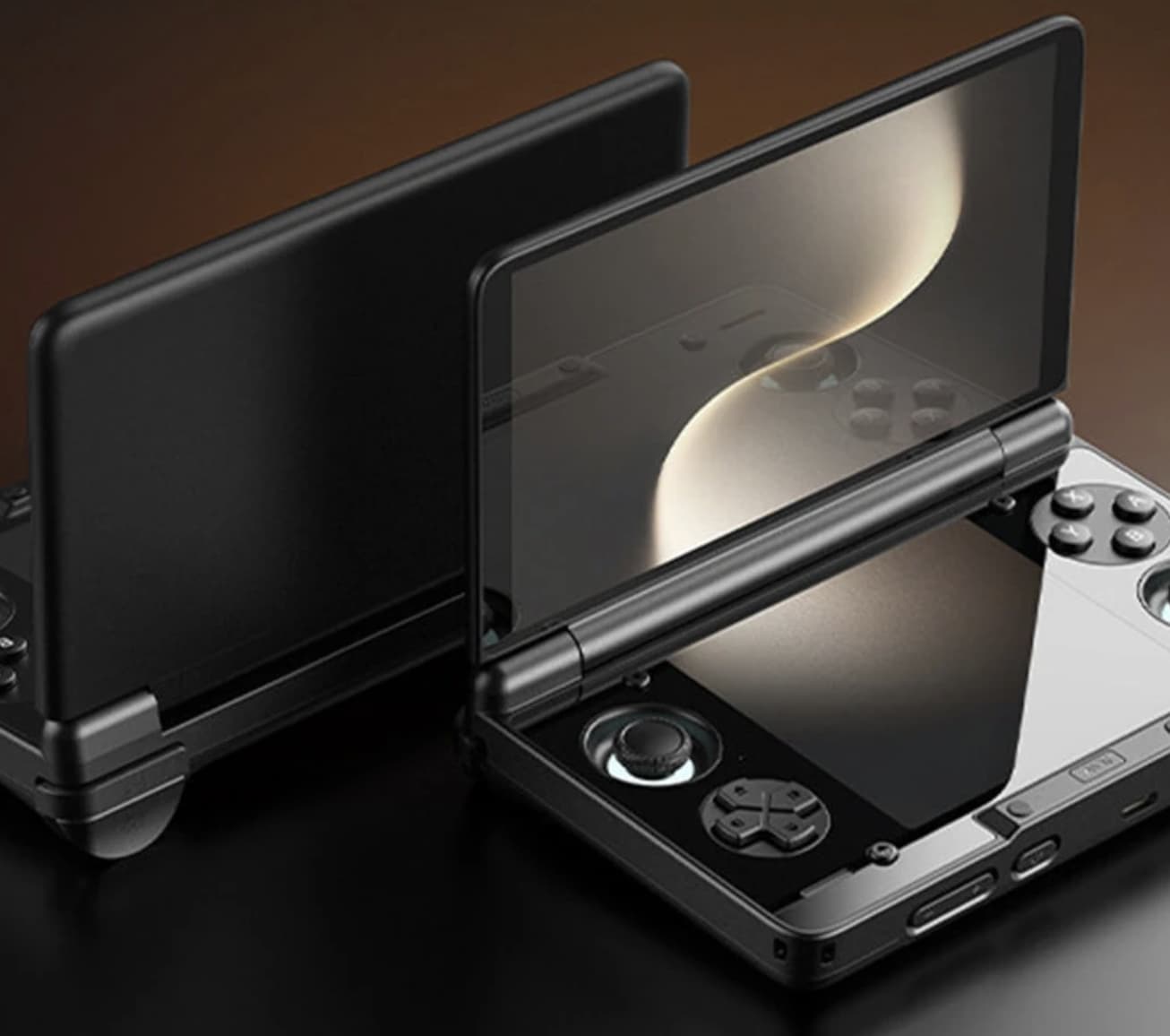
When the Thor is closed, the two displays face inward. That gives the handheld a natural protective position when it is placed inside a bag or carried between locations.
The closed form also makes the Thor visually distinct from the large number of slab-style Android gaming handhelds now available.
However, the hinge introduces its own design considerations. Users who want the device primarily for traditional single-screen Android gaming may not need a second display or a clamshell mechanism. The dual-screen architecture becomes much more valuable when the software can actually make use of it.
8GB + 128GB Is the More Straightforward Configuration
The Banggood listing specifically covers the 8GB RAM and 128GB storage version.
That capacity should be enough for a focused Android gaming setup, but storage requirements can grow quickly once users begin adding large game files, emulator libraries and multiple applications.
AYN’s wider lineup includes a 12GB/256GB model and higher-end 16GB configurations with substantially more storage.
This makes the 8GB/128GB model easier to understand as an entry configuration rather than the only version of the Thor. Buyers who plan to maintain a large local game library should pay particular attention to storage before choosing between variants.
Who Actually Benefits From Two Screens?
The Thor makes the most sense for users whose gaming habits can take advantage of its unusual layout.
Dual-screen emulation is an obvious example. Systems that originally used two displays can be represented more naturally when the handheld itself physically provides two panels.
The secondary display can also be useful for touch-based controls, menus or supplementary information while the main display remains dedicated to gameplay.
For ordinary Android games that only need one screen, however, the second panel becomes less important. In that situation, the Thor’s main advantage is its unusual form factor rather than a fundamental change in gameplay.
That distinction is worth keeping in mind when comparing it with conventional single-screen Android handhelds.
A Different Kind of Android Gaming Handheld
The AYN Thor gaming handheld ‘s most interesting feature is not the Snapdragon 8 Gen 2 by itself, nor is it simply the 120Hz AMOLED display.
It is the combination of a 6-inch 120Hz AMOLED main screen, a secondary AMOLED touchscreen, Hall-effect controls, Android 13 and a 6000mAh battery inside a foldable chassis.
That combination gives the Thor a specific purpose.
For users who mainly want a standard Android gaming handheld, its dual-screen construction may be more hardware than they need. But for players interested in DS/3DS-style emulation, dual-screen interfaces or experimenting with different Android gaming layouts, the second display provides a capability that conventional handhelds simply cannot reproduce in the same physical way.
The result is a device that stands apart not because it has the longest specification sheet, but because its hardware is built around a different idea of what a portable gaming console can be.