








The appeal of a good RC drift car is not just speed. For many hobbyists, the real attraction is learning how to control a car through a corner, balance throttle and steering, and keep a slide smooth rather than simply driving as fast as possible.
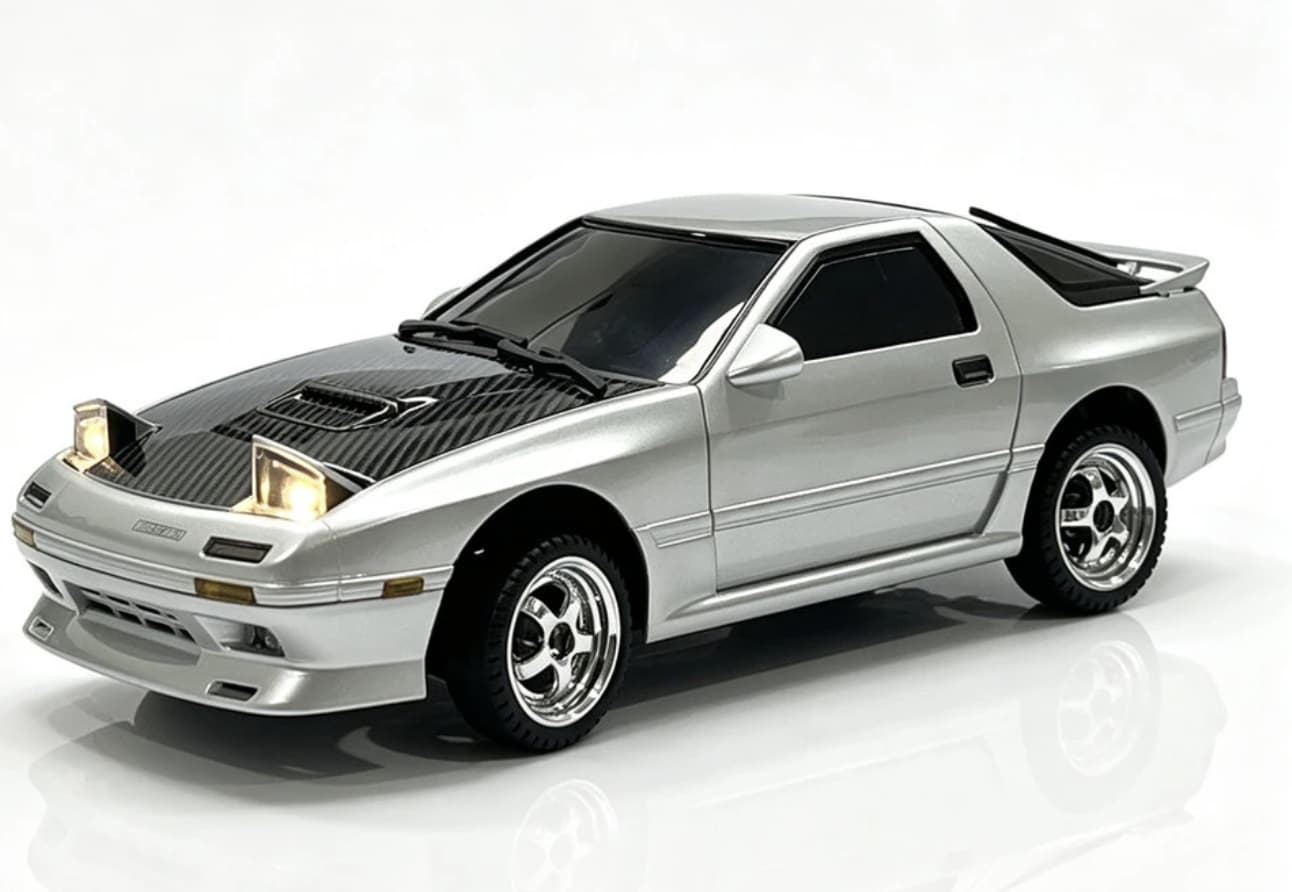
The LDRC 1802 takes that approach in a compact 1:18 RC cars. Styled after the classic Mazda RX-7 FC3S, this rear-wheel-drive RC car combines a built-in gyro, 2.4GHz radio control, full-proportional steering and throttle, drift tires, independent suspension and functional lighting. The result is a small-scale model aimed more at controlled driving and drifting than conventional straight-line RC racing.
A 1:18 RX-7 Designed Around Drifting
The first thing that separates the LDRC 1802 from a typical toy-grade RC car is its rear-wheel-drive layout.
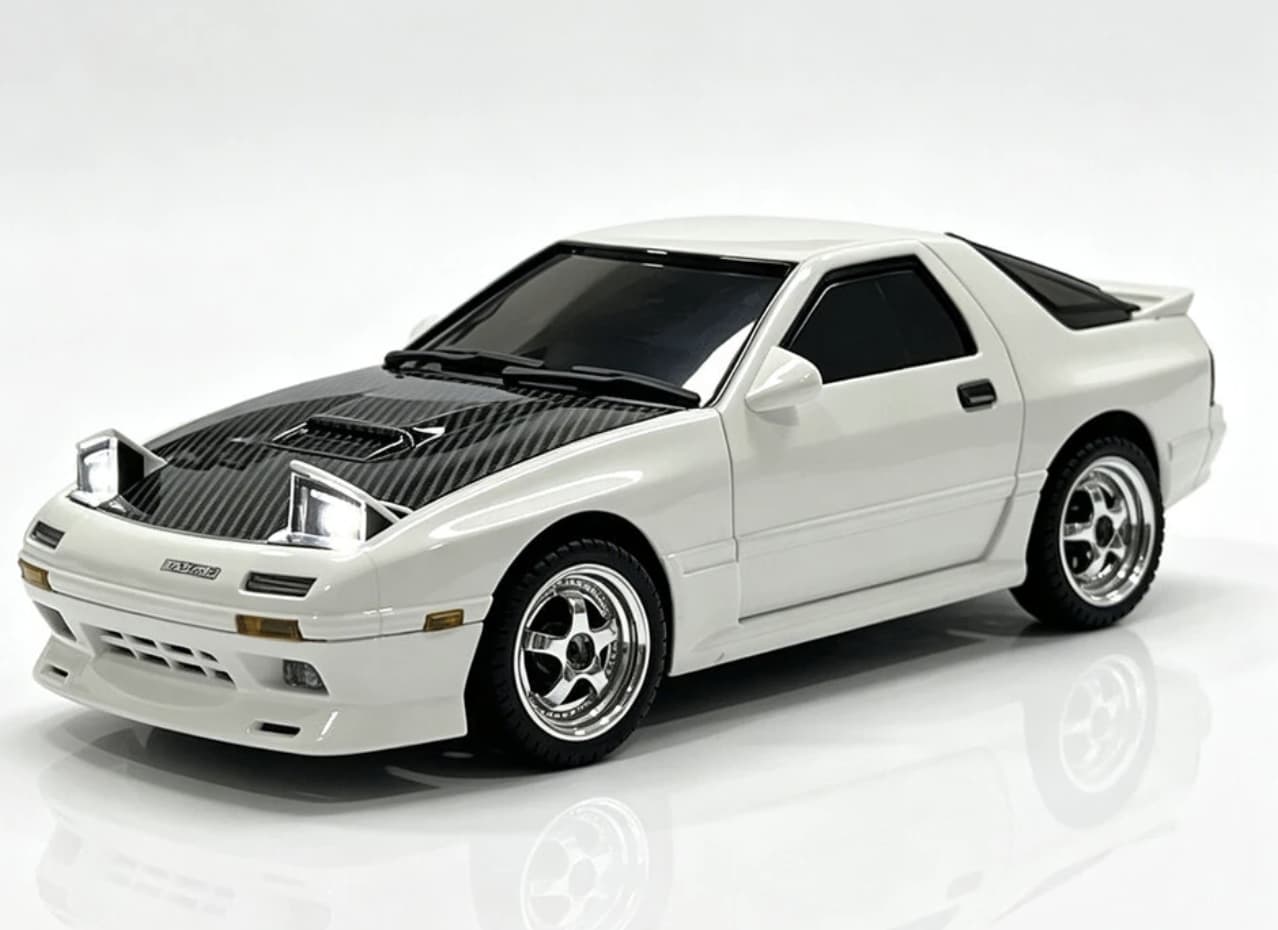
RWD is particularly relevant to RWD RC drift cars because the rear wheels are responsible for driving the car forward while the front wheels handle steering. That makes throttle control an important part of maintaining a slide. Instead of simply turning the steering wheel and expecting the car to follow, the driver has to coordinate steering angle, throttle input and the movement of the rear end.
At 1:18 scale, the LDRC 1802 is also small enough to be practical indoors when the surface and available space are suitable. Its compact proportions make it easier to set up a small practice area without needing a large outdoor track. Banggood specifically positions the model for drifting on flat indoor surfaces and small DIY tracks.
Why the Built-In Gyro Matters
A rc gyro technology is one of the most useful features for a small RWD drift car.
During a slide, the rear of the car can rotate faster than the driver expects. The gyro can help correct the vehicle’s steering response and make the chassis easier to keep under control. That does not eliminate the need for driver skill, but it can make the learning process less frustrating.
For beginners, this is particularly useful because drifting involves much more than turning sharply. The driver needs to learn how much steering to apply and when to adjust the throttle. A gyro-assisted setup can provide a more manageable starting point while still leaving room to develop better control.
The LDRC 1802 also uses full-proportional throttle and steering, giving the transmitter more control than a simple forward-stop-reverse toy controller. Small trigger or steering-wheel movements can therefore translate into smaller vehicle inputs, which is important when trying to maintain a consistent drift.
The RX-7 FC3S Body Adds More Than Just Style
The RX-7 FC3S is arguably one of the most recognizable Japanese sports cars of its era, so the choice of body gives the LDRC 1802 a strong enthusiast appeal.
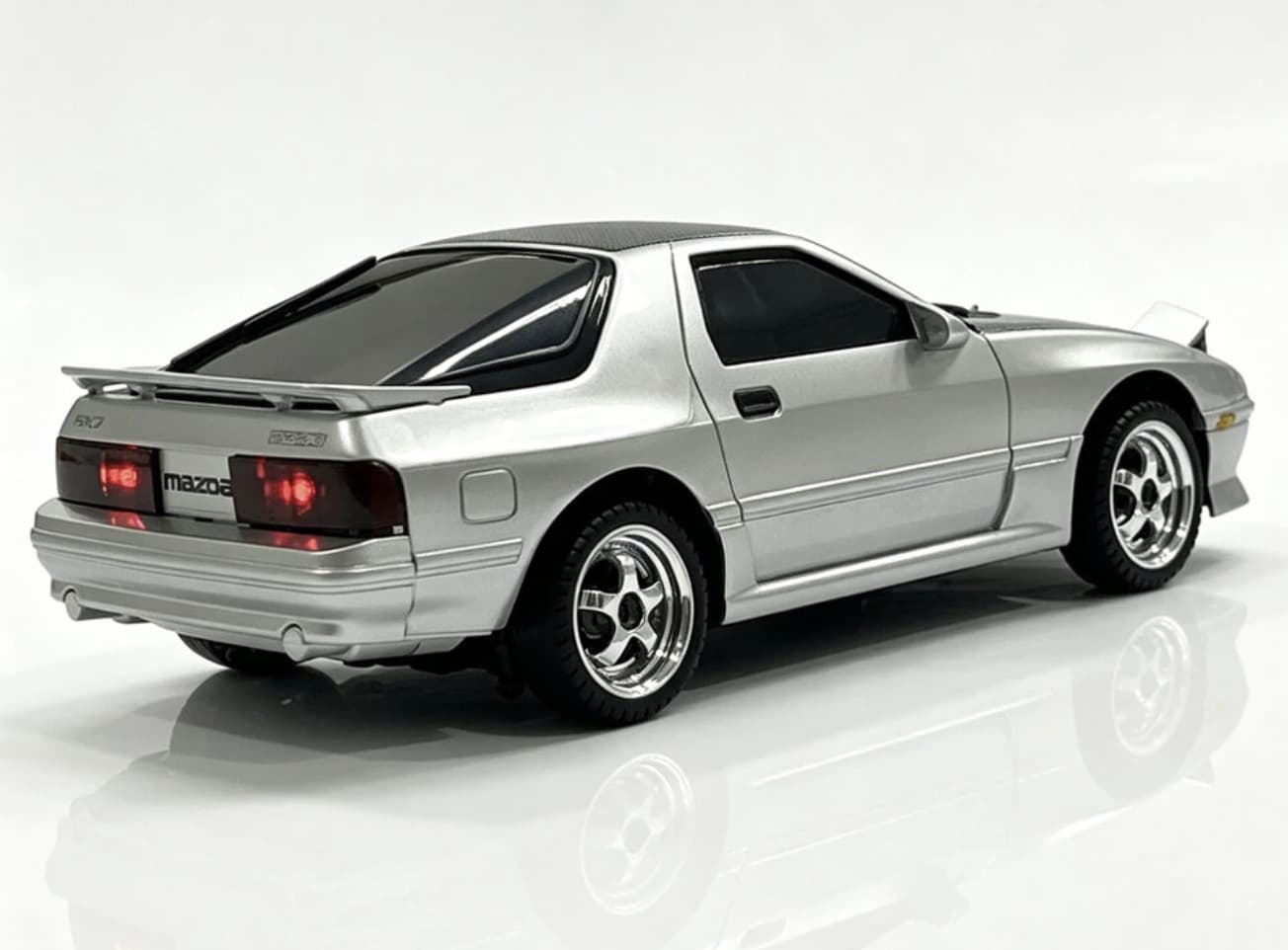
The model is designed as a detailed 1:18 replica rather than an anonymous RC shell. That makes it interesting to two different audiences: people who want a compact drift car to drive and collectors who appreciate the appearance of a classic JDM model.
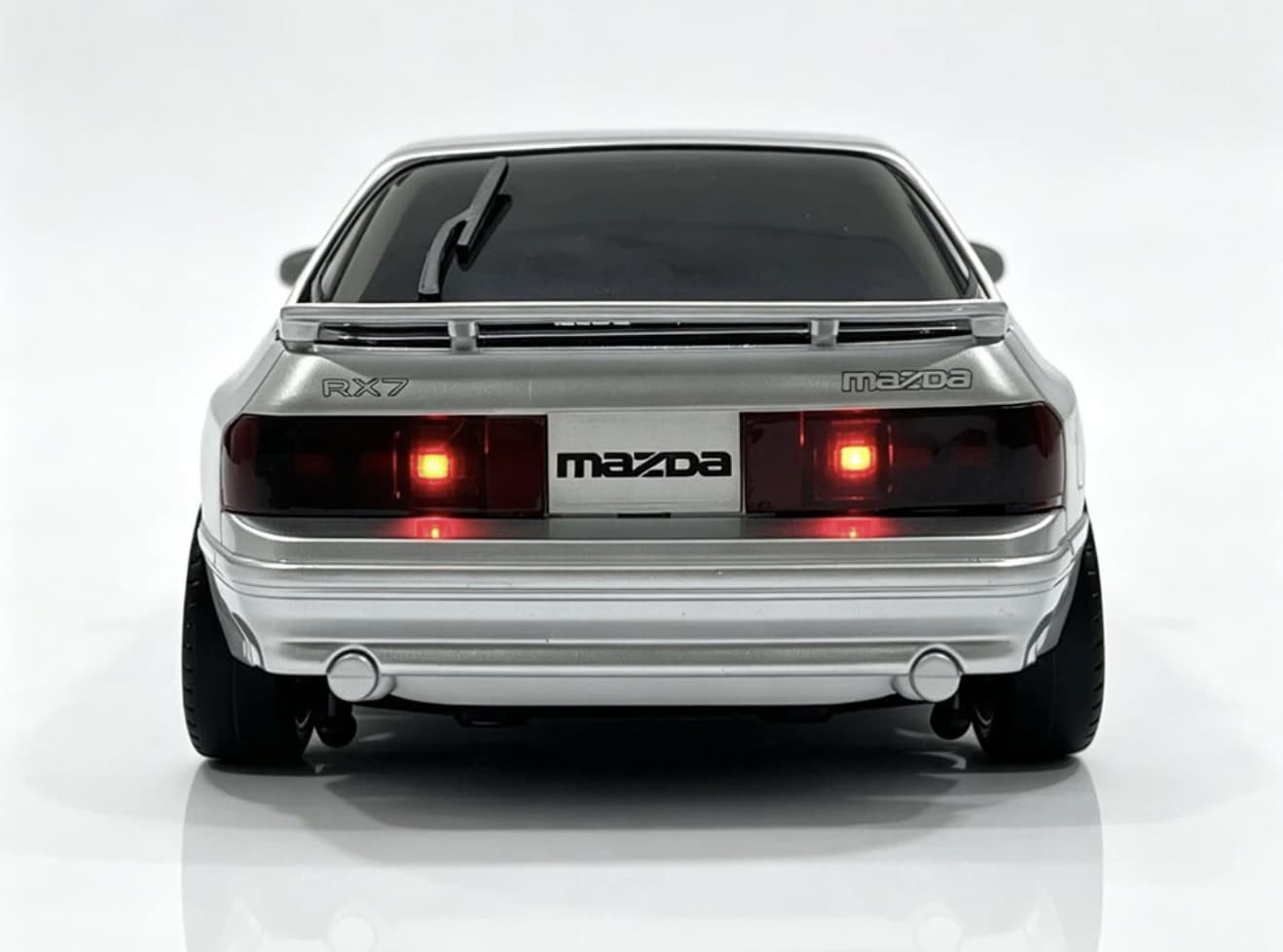
The lighting system adds another layer of realism. The integrated lights respond to transmitter inputs, while the listing also describes remotely controlled headlight functions. This means the car can look more convincing during evening or indoor driving rather than functioning purely as a mechanical platform.
Compact Chassis With Room for Hobby Experimentation
The LDRC 1802 is not presented as a sealed, disposable toy. Its chassis uses a multi-link design and includes a metal drive shaft, independent suspension and ball bearings across the car.
Those components matter because RC drifting places repeated demands on steering, drivetrain and suspension parts. A more conventional hobby-style layout also gives owners greater opportunity to experiment with setup and replacement components as they become more familiar with the car.
Banggood specifically highlights the model’s modification potential, suggesting that the chassis can serve as a starting point for owners who want to improve their driving setup over time.
That point is worth emphasizing. The biggest appeal of a small drift RC car is often not what it can do immediately after opening the box, but how much the owner can learn from adjusting and driving it.
2.4GHz Control and Proportional Driving
The included transmitter operates on 2.4GHz and provides three channels. The listed control range is around 30–50 meters, which is more than enough for the kind of close-range drifting environment this car is designed for.
More importantly, the proportional control system makes the LDRC 1802 better suited to precision driving than an RC car with only basic on/off inputs.
For drifting, that distinction is significant. A smooth slide can require tiny changes in throttle or steering. Having more control between zero and maximum input gives the driver a better chance of making those adjustments without upsetting the car.
Battery and Driving Time
The LDRC 1802 is listed with a 7.4V 500mAh Li-ion battery, with the package configuration allowing the number of included batteries to vary. Banggood lists approximately 120 minutes for charging one battery and around 20–30 minutes of driving time per battery.
Those figures should be viewed as practical estimates rather than guaranteed runtime. Actual driving time can change depending on throttle use, surface conditions, drifting frequency and battery condition.
For longer sessions, having an additional compatible battery can be more useful than simply expecting one pack to provide uninterrupted driving.
What Kind of Surface Works Best?
This is not the type of RC car that needs a rough outdoor trail to show its strengths.
The LDRC 1802 is more naturally suited to smooth, flat surfaces where the drift tires can slide predictably. A clean indoor floor or dedicated small-scale RC practice area can provide a better environment than loose gravel, grass or heavily textured pavement.
Surface choice can dramatically change the character of an RWD drift car. Too much grip can make initiating a slide harder, while an excessively slippery surface can make the car difficult to control. Finding the right balance is part of the hobby.
Is the LDRC 1802 a Good Choice for Beginners?
It depends on what the buyer expects from a beginner RC car.
If the goal is simply maximum speed, the LDRC 1802 is probably not the most interesting proposition. Its appeal lies elsewhere: rear-wheel drive, drift behavior, proportional control and the ability to practice vehicle handling.
For someone specifically interested in learning RC drifting, those features make considerably more sense.
The built-in gyro can help stabilize the car while a new driver learns the basics. Once those fundamentals become familiar, the proportional controls provide enough precision to begin experimenting with steering angles, throttle modulation and smoother transitions.
Independent hobby coverage has also described the LDRC 1802 RX-7 as a budget-friendly way into RWD drifting, although one review noted that the car may benefit from setup or tuning rather than being treated as a perfect competition-ready machine straight out of the box.
A Better Fit for Hobby Driving Than Straight-Line Racing
The LDRC 1802 makes the most sense when viewed as a compact drift platform rather than a traditional speed-focused RC racer.
Its RX-7 FC3S styling gives it personality, while the RWD drivetrain, gyro assistance and proportional controls provide the mechanical foundation for learning controlled slides. The 2.4GHz radio system keeps the setup straightforward, and the compact 1:18 format makes it easier to find a suitable practice space.
There are also practical compromises. A small drift car is naturally more sensitive to surface conditions than a larger off-road RC vehicle, and the quoted battery runtime means serious hobbyists may want spare batteries for extended sessions. The car’s relatively modest positioning also means experienced drivers should not confuse it with a high-end competition chassis.
Final Take
LDRC 1802 RX-7 FC3S is interesting because it focuses on a specific kind of RC driving rather than trying to do everything.
Its combination of 1:18 scale, rear-wheel drive, gyro assistance, full-proportional control, drift tires, functional lighting and RX-7 FC3S styling gives it a clear identity.
For a newcomer who wants to explore RC drifting without immediately moving into a much larger and more complicated setup, it offers a practical starting point. For experienced hobbyists, its greater value may be as a compact platform that can be driven, adjusted and eventually modified.
The important point is that this LDRC model is about control rather than headline speed. If learning how to hold a slide and improving your driving technique sounds more appealing than simply racing from one end of a track to the other, the LDRC 1802 is a much more interesting proposition.