










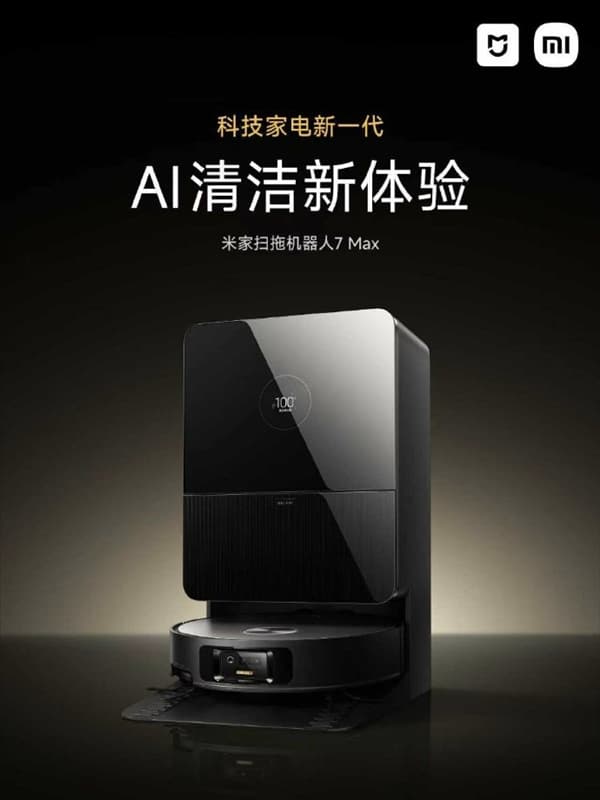
Mijia Mop and Vacuum Robot 7 Max has been officially unveiled as Xiaomi expands its AI-powered smart home lineup. Instead of simply following preset vacuuming and mopping commands, the new robot is designed to analyze its surroundings, identify different types of floor dirt and automatically choose a more suitable cleaning method.
That shift makes the Robot 7 Max more than a conventional robot vacuum cleaner, as its AI camera and vision models allow it to make cleaning decisions based on the environment.
That shift makes the Robot 7 Max more than a conventional floor-cleaning device. Its combination of an AI camera, vision models and Xiaomi’s connected smart-home ecosystem allows it to make cleaning decisions based on what it detects around the home.
AI Camera Helps the Robot Understand Its Environment
Traditional robot vacuum cleaners generally rely on predefined cleaning modes. Users may need to select stronger suction, additional mopping cycles or different settings depending on the type of mess.
The Mi Home Mop and Vacuum Robot 7 Max takes a more automated approach. It uses a high-definition AI camera together with on-device and cloud-based vision models to analyze the environment.
According to Xiaomi’s introduction, the system can recognize the room where the robot is operating and identify different forms of dirt on the floor. It can then adjust its cleaning strategy rather than applying exactly the same routine everywhere.
This could be particularly useful in homes where kitchens, living rooms and other areas regularly require different levels of cleaning.
Different Stains Trigger Different Cleaning Modes
One of the most notable features of the Robot 7 Max is its ability to respond differently depending on what it detects.
For example, when the robot recognizes that it is cleaning a kitchen, it can automatically activate hot-water mopping. This is intended to help deal with more difficult residues, including dried food or sauce stains.
The robot can also change its behavior when it encounters loose particles. Instead of maintaining the same suction level, it can increase suction to collect debris more efficiently.
For tougher liquid stains such as coffee or juice, the system can perform additional mopping passes. Once the cleaning task is finished, the robot can also clean its mop automatically, reducing the amount of manual maintenance required from the user.
From Automated Cleaning to AI-Based Decisions
The larger idea behind the Mi Home Mop and Vacuum Robot 7 Max is a move from rule-based automation to AI-assisted decision-making.
A conventional robot may know that it has been instructed to mop a floor, but it does not necessarily understand why one area requires more cleaning than another. Xiaomi’s new approach attempts to close that gap by using cameras and AI vision to interpret the environment first and then select an appropriate response.
For users, the advantage is convenience. Instead of repeatedly changing cleaning modes or preparing different areas of the house in advance, the robot can handle more of those decisions by itself.
The effectiveness of this approach will ultimately depend on how accurately the vision system recognizes rooms and different types of dirt in real-world conditions.
Part of Xiaomi’s New AI Smart Home Strategy
The Robot 7 Max is not being introduced as an isolated AI product. Xiaomi also unveiled several other smart-home devices with AI-powered features during the same product push.
The Robot 7 Max is part of Xiaomi’s broader smart home ecosystem, where connected devices increasingly use AI to understand their surroundings and respond automatically.
The company’s growing range of AI home appliances shows how Xiaomi is moving beyond simple device automation toward more adaptive household technology.
The Xiaomi TV S Pro RGB-Mini LED can reportedly detect a person’s position and adjust the picture accordingly. The Mi Home Smart Air Purifier 3 Max combines a camera with a vision model to monitor smoke and detect potential cooking-related problems.
Meanwhile, the Xiaomi Smart Lock 5 Max uses dual cameras and millimeter-wave radar to analyze activity around the door.
These products share a similar philosophy: smart-home devices should increasingly be able to understand situations and respond proactively instead of simply waiting for users to issue commands.
Why the Robot 7 Max Could Be Different
Floor cleaning is a particularly practical application for this type of AI because different messes often require different approaches.
Loose dust and crumbs may need stronger suction, while dried food residue can benefit from hot-water mopping. Liquid stains may require repeated passes, and the robot may need to clean its mop before moving to another area.
By combining AI vision, adaptive cleaning and automatic mop maintenance, the Mi Home Mop and Vacuum Robot 7 Max aims to reduce the number of decisions users have to make during everyday cleaning.
The real test will be whether its recognition system can consistently distinguish different rooms and stains in busy household environments. If it can, the Robot 7 Max could represent a meaningful step toward more autonomous home-cleaning appliances rather than simply another robot vacuum with higher specifications.