










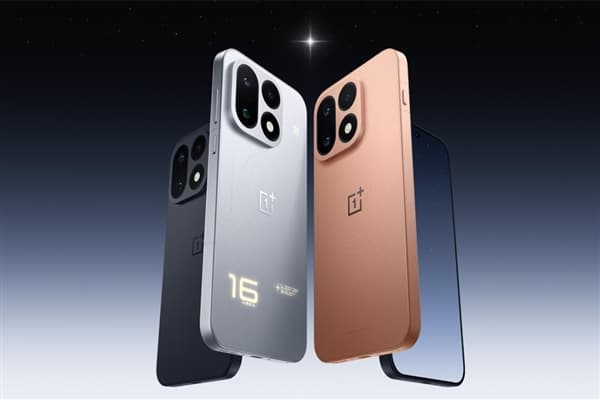
OnePlus is preparing another major display upgrade for its next flagship smartphone. The company has confirmed that it is working with BOE on the fourth-generation Oriental Screen, which will make its global debut on the upcoming OnePlus 16.
According to OnePlus China President Li Jie, OnePlus and BOE will hold a technology communication event on October 9 at 10:00 a.m. to introduce the new display technology. The companies are expected to explain how the fourth-generation Oriental Screen improves everyday viewing, scrolling, and motion clarity.
Rather than focusing only on higher specifications, OnePlus says the new panel is designed to improve the parts of the display experience users notice every day.

OnePlus 16 Will Be the First Phone With the Fourth-Generation Oriental Screen
The OnePlus 16 will be the first smartphone to use BOE’s fourth-generation Oriental Screen.
Li Jie said the new display is designed to make content look clearer, scrolling feel smoother, and moving images appear more defined. OnePlus also plans to explain the underlying display technologies in simpler terms during the upcoming presentation.
This approach is important because smartphone displays are no longer judged by resolution alone. Refresh rate, motion handling, touch response, brightness, power efficiency, and image clarity can all affect how a phone feels during everyday use.
The fourth-generation panel therefore appears to continue OnePlus and BOE’s strategy of improving the overall display experience rather than simply increasing a single specification.
From 165Hz to 185Hz: OnePlus Pushes Refresh Rate Higher
The most notable change is the reported 185Hz refresh rate.
Last year’s OnePlus 15 introduced the third-generation Oriental Screen, which combined a 1.5K resolution with a 165Hz refresh rate. At the time, this was positioned as a solution to the long-standing challenge of combining high resolution with very high refresh rates on smartphone OLED panels.
The fourth-generation screen takes the refresh-rate figure even further.
The OnePlus 16 is expected to support a maximum refresh rate of 185Hz while also offering a global 165Hz refresh rate mode. That means the higher-refresh-rate experience is not limited only to selected applications or specific scenarios.
For everyday activities such as scrolling through social media, browsing websites, and reading articles, a 165Hz global mode could make animations and page movement appear more continuous than on conventional 120Hz displays.
Why a High Refresh Rate Matters Beyond Gaming
A higher refresh rate is often associated with gaming, but its benefits are not limited to games.
When scrolling through a long webpage or moving between menus, the display can update the image more frequently. This can make motion appear smoother and reduce the perception of stuttering during fast movement.
The difference may be particularly noticeable to users who are already accustomed to high-refresh-rate phones.
However, refresh rate alone does not guarantee a better display. The quality of the OLED panel, response time, display driver, software optimization, and power management all influence the final experience.
That makes OnePlus’ upcoming display announcement particularly interesting. The company is emphasizing not just the 185Hz number but also improvements to transparency, smoothness, and motion clarity.
OnePlus and BOE Previously Used 165Hz as a Key Breakthrough
The fourth-generation Oriental Screen builds on technology introduced with the previous generation.
The third-generation Oriental Screen, launched with the OnePlus 15, combined a 1.5K-class resolution with a 165Hz refresh rate. OnePlus and BOE reportedly achieved this through changes to the display circuitry, driving technology, and display algorithms, along with new X3 luminous materials.
Before this development, ultra-high-refresh-rate smartphone displays were more commonly associated with lower resolutions such as 1080p.
By combining higher resolution with a 165Hz refresh rate, the third-generation panel attempted to address the trade-off between image sharpness and refresh speed.
OnePlus now appears ready to take that approach another step forward with the fourth-generation panel.
OnePlus 16 Could Offer 185FPS Gaming
The new display technology could also have a direct impact on mobile gaming.
According to OnePlus, the OnePlus 16 already supports native 185FPS+ gaming at high image quality in Delta Force. The company says its updated Fengchi gaming engine is designed to help the phone maintain a high frame rate during extended gaming sessions.
This is particularly relevant for competitive shooters, where rapid camera movement and quick target tracking can benefit from a more responsive gaming phone display.
If the hardware and software can consistently deliver frame rates close to the panel’s 185Hz capability, the higher refresh rate could provide smoother motion in fast-paced games.
This is particularly relevant for competitive shooters, where rapid camera movement and quick target tracking can benefit from a more responsive display.
At the same time, sustained high-frame-rate gaming places significant demands on the processor, graphics hardware, cooling system, battery, and display. The real-world performance of the OnePlus 16 will therefore depend on how effectively these components work together.
The Fourth-Generation Oriental Screen Has a Bigger Goal
The OnePlus 16’s display upgrade is not simply about moving from 165Hz to 185Hz.
OnePlus is positioning the fourth-generation Oriental Screen around three everyday improvements: clearer viewing, smoother interaction, and sharper motion.
That distinction matters because extremely high refresh rates can become difficult to appreciate if other parts of the display experience remain unchanged. A well-balanced panel needs to combine refresh rate with response speed, image quality, touch performance, and efficient power consumption.
The upcoming technology communication event should provide more information about how OnePlus and BOE achieved these improvements.
What to Expect From the OnePlus 16 Display
Based on the information released so far, the OnePlus 16’s display is expected to focus on several key areas:
| Display Feature | OnePlus 16 |
|---|---|
| Display technology | Fourth-generation Oriental Screen |
| Development | OnePlus and BOE |
| Maximum refresh rate | 185Hz |
| Global refresh rate | 165Hz |
| High-frame-rate gaming | Up to 185FPS+ claimed |
| Gaming support | Delta Force |
| Optimization | Fengchi gaming engine |
| Key focus | Smoothness, clarity and motion |
These specifications make the OnePlus 16 one of the more interesting upcoming smartphones for users who prioritize display performance.
The fourth-generation panel therefore appears to continue OnePlus and BOE’s strategy of improving the overall display experience on OnePlus flagship phones rather than simply increasing a single specification.
OnePlus 16 Could Raise the Bar for High-Refresh-Rate Phones
The smartphone display market has gradually moved from 60Hz to 90Hz and 120Hz panels, while premium gaming-focused phones have pushed refresh rates even higher.
The OnePlus 16’s reported 185Hz panel suggests that the next stage of competition may focus on making ultra-high refresh rates useful outside of gaming as well.
When scrolling through a long webpage or moving between menus, the display can update the image more frequently, which is why high-refresh-rate smartphone displays have become increasingly common on premium phones.
If OnePlus can combine 185Hz gaming with a consistent 165Hz experience across everyday applications, the fourth-generation Oriental Screen could become one of the phone’s most important features.
More technical details should emerge when OnePlus and BOE officially introduce the fourth-generation Oriental Screen on October 9. Until then, the claimed specifications should be treated as announced information rather than a complete assessment of the panel’s real-world performance.
For users interested in high-refresh-rate smartphones, however, the OnePlus 16 is already shaping up to be a notable device to watch.