











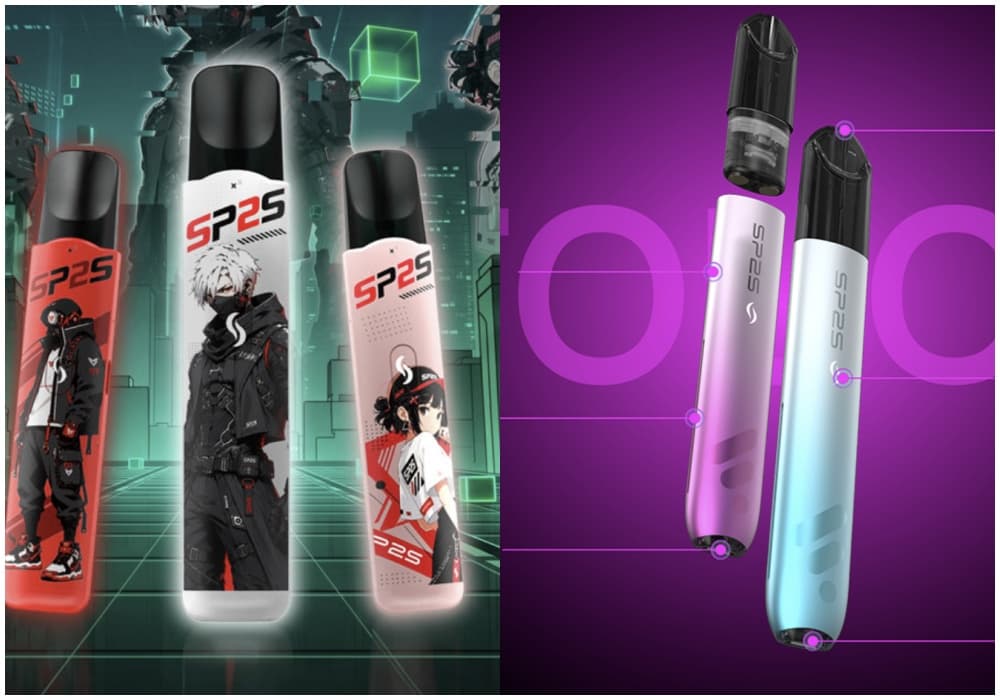
SP2S has developed two pod systems with noticeably different approaches to device design: the SENX AIR and SP2S TOUCH. Both support USB Type-C charging and use replaceable pod cartridges, but their internal hardware and operating features are not the same.
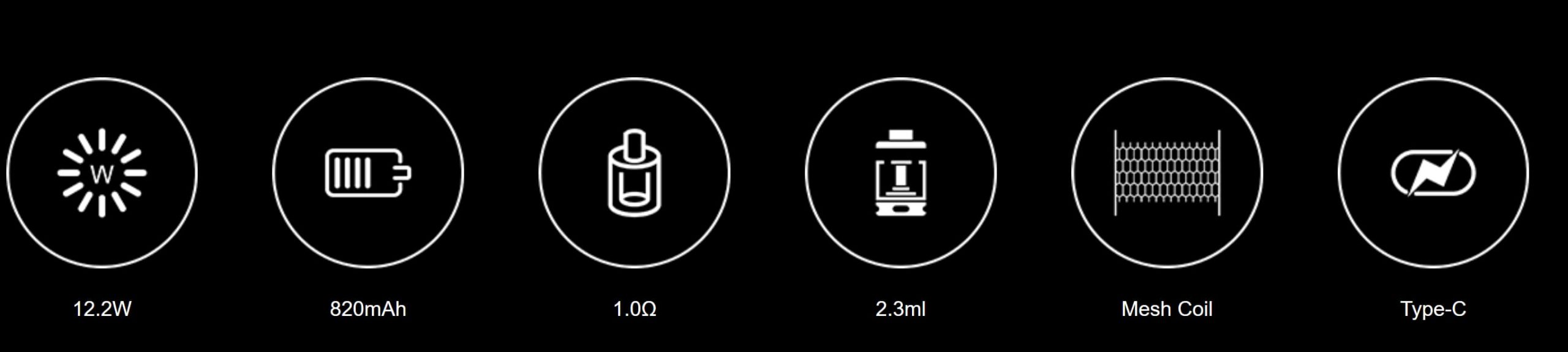
The SENX AIR is built around an 820mAh battery, a 12.2W constant-output system and a 1.0Ω mesh coil. It also introduces RGB battery-status lighting, textured UV-printed finishes and an advertised 8X Leak-Guard System.
The SP2S TOUCH takes a different route. It features a 450mAh battery, a 2.5ml cartridge, an upgraded porous ceramic coil and three power modes with a maximum output of 8.25W. Its all-aluminum alloy construction and simplified touch-style controls give it a distinct design identity.
So, what separates these two SP2S pod systems beyond their appearance? Here is a closer look at their specifications and engineering differences.
SP2S SENX AIR vs TOUCH: Specification Comparison
| Specification | SP2S SENX AIR | SP2S TOUCH |
|---|---|---|
| Battery capacity | 820mAh | 450mAh |
| Maximum output | 12.2W constant output | 8.25W |
| Coil technology | Mesh coil | Porous ceramic coil |
| Listed resistance | 1.0Ω | Not specified |
| Pod capacity | 2.3ml | 2.5ml |
| Power adjustment | 12.2W constant output | Three power modes |
| Charging | USB Type-C | USB Type-C |
| Battery indicator | RGB phantom lights | LED indicator |
| Construction | UV-printed textured design | All-aluminum alloy body |
| Leakage protection | Advertised 8X Leak-Guard System | Not specified on product page |
The most significant differences are the battery capacity, coil material and power-control system. The SENX AIR has a larger battery and a higher stated output, whereas the TOUCH provides selectable operating modes and uses a ceramic heating element.
1. Battery Capacity: 820mAh vs 450mAh
Battery capacity is one of the clearest differences between the two products.
The SENX AIR contains an 820mAh battery, compared with the 450mAh battery inside the TOUCH. On paper, the SENX AIR has approximately 82% more battery capacity.
This difference provides a useful indication of their respective power reserves, although it does not establish an exact runtime comparison.
Actual battery endurance depends on power consumption, operating conditions, charging habits and usage frequency. The SENX AIR’s higher capacity is paired with a 12.2W output, while the TOUCH operates at a maximum of 8.25W.
The two figures therefore should not be interpreted independently. A larger battery does not automatically translate into proportionally longer operating time when the devices have different power requirements.

Both products use USB Type-C charging. However, SP2S does not publish a confirmed full charging time for either model on the product pages.
2. Mesh Coil vs Porous Ceramic Coil: Two Different Heating Designs
The coil systems represent another important distinction.
SENX AIR: 1.0Ω Mesh Coil
The SENX AIR uses a mesh coil with a listed resistance of 1.0Ω.
Mesh heating elements use a metal mesh structure rather than a conventional single-wire heating element. Their broader surface geometry can distribute heat across the coil area.
SP2S pairs this system with a constant 12.2W output. The manufacturer’s description says this configuration is designed to support consistent atomization.
However, coil material alone does not establish overall performance. Heating consistency, liquid compatibility, airflow and cartridge construction all contribute to the final operating characteristics.
TOUCH: Upgraded Porous Ceramic Coil
The TOUCH uses an upgraded porous ceramic coil.
Ceramic heating structures have a different physical composition from mesh elements. Their porous structure is designed to interact with the liquid supplied to the heating area.
SP2S claims that the upgraded ceramic coil increases the advertised puff count by 30% when paired with the TOUCH device. This is a manufacturer claim, not an independently verified measurement.
The two technologies should not be treated as interchangeable. They represent different heating approaches, and the manufacturer’s specifications do not provide enough independent testing data to establish which has better durability or overall consistency.
3. Power Control: Constant Output vs Three Operating Modes
The way each device handles power is another major design difference.
The SENX AIR is specified with a constant output of 12.2W. Its product page emphasizes a fixed output configuration rather than multiple selectable power levels.
The TOUCH provides three operating modes:
- Smooth: The lower-power setting.
- Classic: The middle operating setting.
- Boost: The highest operating setting.
Its maximum listed output is 8.25W, with an adjustment range of 7–8.25W.
This gives the TOUCH a more adjustable operating interface. Users can switch between the three modes using the device’s control system.
SP2S specifies the following button operations:
- Five clicks to turn the device on or off.
- Three clicks to switch between power modes.
The distinction is straightforward: the SENX AIR emphasizes a fixed-output architecture, while the TOUCH provides three selectable power settings.
4. Cartridge Capacity: 2.3ml vs 2.5ml
The TOUCH has a slightly larger listed cartridge capacity.
Its cartridge holds 2.5ml, while the SENX AIR uses a 2.3ml pod. The difference is 0.2ml.
Although this is a relatively small numerical gap, cartridge capacity is still worth checking when comparing replacement components and product versions.
Neither figure should be confused with battery capacity. The milliliter measurement describes the cartridge’s stated liquid capacity, while mAh describes the rechargeable battery’s electrical capacity.
The product pages do not provide enough information to establish whether the two models share interchangeable cartridges. Buyers and distributors should verify model-specific compatibility rather than assuming that SP2S pods work across both systems.
5. Design and Construction: RGB Lighting vs Aluminum Alloy
The SENX AIR and TOUCH also take different visual approaches.
SENX AIR: Textured Finishes and RGB Indicators
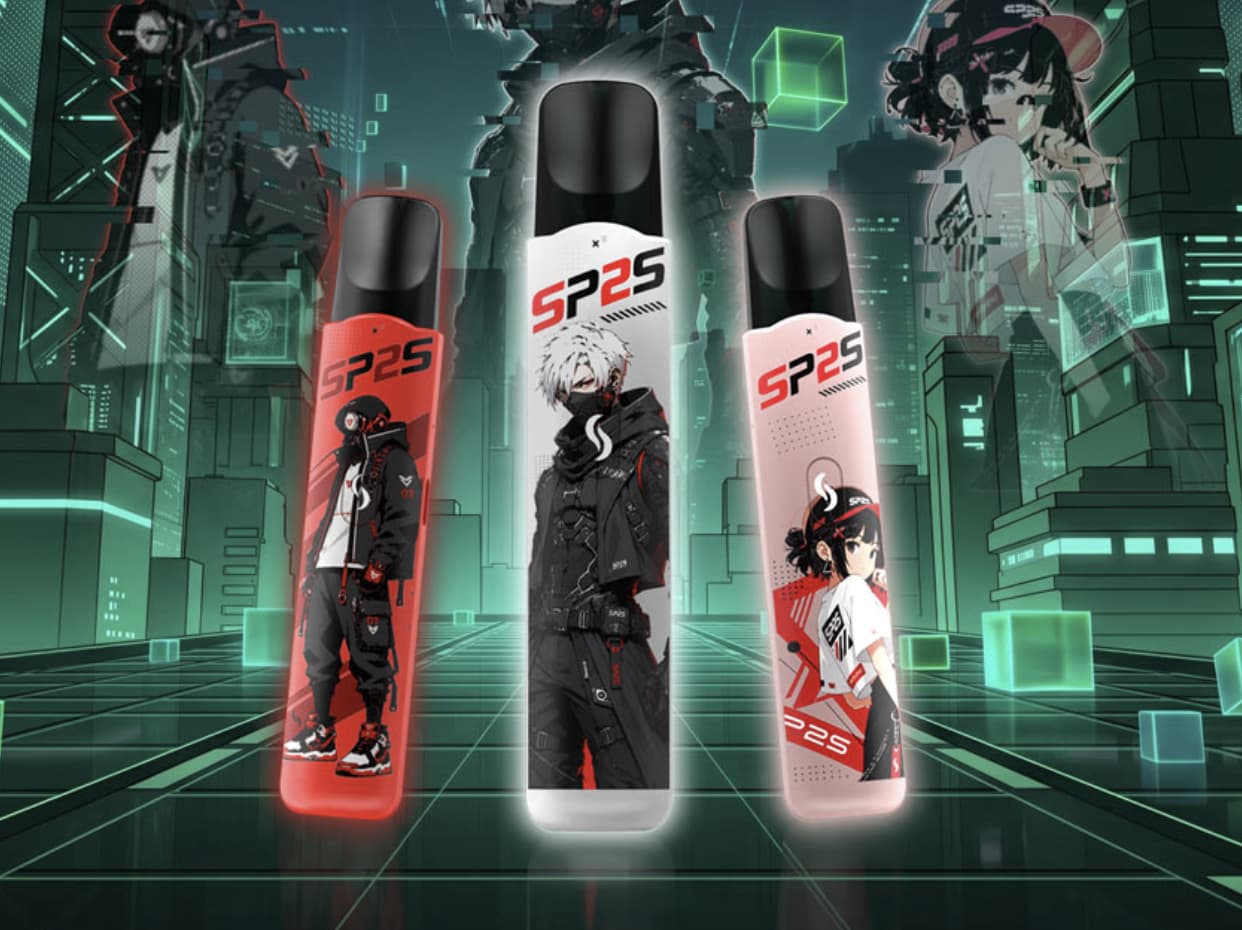
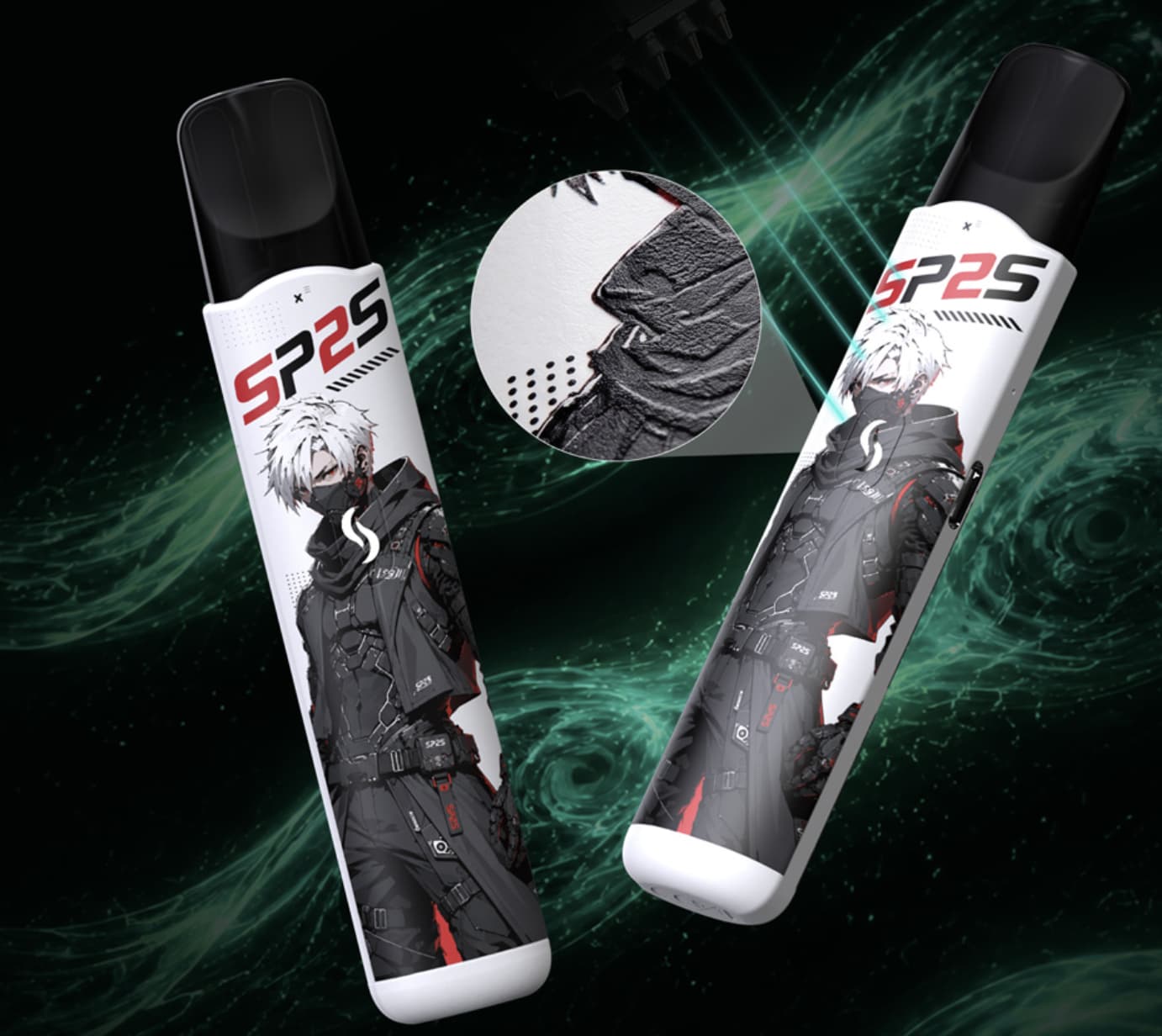
The SENX AIR features UV-printed surface patterns designed to create detailed, three-dimensional visual effects.
SP2S describes the printing as fade-resistant and offers several named finishes, including Yellow Drip, Storm White, Sakura Pink, Red Phantom, Cyber Green and Hyper Blue.
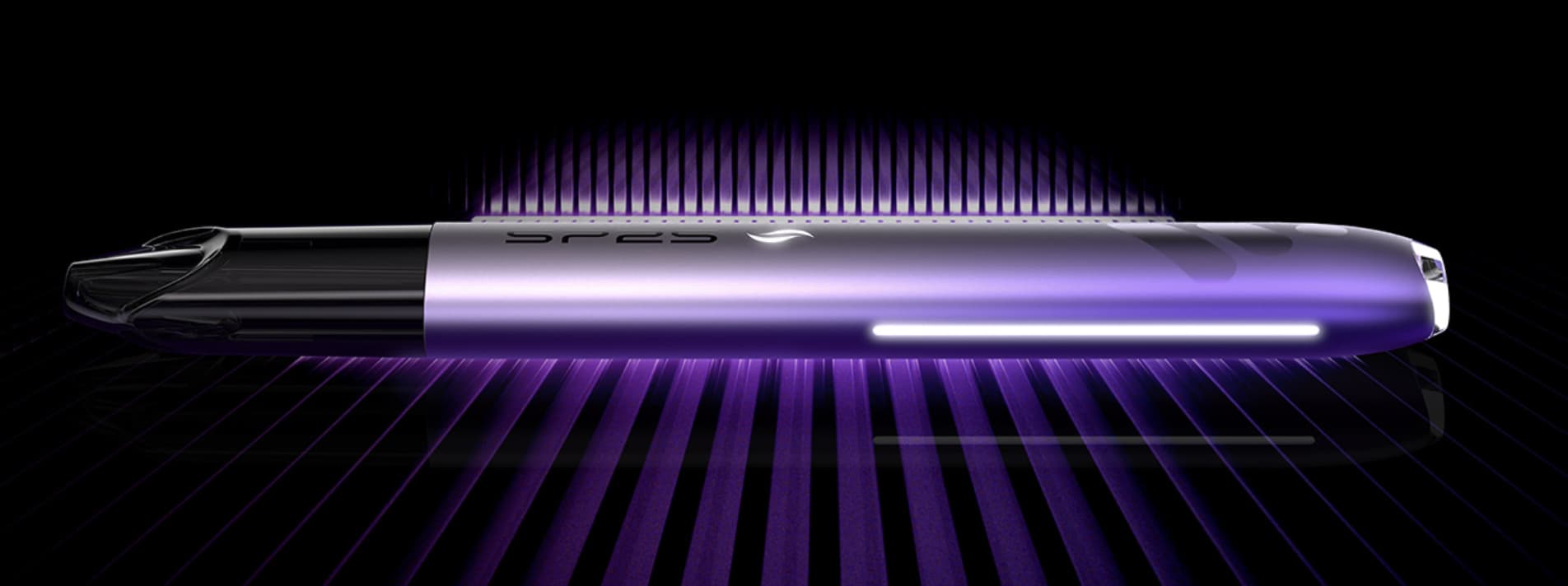
Another distinctive feature is its RGB Phantom Lights system. According to the manufacturer, the lighting provides real-time battery-level information.
This combines a visual design element with a practical status indicator.
TOUCH: Minimalist Aluminum Construction
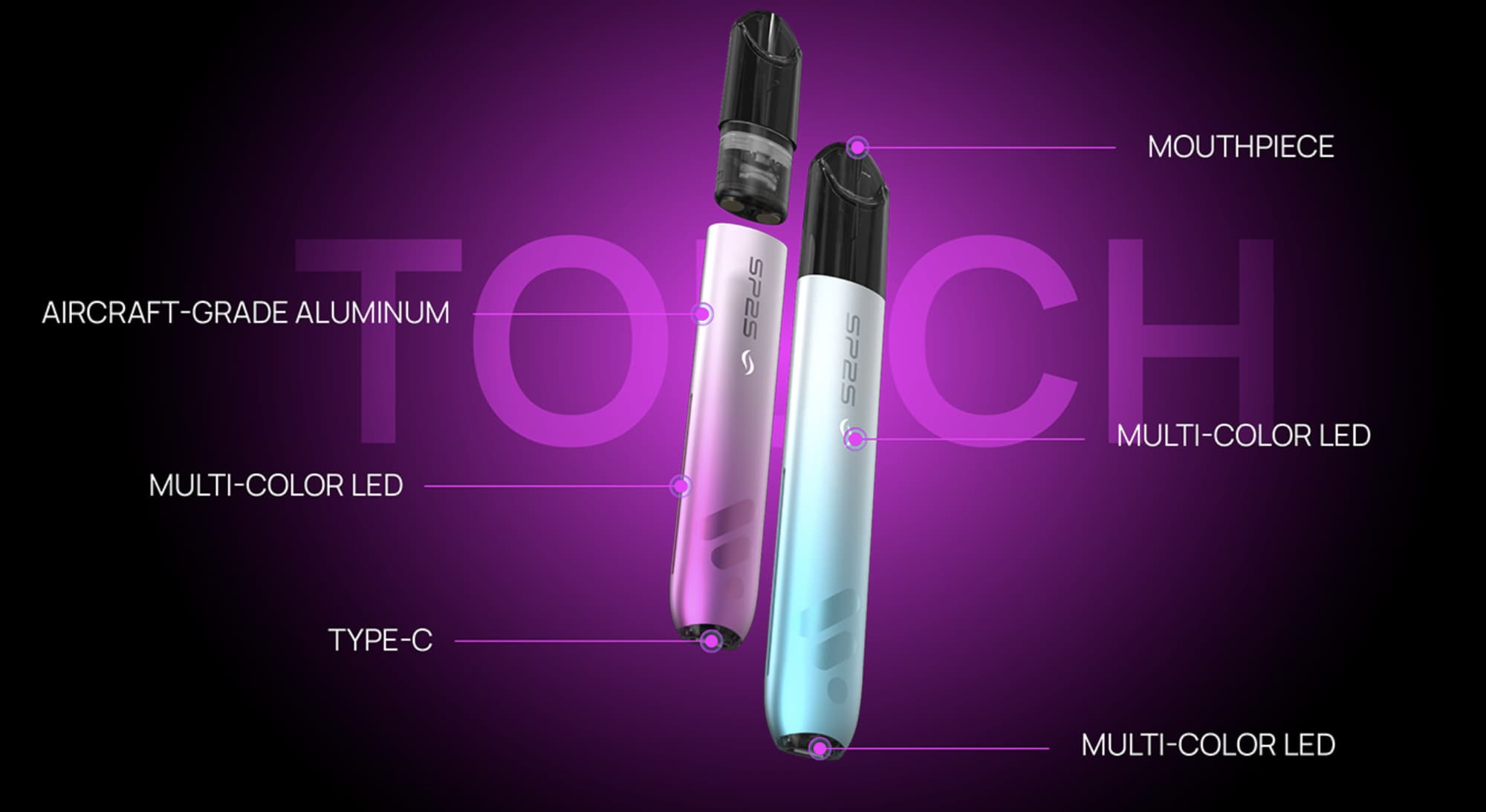
The TOUCH uses an all-aluminum alloy body with curved surfaces and a minimalist appearance.
Its product page highlights the material’s smooth finish and ergonomic design. Instead of the SENX AIR’s RGB lighting system, the TOUCH uses a simpler LED indicator.
The listed color options include Titan Blue, White, Titan Pink, Titan Black, Titan Metal and Titan Purple, alongside additional black variants shown on the product page.
The difference is primarily one of design philosophy: the SENX AIR emphasizes textured graphics and illuminated status feedback, while the TOUCH focuses on metal construction and a more understated exterior.
6. Leakage Protection and Everyday Maintenance
SP2S advertises an 8X Leak-Guard System for the SENX AIR.
The manufacturer’s description says this system is designed to help reduce leakage and improve product durability. However, the product page does not provide detailed laboratory results or a standardized leakage test explaining the meaning of the 8X designation.
The TOUCH product page does not list an equivalent leakage-protection specification.
That does not prove the TOUCH has no leakage-control features. It simply means the manufacturer has not presented a directly comparable specification on the two pages.
For a fair comparison, the actual cartridge construction, seals and replacement-pod design would need to be examined under the same testing conditions.
7. USB Type-C Charging on Both Models
Both devices use USB Type-C charging, giving them a common connection standard.
This makes the charging interface easy to identify, but it does not mean their charging performance is identical.
SP2S does not publish the same detailed charging-power specification for both products. Consequently, a precise charging-time comparison cannot be established from the available information.
The SENX AIR’s 820mAh battery and the TOUCH’s 450mAh battery also mean that their charging requirements may differ.
Users should follow the manufacturer’s charging instructions and avoid using damaged charging cables or power accessories.
Key Differences at a Glance
The following points summarize the main technical distinctions:
SP2S SENX AIR
- 820mAh rechargeable battery
- 12.2W constant output
- 1.0Ω mesh coil
- 2.3ml cartridge
- RGB battery-status lighting
- UV-printed textured finishes
- Advertised 8X Leak-Guard System
SP2S TOUCH
- 450mAh rechargeable battery
- Maximum 8.25W output
- Three selectable power modes
- Upgraded porous ceramic coil
- 2.5ml cartridge
- All-aluminum alloy construction
- LED status indicator
Final Comparison: Two Different SP2S Pod System Designs
SP2S SENX AIR and SP2S TOUCH share USB Type-C charging and a pod-system format, but their specifications reveal two different engineering priorities.
The SENX AIR combines a larger 820mAh battery, a 12.2W constant-output system, mesh coil technology and RGB lighting. Its UV-printed exterior and advertised leakage-control system are additional design features.
The TOUCH places more emphasis on adjustable power settings, an upgraded porous ceramic coil and an aluminum alloy body. Its 2.5ml cartridge is also slightly larger than the SENX AIR’s 2.3ml version.
For anyone comparing the products from a technical or purchasing perspective, the most important considerations are battery capacity, cartridge compatibility, coil construction and the availability of replacement components.
Neither product can be declared superior based on specifications alone. Independent testing would be needed to compare battery endurance, leakage performance, coil longevity and consistency under identical conditions.