












Huawei has officially unveiled the Mate X8 series in China, introducing its latest large-format foldable flagship with significant upgrades to performance, battery capacity, display technology, and mobile photography. The new device starts at 12,999 yuan, with higher-memory Collector’s Edition configurations reaching 20,999 yuan.
The Mate X8 represents Huawei’s latest push into the premium foldable smartphone market. It combines a 6.5-inch cover screen with an 8.2-inch foldable inner display, runs on the Kirin 9050 Pro chipset, and features a 6,200mAh battery. However, its most unusual addition is the Huawei Imaging Z10 modular camera, an optional photography accessory designed to bring continuous optical zoom and a larger imaging sensor to the smartphone.
Huawei has continued to develop advanced imaging hardware across its foldable lineup, as demonstrated by the Huawei Mate XT 2’s full RYYB camera system and periscope telephoto lens.
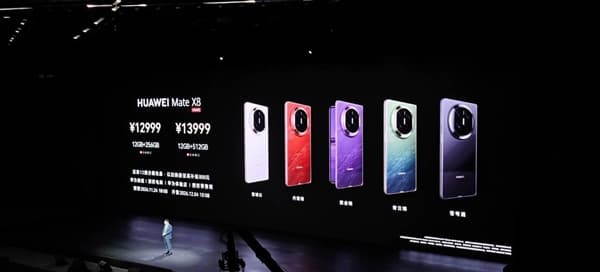
Huawei Mate X8 Price and Storage Options
Huawei has introduced several configurations of the Mate X8, including standard and Collector’s Edition models.
The standard version comes with 12GB of RAM and offers two storage options, while the Collector’s Edition increases memory to 16GB and adds a 2TB configuration.
| Configuration | Price in China |
|---|---|
| 12GB + 256GB | ¥12,999 |
| 12GB + 512GB | ¥13,999 |
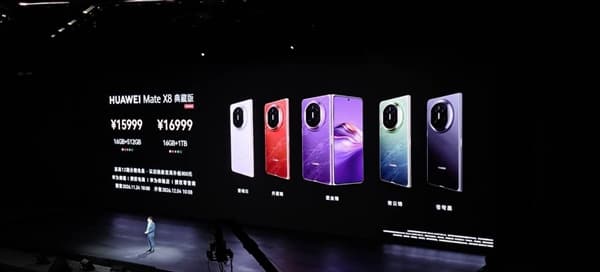
| 16GB + 512GB Collector’s Edition | ¥15,999 |
| 16GB + 1TB Collector’s Edition | ¥16,999 |
| 16GB + 2TB Collector’s Edition | ¥20,999 |
With a starting price above ¥12,000, the Mate X8 is positioned firmly in the premium foldable category. The larger storage options are aimed at users who need additional space for high-resolution photos, videos, applications, and other files.
Huawei Strengthens Its Position in the Foldable Smartphone Market
During the launch event, Huawei Executive Director and Chairman of the Consumer Business Group Richard Yu stated that the company holds more than 70% of China’s domestic foldable smartphone market.
He also said Huawei ranks first in brand first-mention awareness within the foldable smartphone category.
Huawei’s foldable portfolio now covers several form factors, including traditional book-style foldables, tri-fold smartphones, and wider-format folding devices. The Mate X8 joins this lineup as the company’s latest large-screen foldable flagship.
Rather than focusing exclusively on a thinner design or a larger external display, Huawei is positioning the Mate X8 around a combination of screen quality, processing power, battery endurance, and expanded camera capabilities.
6.5-Inch Cover Display and 8.2-Inch Folding Screen
The Huawei Mate X8 features two displays built on Huawei’s second-generation Linglong screen technology.
The external display measures 6.5 inches, while unfolding the device reveals a much larger 8.2-inch internal screen. This arrangement gives users a conventional smartphone-style experience when the device is closed and a tablet-like workspace when opened.
Brightness is one of the most notable display specifications. Huawei claims that the cover screen can reach a peak brightness of up to 12,000 nits, while the internal display reaches up to 8,000 nits.
Both screens can also reduce their brightness to as low as 1 nit. This is designed to make nighttime viewing more comfortable, particularly when checking notifications or reading in dark environments.
The combination of high peak brightness and very low minimum brightness gives the Mate X8 a broad display range for different lighting conditions.
Kirin 9050 Pro Chipset and 6,200mAh Battery
At the heart of the Mate X8 is Huawei’s Kirin 9050 Pro processor. Huawei describes it as the most powerful chipset yet used in one of its foldable smartphones.
According to the company’s launch presentation, overall device performance has improved by 31% compared with its predecessor. The exact benchmark conditions and comparison platform were not specified in the supplied announcement, so this figure should be treated as Huawei’s stated performance claim rather than an independently verified result.
Battery capacity has also received attention. The Mate X8 packs a 6,200mAh battery, providing a substantial power reserve for a large-screen foldable device.
Another listed feature is support for four SIM cards in a three-standby arrangement. This unusual configuration may appeal to users who manage several mobile numbers or separate personal and business connections.
Together, the new chipset, larger battery, and expanded connectivity options are intended to make the Mate X8 a more capable everyday flagship.
Quad-Camera System With a 50MP Periscope Telephoto Lens
Photography is another major focus of the Mate X8.
The phone features a multi-camera setup consisting of:
- 50MP main camera
- 50MP periscope telephoto camera
- 40MP ultra-wide camera
- Third-generation Red Maple Primary Color Camera
The combination covers several common shooting situations, from everyday photography and landscapes to longer-distance subjects.
The periscope telephoto camera is particularly important because it provides a dedicated long-range imaging option within the foldable phone’s camera system.
Huawei also says that every Mate X8 configuration supports the company’s Ruiying Z10 modular camera accessory, expanding the phone’s photographic capabilities beyond its built-in camera hardware.
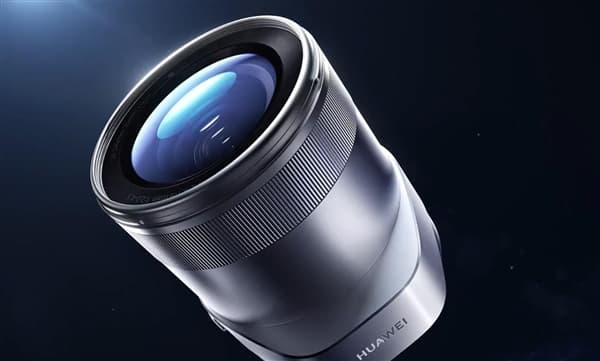
Huawei Ruiying Z10: A Detachable Camera With 10x Continuous Optical Zoom
The most distinctive photography feature announced alongside the Mate X8 is the Huawei Ruiying Z10 modular camera.
Unlike a conventional smartphone camera attachment that simply adds another lens, this accessory uses a multi-group optical system designed to provide a much wider zoom range.
Its key specifications include:
- 24mm–240mm focal-length coverage
- Up to 10x continuous optical zoom
- Maximum aperture ranging from F2.0 to F4.5
- 1-inch image sensor
- Multi-group optical lens structure
The combination of a 1-inch sensor and a dedicated optical system is designed to offer greater flexibility than relying entirely on the smartphone’s built-in cameras.
The 24mm-to-240mm range covers both relatively wide compositions and distant subjects. This could make the accessory useful for travel photography, portraits, architectural details, and cityscape shots.
The actual image quality will depend on factors such as lighting, focusing performance, stabilization, and the camera module’s processing capabilities. Nevertheless, its optical design makes it one of the most unusual accessories introduced with the Mate X8.
Huawei’s foldable photography experience also includes dedicated telephoto features, and our Huawei Mate XTs camera guide explains how to make better use of its optical zoom and long-distance shooting capabilities.
HyperClick Mount Makes Camera Attachment Simpler
Huawei has equipped the Ruiying Z10 module with a new HyperClick mounting system.
According to the company, users can attach the accessory to the phone with a simple click, without a complicated installation process.
Images captured through the module can be transferred directly to the smartphone, making it easier to review, store, and share photographs.
This direct connection is particularly useful for travel and outdoor photography, where users may want to move quickly between taking pictures and sharing them.
The accessory also includes several built-in photographic color styles, reducing the need for extensive editing after a shot has been taken.
Available styles include:
- German-inspired tonal rendering
- Cool-white portrait
- Vintage soft light
- Refined landscape
These presets are designed to give photographs different visual characteristics with a single selection. Users can therefore experiment with different styles without having to make extensive adjustments in post-processing software.
A New Direction for Foldable Phone Photography
The Mate X8’s modular camera system reflects a broader ambition to make foldable smartphones more capable photography tools.
Traditional foldables must balance camera hardware against limited internal space, hinge construction, battery requirements, and overall thickness. A detachable imaging accessory offers another way to expand camera capabilities without requiring every optical component to be permanently integrated into the phone.
Huawei’s approach also gives the Mate X8 a distinctive feature beyond its display and processor specifications.
Whether the Ruiying Z10 can deliver a meaningful advantage in real-world photography will depend on independent image-quality testing, accessory pricing, and everyday usability. Its advertised 10x continuous optical zoom and 1-inch sensor nevertheless make it a notable part of the Mate X8 launch.
Huawei Mate X8: A Premium Foldable Built Around Photography
The Huawei Mate X8 brings together several major hardware upgrades, including an 8.2-inch folding display, a Kirin 9050 Pro processor, a 6,200mAh battery, and a quad-camera system with a periscope telephoto lens.
Its second-generation Linglong displays also stand out with unusually high advertised peak brightness, while the minimum 1-nit brightness setting adds flexibility for low-light use.
However, the Ruiying Z10 modular camera may be the device’s most distinctive selling point. With a 1-inch sensor, a 24mm–240mm optical range, and a HyperClick mounting system, Huawei is attempting to extend smartphone photography into a more dedicated camera-like experience.
Starting at ¥12,999 in China, the Mate X8 targets buyers looking for a high-end foldable with more than just a large screen. Its ultimate appeal will depend on real-world performance, camera quality, and how useful the modular photography system proves to be.