










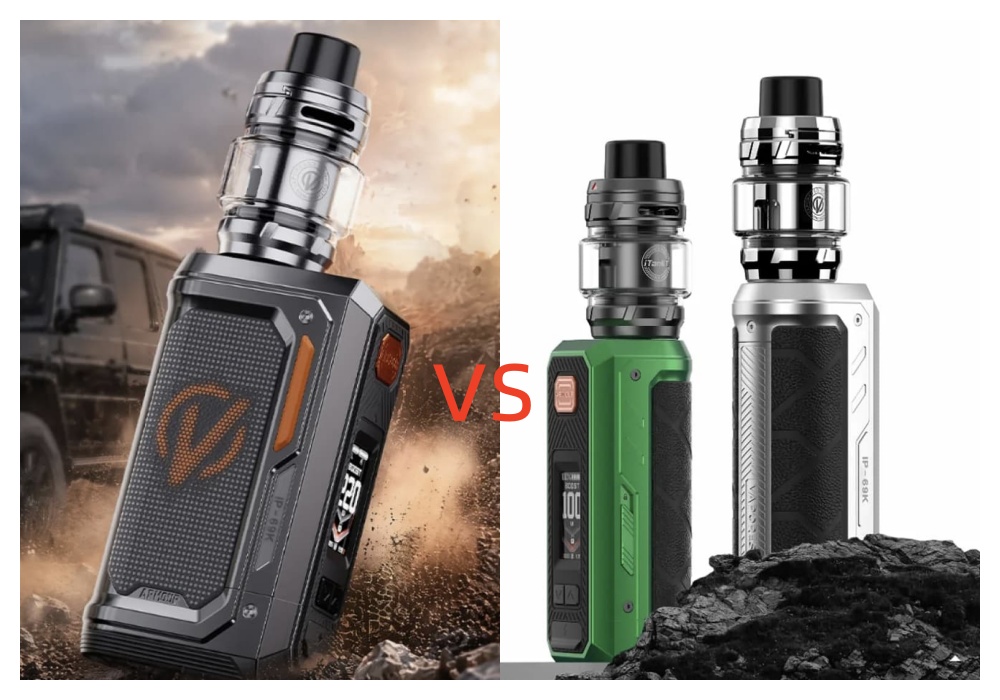
Vaporesso ARMOUR family is built around a simple idea: a vape mod should be able to handle demanding everyday use without being treated like a fragile piece of electronics. Vaporesso ARMOUR OCTA and ARMOUR ULTRA take that idea in two different directions.
At first glance, the two devices have plenty in common. Both use Vaporesso’s iTank T platform, support GTi Dual Mesh coils, feature a 0.96-inch TFT screen, offer USB-C charging, and are designed with substantial protection against water, dust, and accidental drops. But underneath the similar ARMOUR branding, they are quite different devices, so readers comparing different Vaporesso vape coils can also explore how coil resistance affects wattage, vapor production, and battery consumption.
The ARMOUR OCTA is a traditional high-power dual-18650 mod capable of up to 220W. The ARMOUR ULTRA instead uses a built-in 5500mAh battery and limits output to 100W. That makes this comparison less about which specification is bigger and more about whether you prefer replaceable batteries and high output or large built-in capacity and a simpler all-in-one setup.
Note: This article is based on the manufacturers’ published specifications and features rather than a long-term hands-on test. Real-world battery life, flavor, coil longevity, and comfort can vary depending on wattage, airflow, e-liquid, and usage habits.
ARMOUR OCTA vs ARMOUR ULTRA: Key Specifications
| Feature | Vaporesso ARMOUR OCTA | Vaporesso ARMOUR ULTRA |
|---|---|---|
| Maximum output | 220W | 100W |
| Battery | 2 × 18650, external | 5500mAh built-in |
| Charging | USB-C, 5V/2.5A | USB-C, 9V/2A or 5V/3A |
| Screen | 0.96-inch TFT | 0.96-inch TFT |
| Tank | iTank T | iTank T |
| Tank capacity | 6ml / 2ml TPD | 6ml / 2ml TPD |
| Included coils | GTi 0.2Ω Dual Mesh + 0.4Ω Dual Mesh | GTi 0.2Ω Dual Mesh + 0.4Ω Dual Mesh |
| Dimensions | 146.3 × 30.8 × 55mm | 144.5 × 37.6 × 31mm |
| Listed weight | 362g | 256g |
| Maximum output style | High-power external-battery mod | Built-in-battery DTL mod |

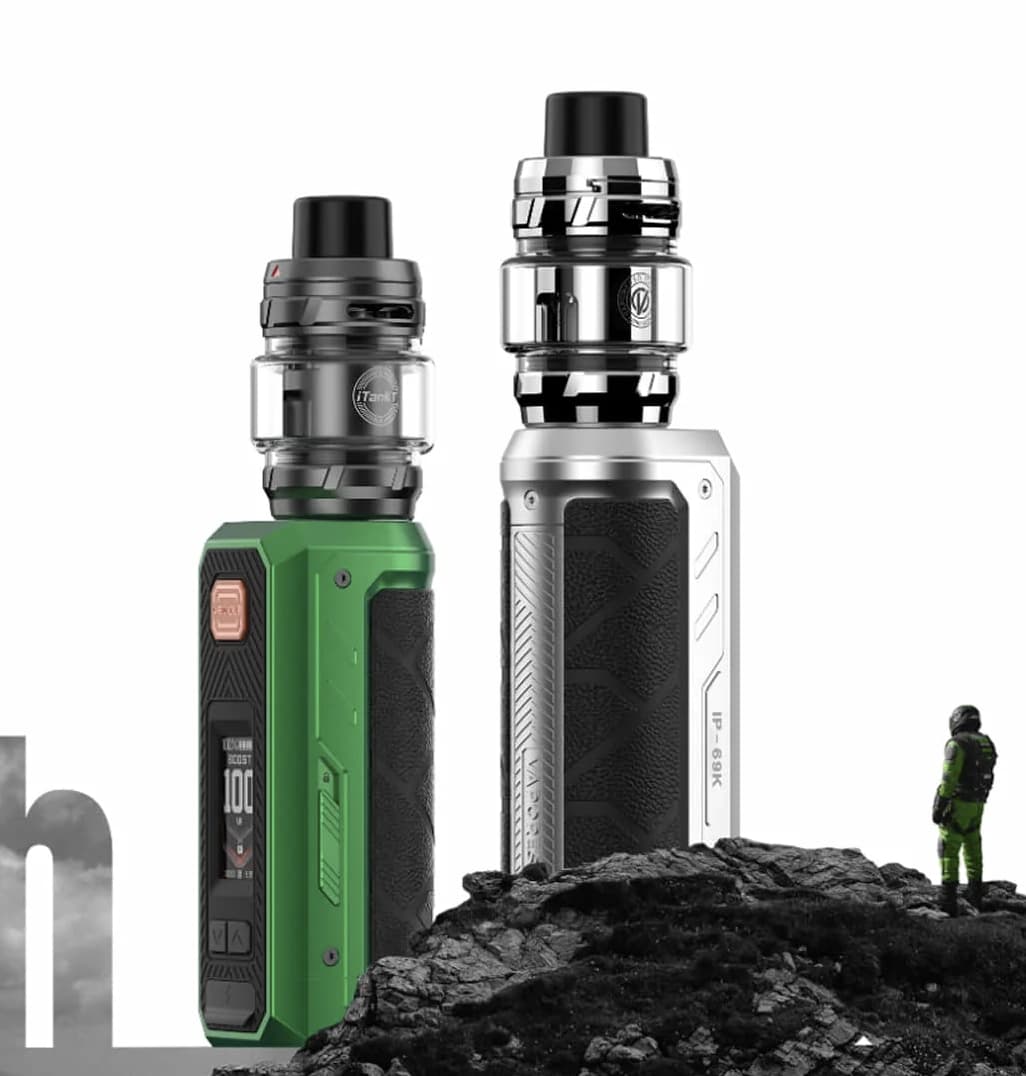
The numbers immediately reveal the intended distinction. The OCTA is substantially heavier and wider in its battery-oriented design, while the ULTRA puts a large 5500mAh battery into a narrower all-in-one body. Vaporesso lists the OCTA at 362g and the ULTRA at 256g.
ARMOUR OCTA: A Classic High-Power Mod With Modern Protection
The ARMOUR OCTA is the more traditional choice for experienced mod users who prefer removable batteries. According to the official Vaporesso ARMOUR OCTA specifications, the device supports up to 220W output and uses two external 18650 batteries.
It uses two 18650 cells, which are not included with the kit, and can deliver up to 220W. Charging is handled through USB-C at 5V/2.5A, while the 0.96-inch TFT screen provides the main device information.
That dual-battery architecture changes how the device fits into a user’s routine. Instead of relying entirely on the internal battery, spare compatible cells can be carried separately and swapped when necessary. For high-power vaping, this can be useful because battery management becomes a separate part of the setup.
The trade-off is obvious: the OCTA is not particularly light. Its listed weight is 362g before considering the additional weight of the batteries and e-liquid. Its dimensions are 146.3 × 30.8 × 55mm.
220W Gives the OCTA More Headroom
The 220W maximum does not mean every user needs to vape anywhere near 220W. In fact, the included GTi 0.2Ω Dual Mesh coil is specified for 60–75W, with 65W listed as its best setting, while the included 0.4Ω Dual Mesh coil is rated at 50–60W, with 55W listed as its best setting.
The value of 220W is therefore more about headroom and flexibility than the expectation of continuously using maximum power.
The OCTA is also compatible with additional GTi coil options, including 0.15Ω Dual Mesh, 0.15Ω Mesh, 0.2Ω Mesh, and 0.4Ω Mesh configurations. Vaporesso lists the 0.15Ω options at 75–90W, with 85W as the recommended setting.
For users who already understand wattage, resistance, airflow, and battery management, this broader power envelope makes the OCTA a more conventional enthusiast-oriented mod.
ARMOUR ULTRA: The 5500mAh Alternative
The ARMOUR ULTRA approaches the same DTL category from a different angle.
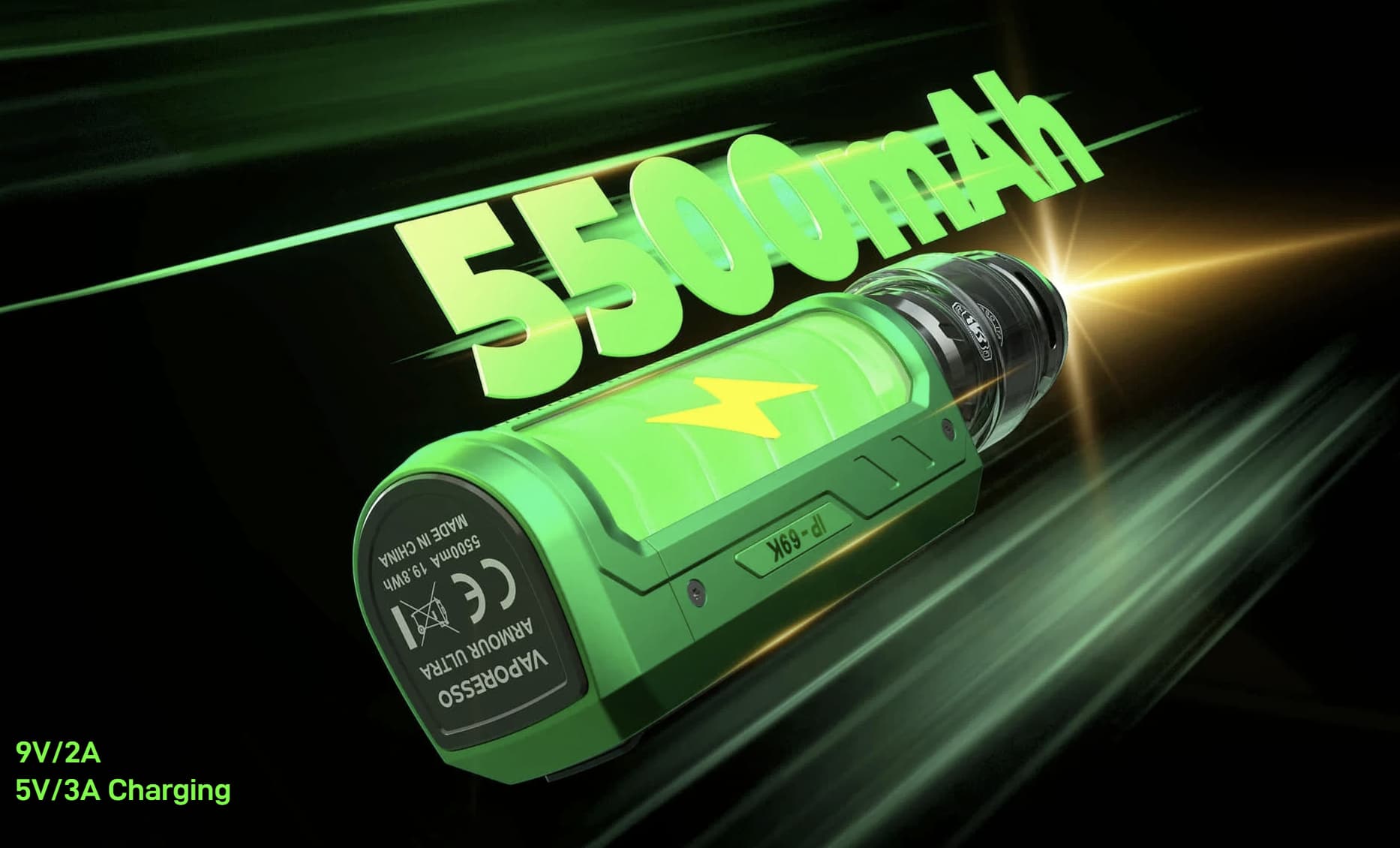
Instead of two removable 18650 batteries, it incorporates a 5500mAh built-in battery and provides up to 100W of output. Vaporesso says the battery is designed to deliver performance comparable to two 18650 cells, while its laboratory testing claims up to three days of use under its stated conditions.
The important difference is convenience.
There is no need to purchase, charge, pair, or carry spare 18650 cells. You charge the device through USB-C and use the integrated battery. For someone who wants a powerful DTL setup without maintaining an external-battery system, that is a meaningful change.
The ULTRA also supports 9V/2A or 5V/3A charging and has the same 0.96-inch TFT display size as the OCTA.
Smaller Body, Lower Maximum Output
The ULTRA measures 144.5 × 37.6 × 31mm and weighs 256g according to Vaporesso’s product specifications. It is therefore 106g lighter than the OCTA as listed, although the comparison involves different battery architectures.
Its 100W ceiling is still considerably above the recommended wattage of the two included coils. The 0.2Ω Dual Mesh coil is rated for 60–75W, while the 0.4Ω version is rated for 50–60W.
That means the ULTRA’s 100W limit is unlikely to be a major restriction for someone using the included GTi coils within Vaporesso’s recommended ranges.
Both Devices Use the Same iTank T Platform
One of the most important similarities is the tank system.
Both the ARMOUR OCTA and ARMOUR ULTRA kits come with the Vaporesso iTank T, a 6ml version for the global configuration, along with GTi 0.2Ω Dual Mesh and 0.4Ω Dual Mesh coils. TPD versions are listed with a 2ml capacity.
This means the comparison is not really about two completely different vaping platforms. The same general tank and coil ecosystem sits on top of two very different power systems.
The iTank T uses a widened airflow design. Vaporesso says its airflow system is designed to increase air intake while keeping operation quiet, and the airflow can be adjusted.
The tank also uses a sliding top-fill design on the ARMOUR ULTRA, allowing the user to open the filling section with one hand.
GTi Dual Mesh Coils Are the Common Ground
Both kits include the same two GTi Dual Mesh coils.
The 0.2Ω version is intended for 60–75W, with 65W listed as its best setting. The 0.4Ω version is rated for 50–60W, with 55W listed as the best setting.
Vaporesso says the Dual Mesh structure is designed to heat e-liquid more evenly and claims a 30% longer coil lifespan based on its own laboratory testing. That should be treated as a manufacturer test claim rather than a guarantee of actual lifespan for every user.
The broader GTi platform also gives both devices room for future coil choices. The official specifications list 0.15Ω Dual Mesh and 0.15Ω Mesh options, alongside 0.2Ω and 0.4Ω configurations.
Protection Is a Major Part of the ARMOUR Identity
The strongest common theme between the two devices is durability.
The ARMOUR OCTA is listed with IP68/IP69K-related protection, dust resistance, waterjet protection, and 1.2m drop resistance. Vaporesso also describes battery-related protections including voltage-surge protection and charging overheat protection.
The ARMOUR ULTRA similarly carries IP68, IP69K, and MIL-STD-810H 1.2m drop-test claims. Vaporesso states that these certifications and tests apply to the mod itself and were conducted under standardized third-party laboratory conditions.
This distinction matters: the protection ratings should not automatically be interpreted as meaning the complete setup, including the tank and installed e-liquid, can be exposed to every condition without limitation.
OCTA Adds Extra Battery Protection
The OCTA has a particularly battery-focused protection system because it relies on external 18650 cells.
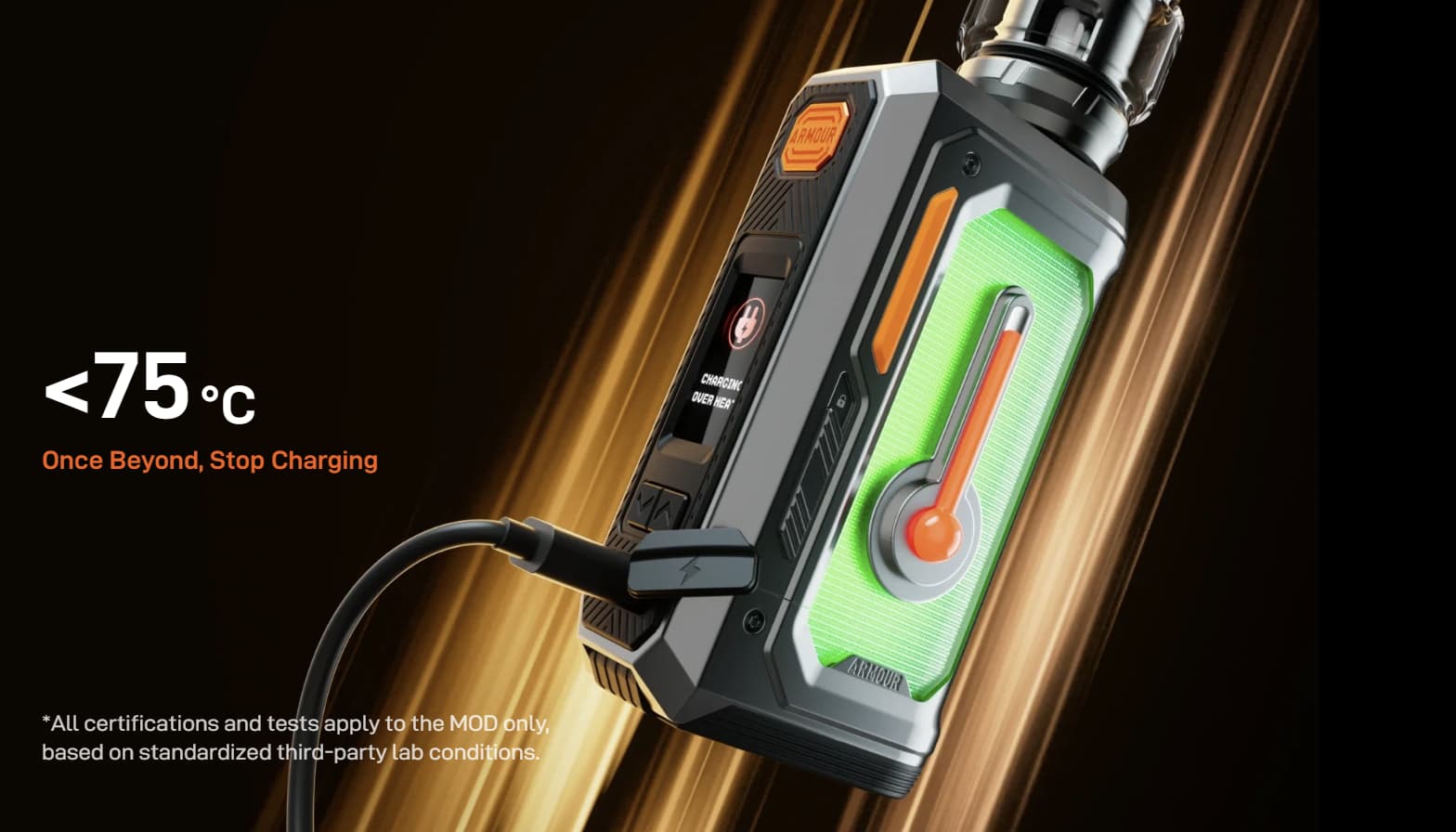
Vaporesso says its Battery Guard can cut output when the voltage difference between batteries exceeds 0.9V, with the aim of reducing risks associated with mixed, old, or worn batteries. It also incorporates charging overheat protection that stops charging when the stated threshold exceeds 75°C.
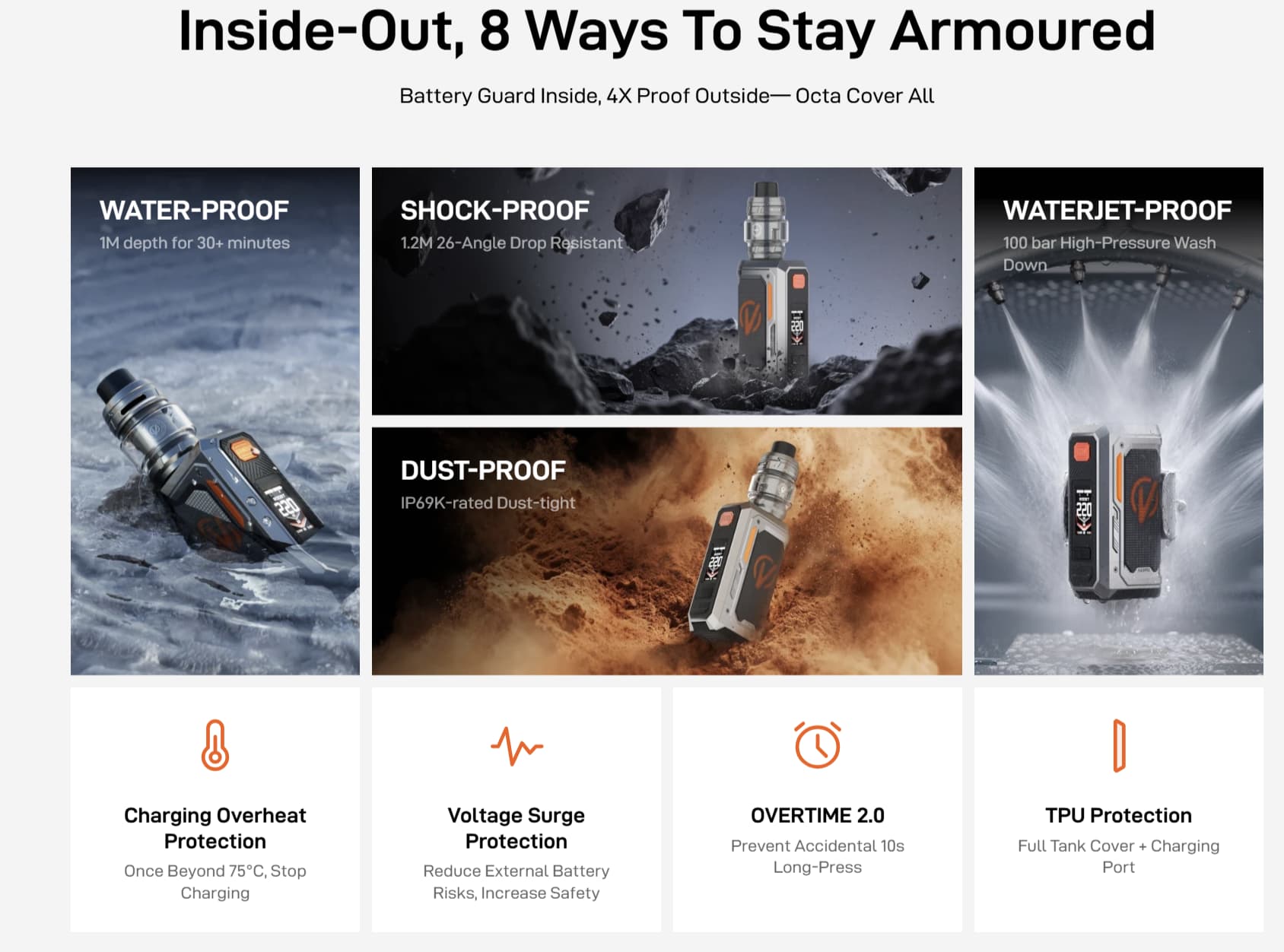
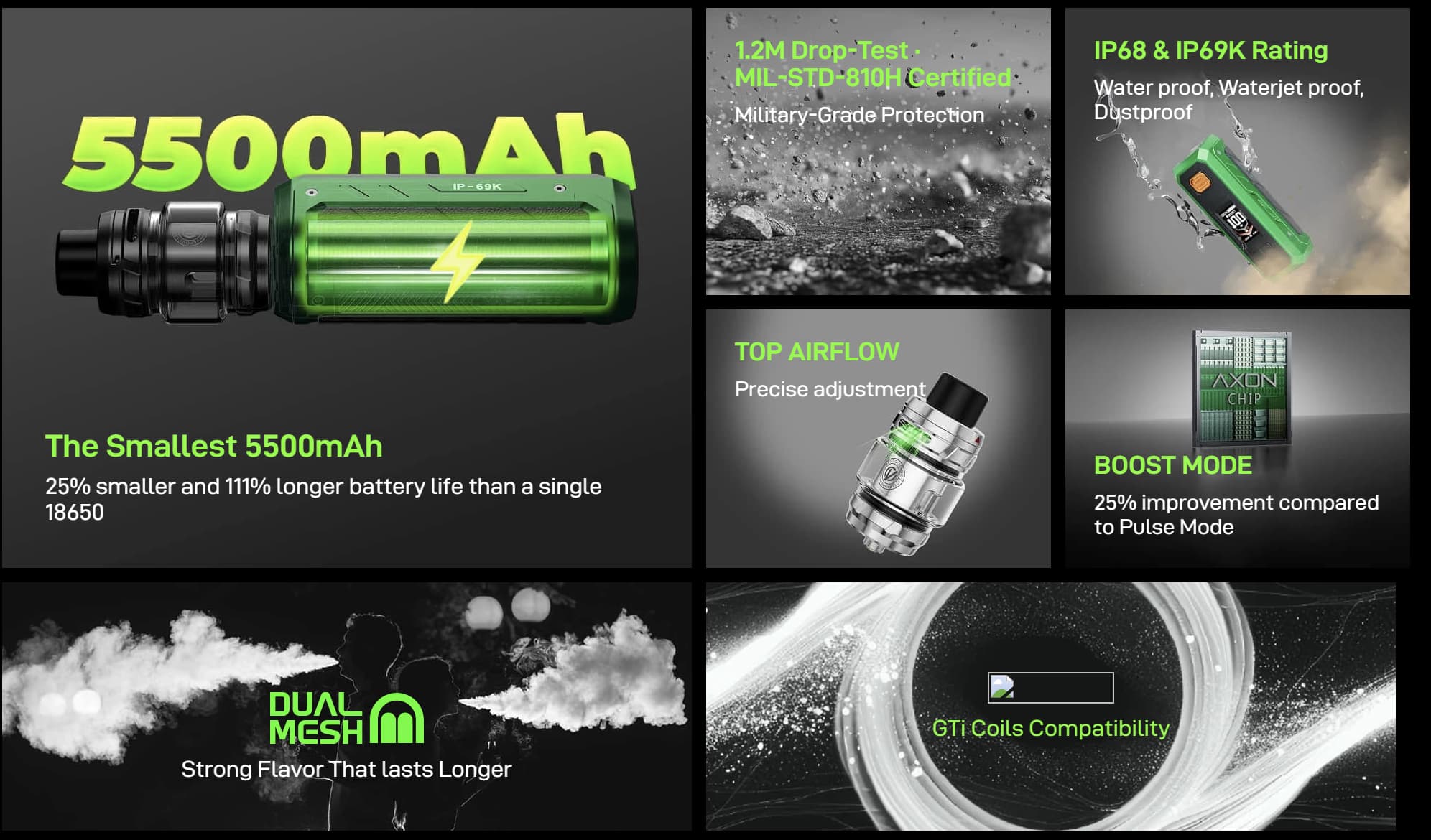
This is relevant to the OCTA’s removable-battery design because battery selection and condition become part of responsible ownership.
Performance: Where the Two Mods Actually Diverge
On paper, the ARMOUR OCTA has considerably more output headroom.
Its 220W maximum makes it the more powerful platform, while the dual-18650 architecture allows users to manage their batteries independently. For users who enjoy experimenting with different GTi coils and higher wattage settings, the additional output range is the defining feature.
The ARMOUR ULTRA takes the opposite approach. Its 100W maximum is lower, but the 5500mAh integrated battery is much more straightforward. The device is designed around endurance rather than extreme output.
There is also a useful practical point here: maximum wattage alone does not determine the quality of a vaping experience. The coil, airflow, e-liquid, resistance, and actual wattage used all influence how the device behaves. Since both products share the iTank T and the same included GTi Dual Mesh coils, the largest difference between them is the power-and-battery architecture rather than the basic tank platform.
Design and Everyday Carry
The OCTA’s 362g listed weight makes its rugged dual-battery construction noticeable. It is better understood as a substantial mod than a lightweight pocket device.
The ULTRA, at 256g, is lighter while still carrying a 5500mAh battery. Its dimensions are also shaped differently, with a narrower 31mm depth but a wider 37.6mm dimension.
Both devices use protective structural elements rather than relying solely on a smooth decorative shell. The OCTA includes TPU protection, a tank protector, silicone protection around the USB port, and an anti-collision pad.
The ULTRA uses a metal cage-like frame, tank protection, protected buttons, and a USB port cover.
So while both are designed for demanding environments, their physical design reflects their different battery strategies.
If you’re comparing other devices from the brand, our Vaporesso pod vape collection provides a broader look at the company’s latest pod systems and vape hardware.
Charging and Battery Management
This is another area where the difference is straightforward.
The ARMOUR OCTA uses two removable 18650 batteries and supports USB-C charging at 5V/2.5A. Because the batteries are removable, users can carry compatible spare cells rather than waiting for the device itself to recharge.
The ARMOUR ULTRA has a 5500mAh internal battery and supports 9V/2A or 5V/3A charging over USB-C.
The ULTRA is therefore more self-contained, while the OCTA provides the flexibility associated with replaceable cells.
Neither approach is universally better; they simply require different habits.
ARMOUR OCTA vs ARMOUR ULTRA: Which Specs Matter Most?
If you are comparing the two devices, it helps to ignore the marketing language and focus on the hardware differences.
Choose the OCTA configuration when these characteristics matter to you:
- 220W maximum output
- Dual external 18650 batteries
- Replaceable-battery convenience
- More power headroom
- Broad GTi coil compatibility
- Heavy-duty mod construction
- Dedicated battery protection features
The ULTRA’s key characteristics are different:
- 5500mAh built-in battery
- 100W maximum output
- USB-C fast-charging options
- Lower listed weight than the OCTA
- 6ml iTank T in the global kit
- Same 0.2Ω and 0.4Ω GTi Dual Mesh coils
- IP68/IP69K and MIL-STD-810H protection claims
- Built-in battery simplicity
The most important decision is therefore not simply “220W versus 100W.” It is external dual-battery flexibility versus large built-in battery convenience.
Final Thoughts
Vaporesso ARMOUR OCTA and ARMOUR ULTRA share enough hardware to feel like members of the same family, but they are aimed at different types of mod users.
The ARMOUR OCTA is the more traditional high-power option. Its dual 18650 battery configuration, 220W maximum output, extensive GTi coil compatibility, and dedicated battery protection make it a substantial platform for users who want more control over the power system.
The ARMOUR ULTRA simplifies the same general DTL concept with a 5500mAh internal battery and a 100W output ceiling. It is lighter than the OCTA as listed, supports faster USB-C charging options, and keeps the same iTank T and GTi Dual Mesh ecosystem.
In other words, the OCTA is built around replaceable-battery power and higher output, while the ULTRA focuses on battery capacity, portability, and all-in-one convenience.
Both are adult nicotine-vaping products, and nicotine is addictive. Users should follow applicable local laws, age restrictions, battery-safety guidance, and the manufacturer’s instructions.