









Choosing between two pod systems is not always about finding the device with the biggest battery or highest output. The more useful question is how each device fits the way you actually use a vape.
The VOOPOO VMATE MAX 2 and VOOPOO ARGUS Z3 are both compact rechargeable pod systems, but they take different approaches to controls and customization. The VMATE MAX 2 puts more emphasis on adjustable settings, while the ARGUS Z3 aims for a simpler experience with automatic power adjustment.
Instead of declaring an overall winner immediately, this comparison looks at the differences that are most likely to affect everyday use.
VMATE MAX 2 vs ARGUS Z3: The Basic Difference
At a glance, the two devices appear quite similar because both use rechargeable batteries, USB-C charging and replaceable pod cartridges.
The important distinction is how much control the user gets.
The VMATE MAX 2 provides adjustable output, a color display and adjustable airflow, giving users more ways to change the way the device performs.
The ARGUS Z3 takes a more automatic approach. Its power management is designed to reduce the amount of manual adjustment required.
That creates two different user experiences:
VMATE MAX 2: more control and customization.
ARGUS Z3: simpler operation with fewer adjustments.
Design: Customization vs Simplicity
The VMATE MAX 2 has a slim body and color display, while the ARGUS Z3 follows the simpler design language associated with the ARGUS family.
Rather than calling one design universally better, the difference is more about priorities.
If you enjoy seeing information such as wattage, resistance and battery status on the device, the VMATE MAX 2 has the more informative interface.
If you prefer a device that requires less interaction, the ARGUS Z3’s simpler approach may be more appealing.
For a daily pod system, this distinction can matter more than cosmetic details.
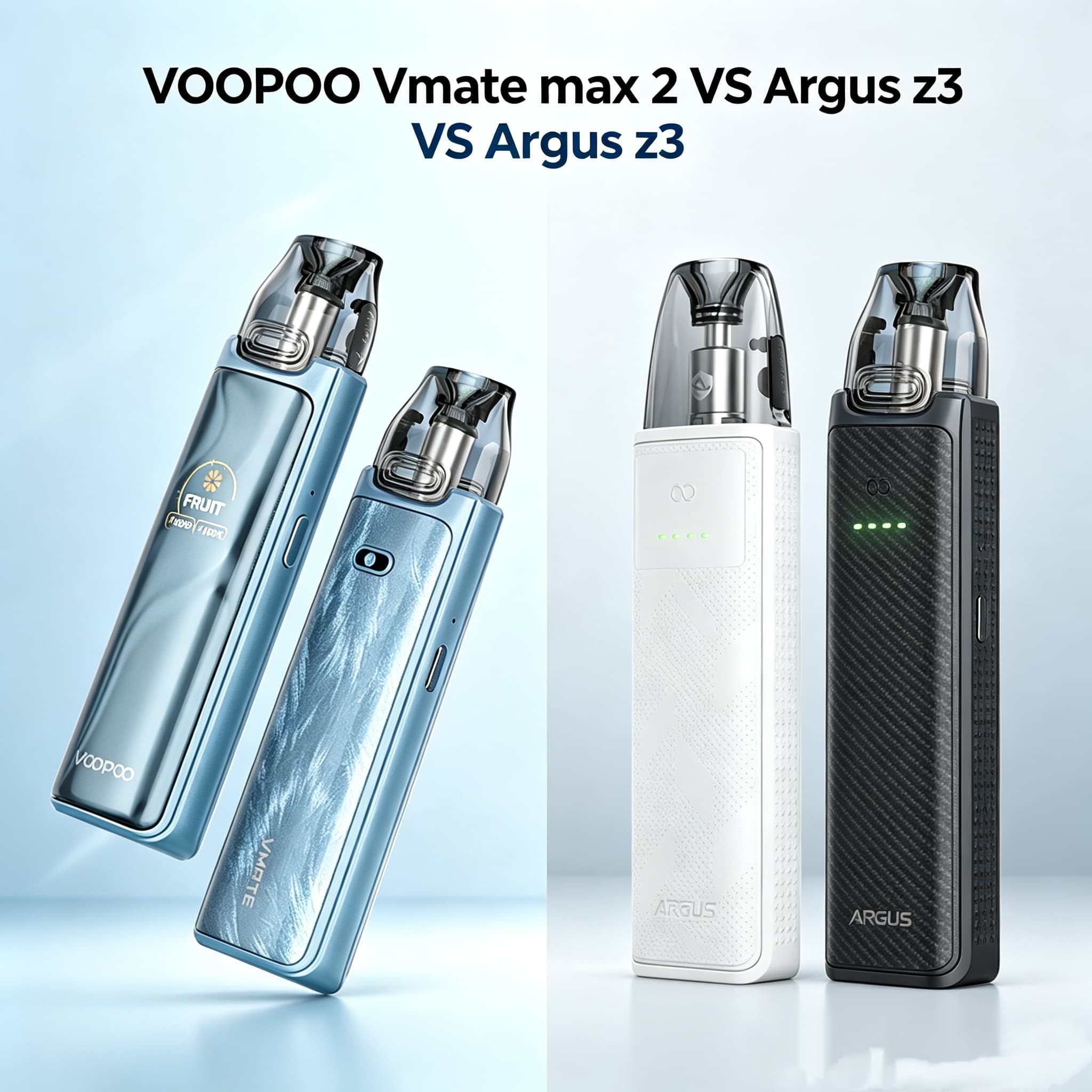
Battery: Both Use 1500mAh Capacity
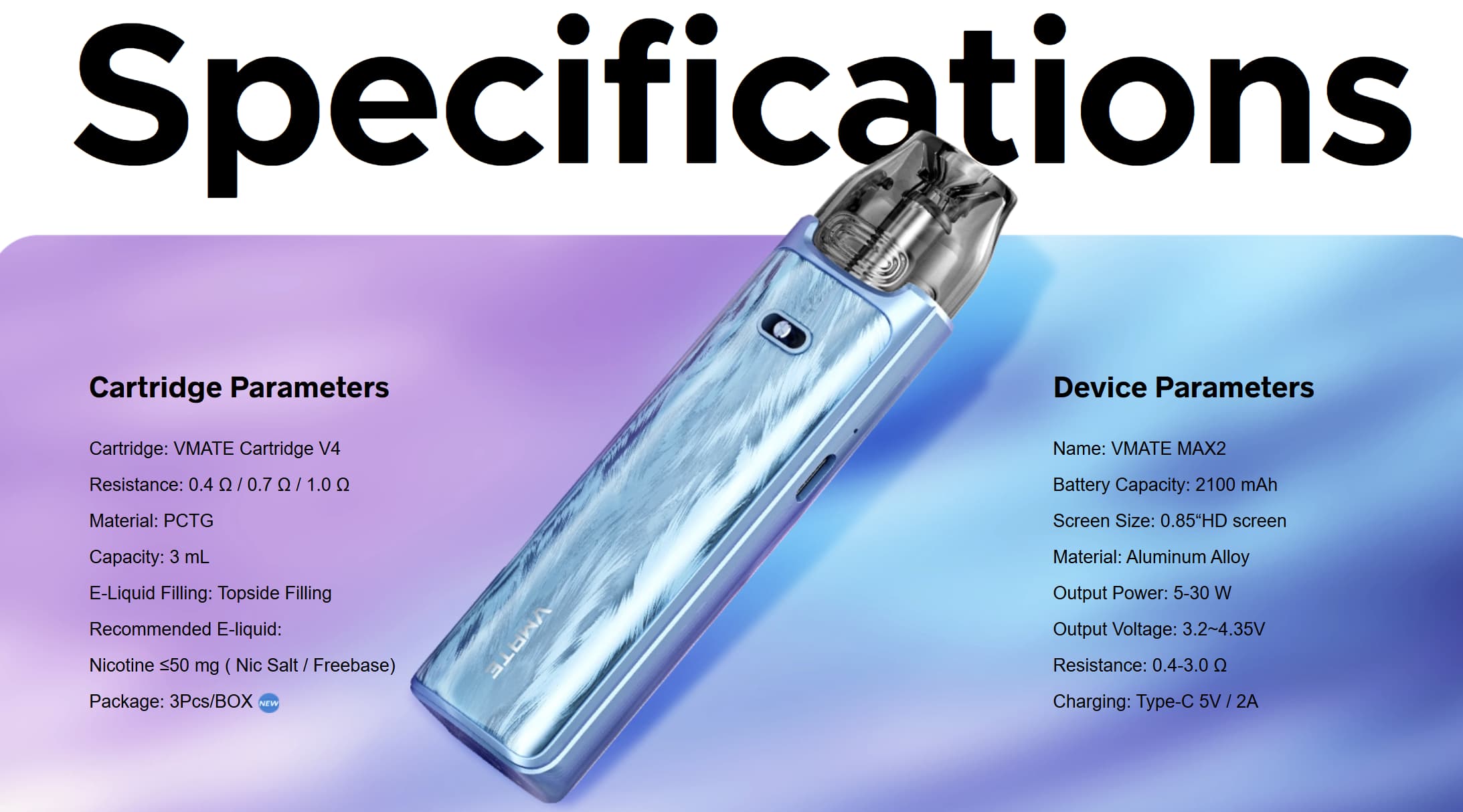
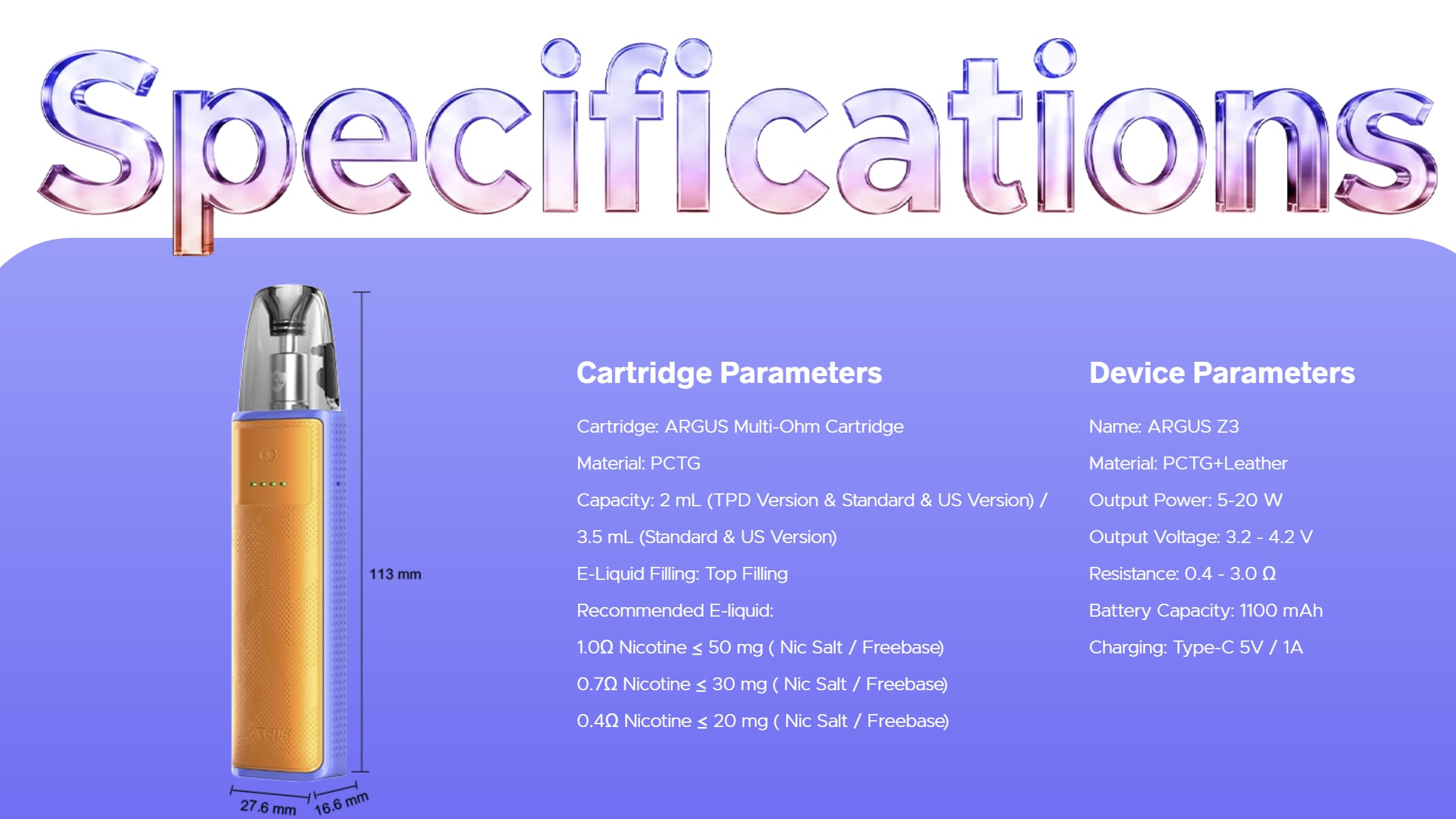
Both devices are listed with a 1500mAh rechargeable battery and USB-C charging.
That makes battery capacity less useful as a deciding factor.
Instead, actual battery endurance will depend on how each device is used.
Power level, puff duration, coil resistance, screen activity and frequency of use can all affect how quickly the battery is depleted.
Therefore, I would not describe either model as having objectively “better battery life” based only on the 1500mAh specification.
The more accurate conclusion is:
Battery capacity is essentially a tie on paper, so users should compare controls, airflow and pod compatibility instead.
Output Control: VMATE MAX 2 Has the Advantage
This is one of the clearest differences between the two devices.
The VMATE MAX 2 offers adjustable output, with the current article listing output of up to 30W in its specification table. The article’s earlier section mentions up to 35W, so the exact maximum should be verified against the official product documentation before publication.
The ARGUS Z3 uses automatic power adjustment.
That means the VMATE MAX 2 is the better choice for users who actually want manual control.
You can adjust the output according to your preferred pod resistance and draw.
The ARGUS Z3 is more straightforward because the device handles more of that process automatically.
Pod Compatibility Matters More Than a Simple Winner
The VMATE MAX 2 uses VMATE Top Fill Cartridges, while the ARGUS Z3 works with the ARGUS Top Fill Pod family.
This difference is important for existing VOOPOO users.
If you already own compatible VMATE cartridges, staying with the VMATE platform may be more convenient.
Likewise, existing ARGUS users may prefer the Z3 because they are already familiar with the ARGUS ecosystem.
Before buying either device, check the currently available pods and replacement options for your preferred refillable pod system.
That can have a bigger impact on long-term convenience than a small difference in specifications.
Airflow: More Adjustment on the VMATE MAX 2
The VMATE MAX 2 includes adjustable airflow, allowing users to change the draw according to their preference. The current article positions it for both MTL and RDL use.
The ARGUS Z3 is positioned toward a simpler MTL-oriented experience.
This creates another straightforward choice.
Prefer experimenting with airflow?
The VMATE MAX 2 makes more sense.
Prefer a straightforward draw without frequent adjustment?
The ARGUS Z3 may be easier to live with.
Neither approach is inherently better.
Display and Controls
The VMATE MAX 2 has a color display that can show information including:
- battery level
- wattage
- resistance
- puff information
- output settings
The ARGUS Z3 takes a simpler approach with LED indicators and automatic power management.
This is a good example of how specifications translate into different user experiences.
A display is useful if you regularly want to check detailed information.
But if you mainly want to inhale and go, a simpler interface can actually be an advantage.
Which One Gives You More Control?
This is where the VMATE MAX 2 clearly separates itself.
Its combination of adjustable output, adjustable airflow and a detailed display gives experienced users more parameters to work with.
The ARGUS Z3 deliberately removes some of that complexity.
So instead of asking:
Which device has more features?
A better question is:
Do you actually want those additional controls?
If yes, choose the VMATE MAX 2.
If no, the ARGUS Z3’s simpler operation may be more convenient.
VMATE MAX 2 vs ARGUS Z3 Specification Comparison
| Feature | VOOPOO VMATE MAX 2 | VOOPOO ARGUS Z3 |
|---|---|---|
| Battery | 1500mAh | 1500mAh |
| Maximum output | Verify official specification | Automatic adjustment |
| Charging | USB-C | USB-C |
| Pod platform | VMATE Top Fill Cartridge | ARGUS Top Fill Pod |
| Airflow | Adjustable | MTL-focused |
| Display | Color display | LED indicators |
| Activation | Draw/button | Auto-draw |
| Control style | More customizable | More automatic |
| Best suited to | Users wanting control | Users wanting simplicity |
Important: Before publishing, verify the maximum VMATE MAX 2 wattage because the existing page currently contains both 35W and 30W references.
That inconsistency should definitely be corrected.
Which Device Is Easier to Use?
The ARGUS Z3 has the simpler learning curve.
Automatic power adjustment means users don’t need to spend as much time choosing wattage.
The VMATE MAX 2 requires more interaction, but that isn’t necessarily a disadvantage.
For an experienced user, having control over wattage and airflow can make the device more enjoyable.
So:
ARGUS Z3 → simpler
VMATE MAX 2 → more configurable
Which One Is Better for MTL?
If your priority is a straightforward mouth-to-lung (MTL) vape, the ARGUS Z3 is the more obvious choice based on its positioning.
The VMATE MAX 2 is more flexible because its airflow and output controls allow users to experiment with different draw characteristics.
Therefore, users who already know what type of draw they like may prefer the flexibility of the VMATE MAX 2.
Users who simply want a straightforward MTL setup may find the Z3 easier.
Which One Should You Choose?
Choose the VMATE MAX 2 if you want:
- adjustable output
- adjustable airflow
- a color display
- more control over the vaping experience
- greater flexibility between MTL and RDL
- more detailed device information
Choose the ARGUS Z3 if you want:
- automatic power adjustment
- simpler controls
- an easier learning curve
- a straightforward MTL-oriented experience
- less manual adjustment
Consider something else if:
Neither model is ideal if your priority is a much larger external battery, advanced standalone features, or a completely different pod ecosystem.
The Real Difference Is Control
The VMATE MAX 2 and ARGUS Z3 don’t need a forced “winner.”
Their biggest difference is the amount of control they give the user.
The VMATE MAX 2 is designed around customization. Its adjustable output, airflow control and color display make it more interesting for users who like to fine-tune their setup.
The ARGUS Z3 takes the opposite approach. Automatic power management and a simpler interface reduce the number of decisions users need to make.
That means the better device depends on your preferred experience rather than a simple specification ranking.
Final Verdict
The VOOPOO VMATE MAX 2 is the more suitable choice for users who want to adjust their pod system and experiment with different settings.
The VOOPOO ARGUS Z3 makes more sense for users who value simplicity and want the device to handle more of the setup automatically.
Both use a 1500mAh battery and USB-C charging, so battery capacity alone doesn’t separate them. The more meaningful differences are output control, airflow adjustment, display functionality and overall ease of use.
If customization is important, go with the VMATE MAX 2.
If simplicity is more important, the ARGUS Z3 is the more straightforward option.
That is a more useful comparison than simply naming one device the winner.
Before you update the page
There are three things I would definitely fix:
- Remove every “Winner: Tie / Winner: VMATE MAX 2 / Winner: ARGUS Z3” block. They make the article look formulaic.
- Correct the 30W/35W inconsistency before publishing. The current article says both figures.
- Remove unsupported phrases such as “exceptional flavor performance,” “excellent flavor,” “premium design,” “reliable,” and “hard to beat.” The current page uses these repeatedly without independent testing evidence.
This version gives the page a different editorial purpose: helping readers decide based on control vs simplicity, rather than producing another generic VOOPOO specification comparison.