










Nicotine pouches have become increasingly popular among adults seeking a smoke-free and tobacco-leaf-free way to consume nicotine. Available in a wide range of strengths, flavors, and formats, these small pouches offer flexibility and convenience. However, choosing the right nicotine strength can be confusing, especially for first-time users.
Selecting a pouch that matches your nicotine tolerance is important for both comfort and satisfaction. A pouch that is too weak may leave cravings unmet, while one that is too strong can cause unpleasant side effects such as dizziness, nausea, or headaches. Understanding how nicotine strengths work can help users make a more informed decision.
Understanding Nicotine Pouch Strength
Nicotine pouch strength is typically measured in milligrams (mg) of nicotine per pouch. Depending on the brand, strengths can range from as little as 2 mg per pouch to more than 20 mg per pouch.
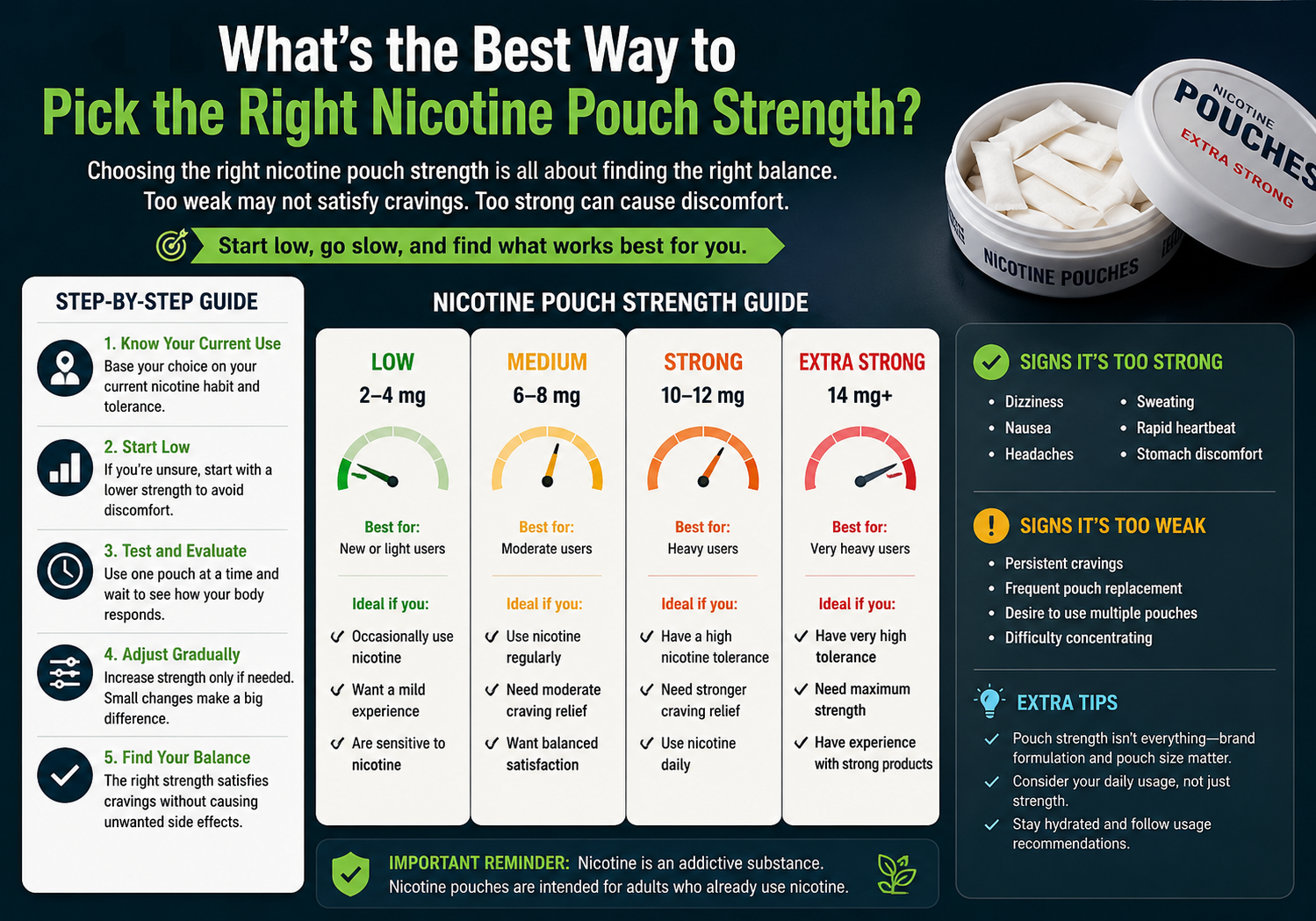
While exact categories vary among manufacturers, nicotine pouches are generally grouped into the following ranges:
- Low strength: 2–4 mg
- Medium strength: 6–8 mg
- Strong: 10–12 mg
- Extra strong: 14 mg and above
It’s important to note that the nicotine content listed on the package does not always translate directly into how strong a pouch feels. Factors such as pouch size, moisture level, formulation, and individual tolerance can influence the overall experience.
Start with Your Current Nicotine Use
The best way to choose a nicotine pouch strength is to evaluate your current nicotine consumption.
For Non-Nicotine Users
Individuals who do not currently use nicotine should generally avoid nicotine pouches altogether. Nicotine is an addictive substance, and starting nicotine use when you are not already a user can increase the risk of dependence.
For Light Nicotine Users
Adults who occasionally use nicotine products or smoke only a few cigarettes per day may find lower-strength pouches more comfortable.
Typical starting range:
- 2–4 mg nicotine per pouch
This level can help satisfy mild cravings while reducing the likelihood of nicotine-related discomfort.
For Moderate Users
People who regularly use nicotine but do not consider themselves heavy consumers often prefer medium-strength products.
Typical starting range:
- 6–8 mg nicotine per pouch
This category is commonly chosen by adults transitioning from cigarettes, vaping, or other nicotine products.
For Heavy Nicotine Users
Adults with a high nicotine tolerance, such as those who smoke heavily or use stronger nicotine products regularly, may prefer stronger pouch options.
Typical range:
- 10–12 mg or higher
However, even experienced users should approach higher strengths cautiously, as nicotine delivery can vary significantly between products.
Signs That a Pouch Is Too Strong
Choosing the strongest option available is not always the best approach. Excessive nicotine intake can lead to uncomfortable symptoms.
Common signs that a pouch may be too strong include:
- Dizziness
- Nausea
- Headaches
- Increased heart rate
- Sweating
- Hiccups
- Stomach discomfort
If these symptoms occur, it may be worth switching to a lower-strength product or reducing usage frequency.
Signs That a Pouch Is Too Weak
On the other hand, a pouch that does not adequately satisfy nicotine cravings may leave users feeling unsatisfied.
Potential indicators include:
- Persistent cravings
- Frequent pouch replacement
- Desire to use multiple pouches at once
- Difficulty concentrating due to nicotine withdrawal
If these issues occur consistently, a slightly stronger strength may be more appropriate.
Why Starting Lower Is Usually Better
Many experienced nicotine users recommend starting with a lower strength than you think you need and adjusting gradually if necessary.
This approach offers several advantages:
- Reduces the risk of nicotine discomfort
- Helps identify your true tolerance level
- Makes it easier to find the minimum effective strength
- Can potentially reduce overall nicotine consumption
Moving up in strength is generally easier than dealing with the unpleasant effects of using a pouch that is too strong.
Consider Frequency of Use
Strength is only one part of the equation. Frequency of use also affects total nicotine intake.
For example:
- A person using five 4 mg pouches daily consumes approximately 20 mg of nicotine.
- A person using two 10 mg pouches daily consumes approximately 20 mg of nicotine.
Understanding both strength and usage patterns can help users manage their nicotine intake more effectively.
Brand Differences Matter
Two nicotine pouches with identical nicotine ratings may feel very different. Factors such as:
- Pouch size
- Moisture content
- Flavor ingredients
- Nicotine formulation
- Release speed
can influence how quickly nicotine is absorbed and how strong the experience feels.
For this reason, users should avoid assuming that all 6 mg or 8 mg products will feel exactly the same.
Tips for First-Time Nicotine Pouch Users
If you are new to nicotine pouches, consider the following guidelines:
- Start with a lower strength.
- Use only one pouch at a time.
- Follow the manufacturer’s recommended usage instructions.
- Wait before using another pouch to gauge the effects.
- Stay hydrated.
- Avoid combining multiple nicotine products unnecessarily.
Taking a gradual approach can help create a more comfortable experience and reduce the likelihood of unwanted side effects.
The Bottom Line
The best nicotine pouch strength is the one that satisfies your nicotine needs without causing discomfort. Your ideal choice depends on your existing nicotine tolerance, usage habits, and personal preferences.
For most adult nicotine users, starting with a lower or medium strength and adjusting gradually is often the safest and most practical strategy. Paying attention to how your body responds can help you find the right balance between satisfaction and comfort.
Ultimately, nicotine pouch strength is not about choosing the strongest option available—it’s about choosing the strength that works best for your individual needs.