










Xiaomi has started rolling out the third batch of devices for the HyperOS 4 beta program, bringing the latest software test build to eight additional smartphones and Xiaomi tablets.
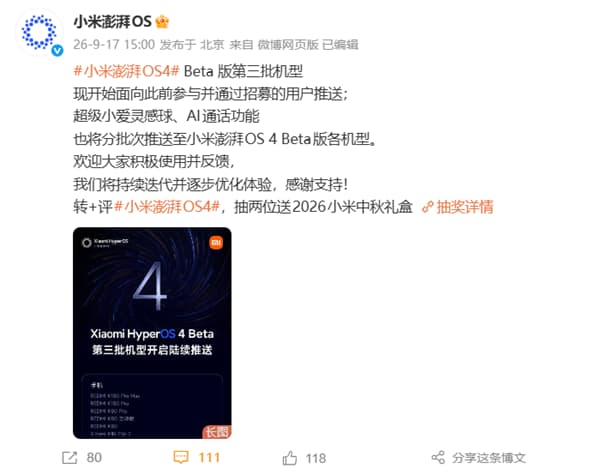
The new rollout is available to users who previously joined the beta recruitment program and successfully passed the selection process. The supported devices include models from the REDMI K series, MIX lineup, and Xiaomi Tablet family.
Eight Devices Join the HyperOS 4 Beta
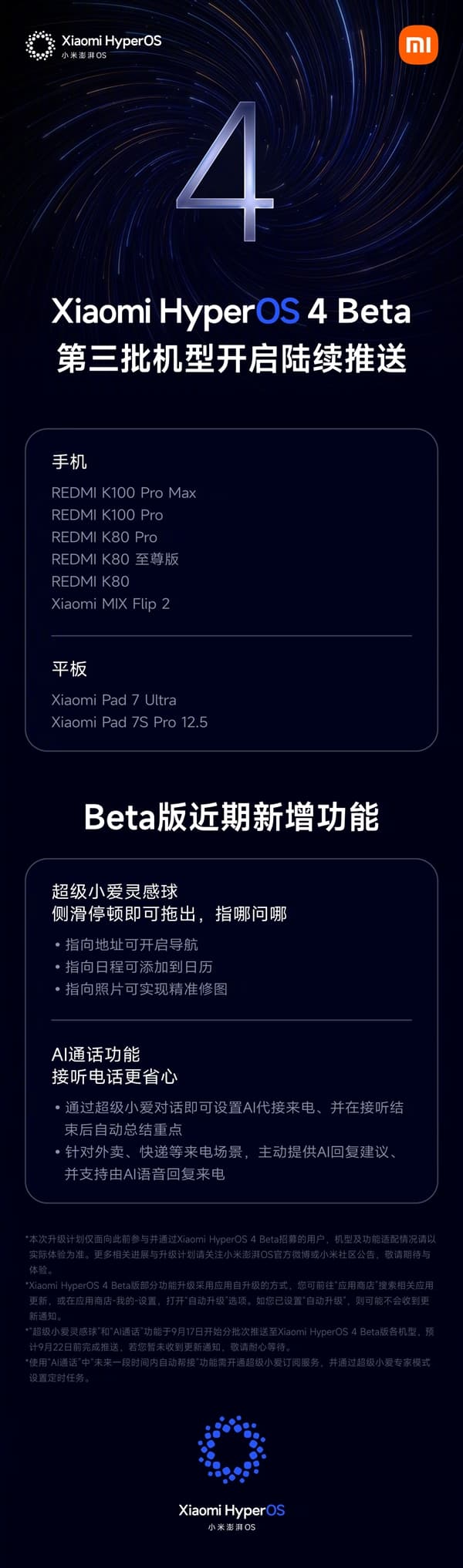
The third beta batch covers the following eight devices:
- REDMI K100 Pro Max
- REDMI K100 Pro
- REDMI K80 Pro
- REDMI K80 Supreme Edition
- REDMI K80
- Xiaomi MIX Flip 2
- Xiaomi Tablet 7 Ultra
- Xiaomi Tablet 7S Pro 12.5
Xiaomi says the latest beta build does more than introduce the system’s existing features. It also adds new AI-powered functions designed to make everyday tasks easier to complete directly from the interface.
HyperOS 4 Adds a More Interactive AI Assistant
One of the major additions is the Super Xiaoice Inspiration Ball, which can be accessed by dragging from the side of the screen and holding the gesture.
The feature is designed to understand what the user is pointing at and then perform related actions. For example, users can point to an address to start navigation or select a schedule to add it to the calendar.
It can also recognize photos for more precise editing, making the feature less dependent on manually opening individual apps and entering information.
These functions show Xiaomi’s broader approach to integrating AI into common smartphone interactions rather than limiting Xiaomi AI features to standalone chat or search tools.
AI Calling Brings Automatic Call Assistance
The latest HyperOS 4 beta also introduces an AI Calling feature.
According to Xiaomi, users can configure AI call answering through a Xiaoice conversation. After handling a call, the system can automatically summarize the important information.
The feature is also designed for specific everyday scenarios. Xiaomi says it can provide suggested replies for calls related to services such as food delivery and package delivery.
AI voice replies are also supported for incoming calls, giving users another way to handle simple conversations without manually responding to every request.
Xiaomi says both the Super Xiaoice Inspiration Ball and AI Calling will be rolled out to the supported HyperOS 4 beta devices in stages.
HyperOS 4 Focuses on a Softer Visual Design
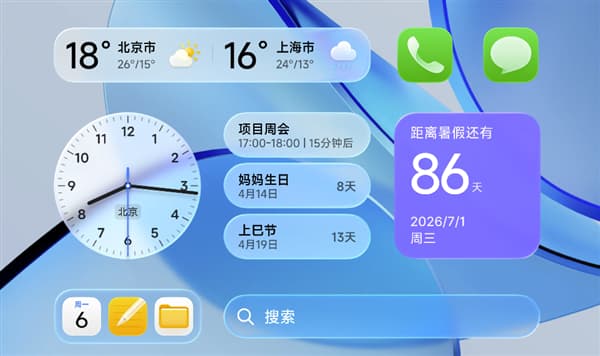
Beyond AI features, Xiaomi HyperOS 4 introduces a new visual direction built around what the company describes as a “Life-Aware Aesthetic” design language.
The interface uses soft glass-style visual materials, with panel transparency able to change according to the content displayed on the screen.
The system also adds flowing light effects during certain drag-and-drop interactions. As users move elements around the interface, the visual effects follow the movement, creating additional depth and motion.
These changes are intended to make everyday interactions feel more dynamic while maintaining a consistent visual style across the operating system.
More Lock Screen and Home Screen Customization
HyperOS 4 also expands customization options for the desktop and lock screen.
Users can reportedly move the clock to different positions on the lock screen, while notification management has been adjusted to provide more flexible stacking and storage options.
Folder customization has also been expanded, including an option to switch folder sizes more easily. In addition, desktop widgets can be grouped together, giving users more ways to organize information without filling the home screen with separate widgets.
Xiaomi Targets Smoother System Performance
Performance optimization is another part of the HyperOS 4 beta.
Xiaomi says it has made deeper changes to the underlying system kernel and introduced technologies such as load calculation and memory preloading.
The company is also working with a dedicated application runtime environment to improve application startup and overall system responsiveness.
Rather than focusing only on visual changes, these system-level optimizations are intended to improve how quickly apps launch and how smoothly the interface operates during everyday use.
HyperOS 4 Beta Rollout Continues in Stages
The third HyperOS 4 beta batch expands Xiaomi’s testing program to eight more devices, while the new AI calling and interactive assistant features add another layer to the software update.
The combination of AI functions, expanded customization, a refreshed interface, and system-level performance improvements makes this beta release broader than a simple visual update.
Because this is still a beta program, feature availability can vary between devices and software builds. Xiaomi is expected to continue refining HyperOS 4 before the wider stable rollout, with additional devices and features potentially being added during the testing process.