










July 6 – Igeekphone
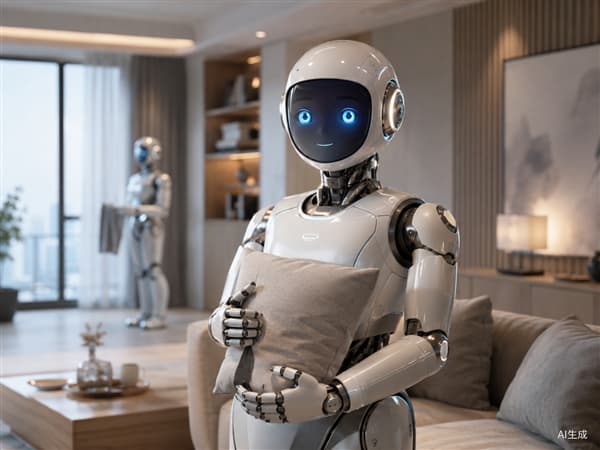
Humanoid robots could become one of the fastest-growing sectors in artificial intelligence over the next decade, with global shipments projected to increase 70-fold by 2035, according to a new industry report from Goldman Sachs.
The report forecasts rapid growth in both humanoid robots and the AI technologies that power them, driven by persistent labor shortages and advances in physical AI.
Humanoid Robots Expected to Reach 1.4 Million Annual Shipments
Goldman Sachs classifies humanoid robots, autonomous driving systems, and intelligent industrial equipment as part of the emerging field of physical AI.
Unlike traditional AI models that primarily generate text or images, physical AI systems must understand and interact with the real world, accounting for factors such as gravity, friction, temperature, and safety while operating in dynamic environments.
Among these applications, humanoid robots are viewed as the industry’s most promising growth area.
The report estimates that global humanoid robot shipments will total just 20,000 units in 2025, but are expected to climb to approximately 1.4 million units annually by 2035—a 70-fold increase in just ten years.
Labor Shortages Are Driving Demand
Goldman Sachs believes the biggest driver behind this growth will be the global shortage of workers.
In the United States alone, the manufacturing sector faces more than one million unfilled material-handling jobs, making repetitive factory tasks particularly well suited for automation through humanoid robots.
However, the report cautions that widespread commercial deployment will take time. Large-scale adoption is not expected until 2027 to 2029, as the industry is still in the technology validation and early commercialization stage.
World Models Could Become AI’s Next Computing Boom
Beyond robotics, Goldman Sachs highlights world models as the next major source of demand for AI computing infrastructure.
While today’s large language models primarily process text and images, world models are designed to simulate complex real-world systems and causal relationships, including physical environments, supply chains, economic changes, and public policy impacts.
The report identifies two major application areas:
- Physical world models, supporting humanoid robots, autonomous vehicles, and industrial simulation.
- Social world models, enabling enterprise strategy, investment analysis, economic forecasting, and policy simulation.
Rather than replacing existing large language models, world models are expected to complement them by creating entirely new computing workloads.
Because high-fidelity simulations require continuous large-scale computation, Goldman Sachs believes that if adoption accelerates faster than expected, current market forecasts for AI servers, data centers, and power infrastructure could prove too conservative.
AI Is Moving Beyond the Digital World
According to the report, artificial intelligence is entering a new phase—shifting from generating online content to interacting directly with the physical world.
Humanoid robots are expected to become one of the primary platforms for this transition. Combined with long-term labor shortages and continued advances in world-model technology, Goldman Sachs believes the industry is well positioned for significant expansion over the next decade.
The firm also expects companies across the robotics supply chain—including hardware manufacturers, semiconductor suppliers, AI infrastructure providers, and computing power vendors—to benefit from the sector’s rapid growth.