









July 7 – Igeekphone News
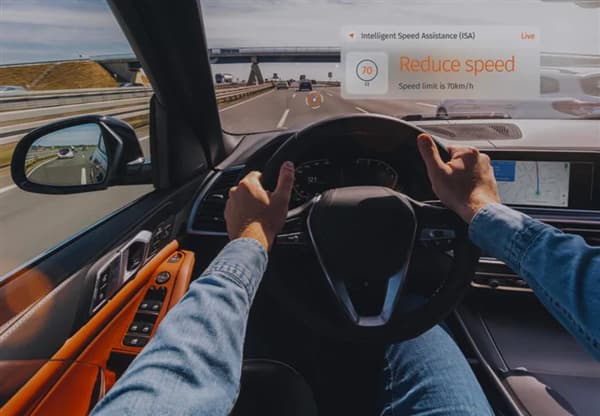
Beginning July 1, repeat speeding offenders in Virginia can now be ordered by a judge to install an Intelligent Speed Assistance (ISA) system in their vehicles, making the state the first in the U.S. to fully implement a court-ordered speed-limiting program.
Under the new law, once a vehicle reaches the posted speed limit, the ISA system prevents it from accelerating any further.
Court-Ordered ISA Replaces License Suspension
The legislation, known as HB2096, allows judges to require eligible reckless drivers to install an ISA device as an alternative to having their driver’s licenses suspended.
The law primarily targets repeat reckless driving offenders, including drivers convicted of extreme speeding offenses such as traveling more than 100 mph (161 km/h).
Under Virginia law, driving 20 mph or more above the posted speed limit, or faster than 85 mph regardless of the speed limit, is classified as reckless driving. Convicted drivers can face penalties of up to 12 months in jail, fines of up to $2,500, and a driver’s license suspension of up to six months.
How the ISA System Works
The Intelligent Speed Assistance technology is provided by LifeSafer ISA and combines GPS location data with digital speed limit information to monitor vehicle speed in real time.
Once the vehicle reaches the legal speed limit, the system prevents further acceleration while allowing the driver to maintain speed or slow down normally.
According to Michael Traversa, president of LifeSafer ISA, the system does not suddenly apply the brakes or shut off the vehicle.
“Once the vehicle reaches the local speed limit, it simply won’t be able to accelerate any further,” Traversa explained, describing it as a dynamic speed limiter rather than an intrusive safety system.
First Statewide Court-Ordered Program in the U.S.
While Virginia is the first state to roll out the program statewide, it is not the first U.S. jurisdiction to adopt the concept.
The District of Columbia passed similar legislation in 2024 and has already begun implementation, although no performance data has been released. Washington State has also approved comparable legislation, but its law will not take effect until 2029. Meanwhile, Maryland is advancing its own version of the program.
Virginia’s approach is unique because judges can begin ordering ISA installations immediately without requiring additional pilot programs.
Supporters and Critics Divided
Supporters argue that a relatively small number of repeat speeding offenders are responsible for a disproportionate share of serious traffic accidents, making ISA an effective way to reduce dangerous driving while allowing offenders to retain limited driving privileges.
Research conducted by the U.S. Department of Transportation’s ITS Joint Program Office found that after Intelligent Speed Assistance systems were introduced, the amount of time repeat offenders spent driving at excessive speeds fell by 49.22%.
Critics, however, argue that the technology represents another step toward increased electronic control over vehicles and driver behavior, raising concerns about government oversight and personal freedom.