











Word around the tech world about a folding iPhone had been circulating for so long that nobody really batted an eye when the announcement finally arrived. Still, seeing the iPhone Duo hit the stage made everything feel official. True to form, Apple bypassed the obvious guesses like “iPhone Fold” or “iPhone Ultra,” settling instead on a name nobody had penciled into their bingo cards.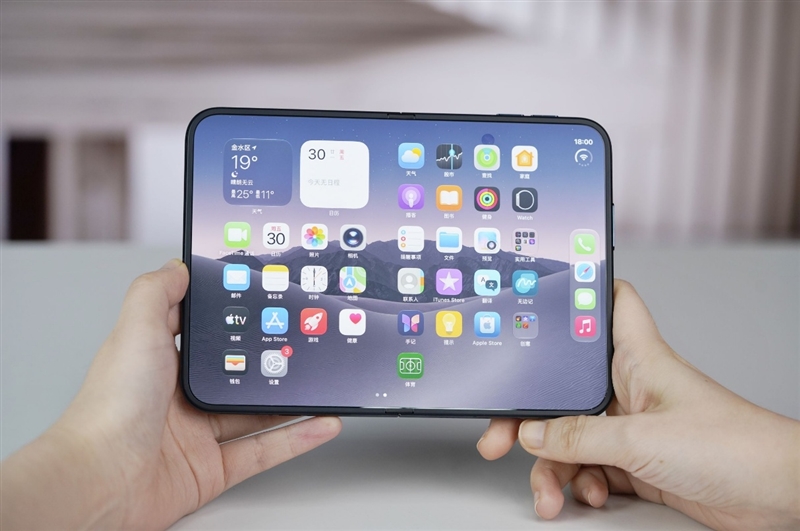
Industry chatter suggests the “Duo” moniker is a nod to the 1990s PowerBook Duo, though for most of us, it immediately brings to mind Microsoft’s dual-screen experiment, the Surface Duo.
Because the company that originally defined the modern smartphone took years to enter the foldable arena, critics have been quick to accuse Apple of losing its innovative edge. Defenders, on the other hand, point to Cupertino’s familiar playbook: wait on the sidelines until both hardware and software mature enough to set the gold standard for everyone else.
Either way, the wait is over, and the device is finally in our hands.
While the iPhone Duo brings plenty of fresh engineering to the table, arriving late to the party means you can clearly see where it borrowed homework from existing foldables.
Among the standard large book-style, compact flip, and newer wide-fold layouts, Apple committed to the wide-fold format. Both panels use a 2:1 aspect ratio, the exact proportions of a standard A4 sheet of paper.
Apple didn’t invent this geometry, of course, yet having them adopt it practically validates the design overnight. Don’t be surprised if rival manufacturers standardize around these exact proportions next year.
Both the cover and main displays share that identical aspect ratio. On the outside sits a 5.4-inch Super Retina XDR screen, opening up to a 7.6-inch foldable Super Retina XDR panel inside. Apple applied a nano-texture finish to the interior display, which cuts down glare and hides the physical crease that usually plagues folding glass.
Under the hood, the Duo matches the iPhone 18 Pro lineup thanks to the shared A20 Pro chip. Camera hardware takes a slight step back, however, dropping down to a dual-lens setup with just the main and ultra-wide sensors.
Trimming down that camera array allowed engineers to shave the chassis down to an impressive 5.2mm, making it thinner when opened than even the iPhone Air. Paired with a titanium frame and reinforced hinge, the hardware feels remarkably solid despite its slim profile.
So, did Apple actually nail the foldable formula on its first try, and is it enough to win over skeptics? Let’s dive in and find out.
Design and Build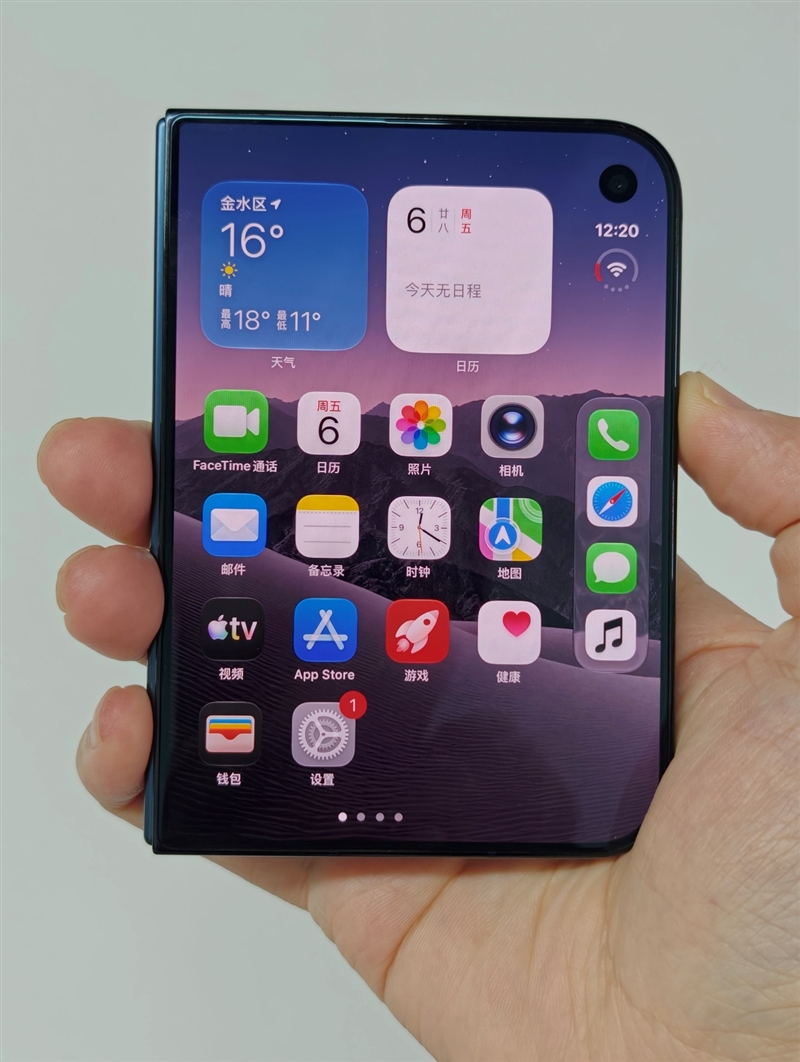
Right out of the box, the iPhone Duo sticks strictly to Apple’s signature minimalist aesthetic. The front features a true-to-size image of the handset, while the sides are kept clean with just the Apple logo and “iPhone” branding. Because Apple continues to omit power adapters from its lineup, the box is noticeably slimmer and sleeker than traditional smartphone packaging, a design choice that obviously cuts down heavily on shipping expenses. Inside, you won’t find much beyond the essentials: the handset itself, a braided charging cable, and a small documentation card tucked neatly underneath.
As Apple’s first entry into the foldable market, the iPhone Duo utilizes a 2:1 aspect ratio for both its cover display and inner folding screen, ensuring visual proportions remain completely uniform whether the device is open or closed. Notably, these dimensions mirror those of the Xiaomi 18 Fold, aligning closely with what local buyers already expect from a standard book-style foldable.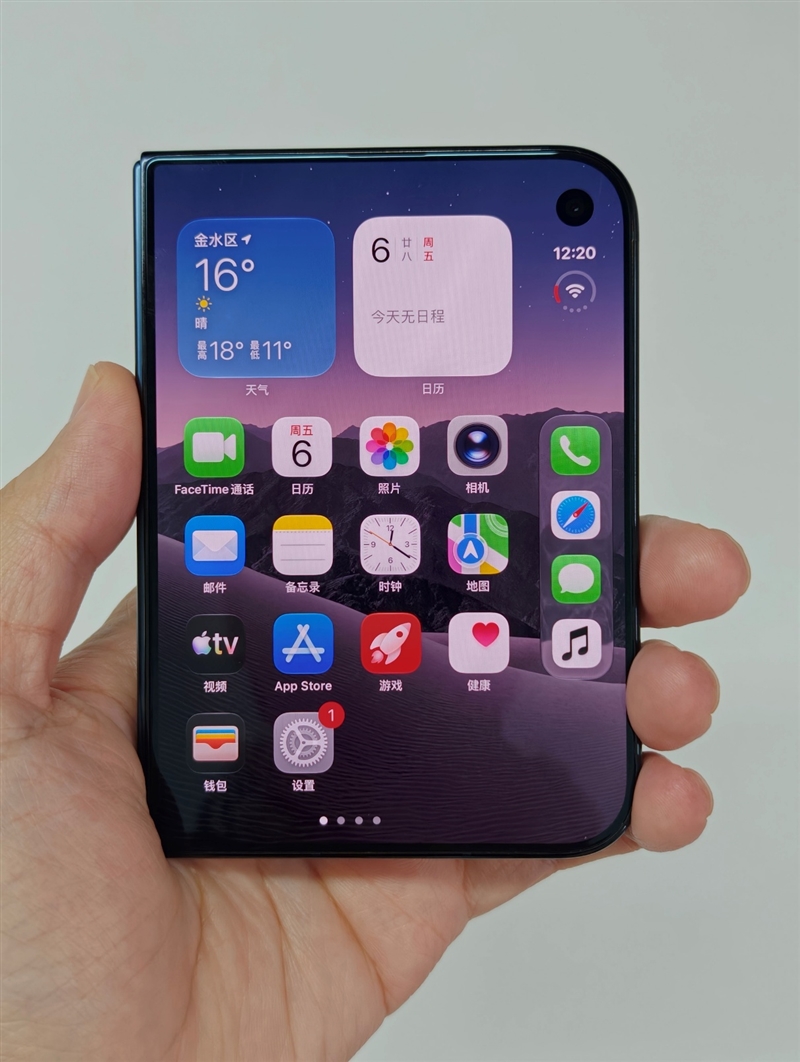
Buyers can choose between two finishes: Starlight White and Midnight. The deep blue Midnight review unit sports a Ceramic Shield back with a micro-matte texture, creating a sharp visual contrast against the glossy camera housing. Around back, Apple opted for a streamlined dual-camera setup. Its 48-megapixel Fusion system pairs a primary wide lens with an ultra-wide shooter, leaving out a dedicated telephoto lens.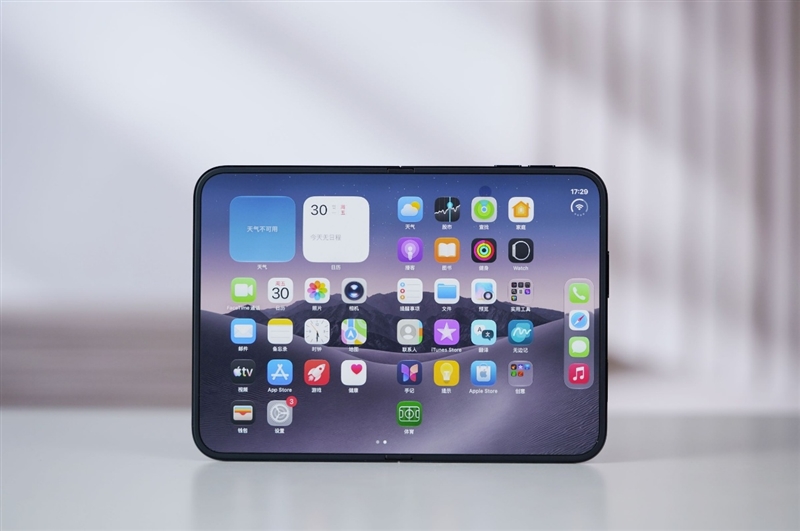
Surrounding the device is a scratch-resistant, deep-blue titanium chassis that feels unmistakably high-end in the hand. Measuring just 5.2mm thick when opened flat, the iPhone Duo undercuts even the iPhone Air to claim the title of Apple’s thinnest handset ever. When closed, the profile comes in at a manageable 11.3mm.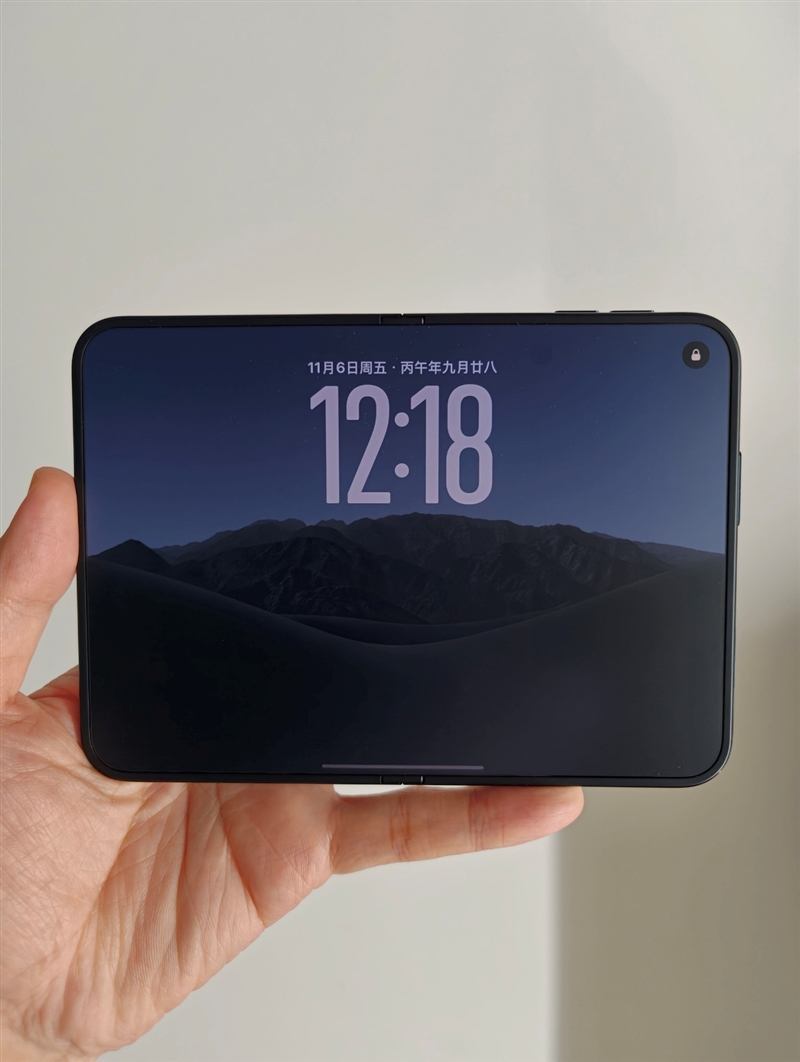
Engineering a frame this thin clearly required a few hardware compromises. Apple relocated the volume rockers to the top edge of the phone and dropped the Action Button entirely, a decision that might frustrate longtime users accustomed to having a quick physical mute or shortcut switch. That leaves just two controls along the side edge: a Touch ID-integrated power button and the Camera Control button.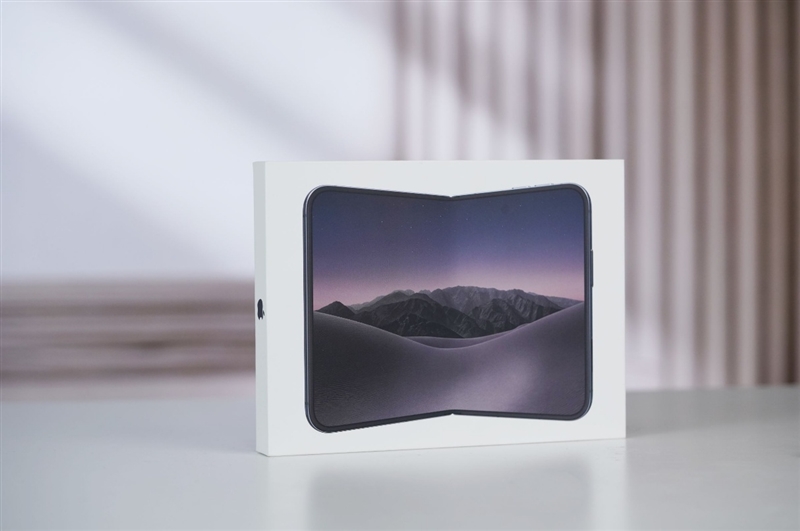
For media consumption, diagonally positioned speakers deliver a surprisingly wide, immersive stereo field during video playback. Software navigation has also been tweaked to fit the form factor. Whether folded or held horizontally, the familiar bottom Dock shifts over to the right edge as a vertical bar, making thumb navigation much easier for right-handed users. It only snaps back to its traditional bottom placement, resembling an iPad mini, when you rotate the unfolded screen into portrait mode.
Foldable Experience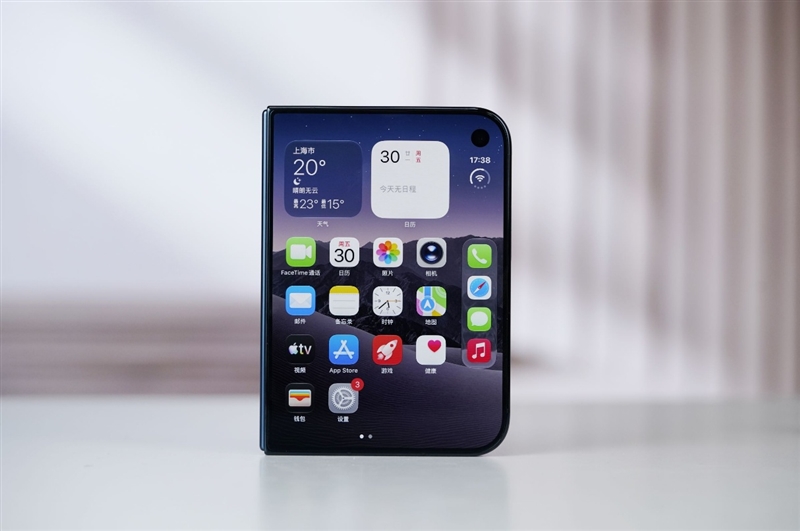
Even though the iPhone Duo marks Apple’s official entry into the foldable market, buyers in China are already well-acquainted with this form factor. In fact, its dimensions and aspect ratio are nearly indistinguishable from the recently launched Xiaomi 18 Fold.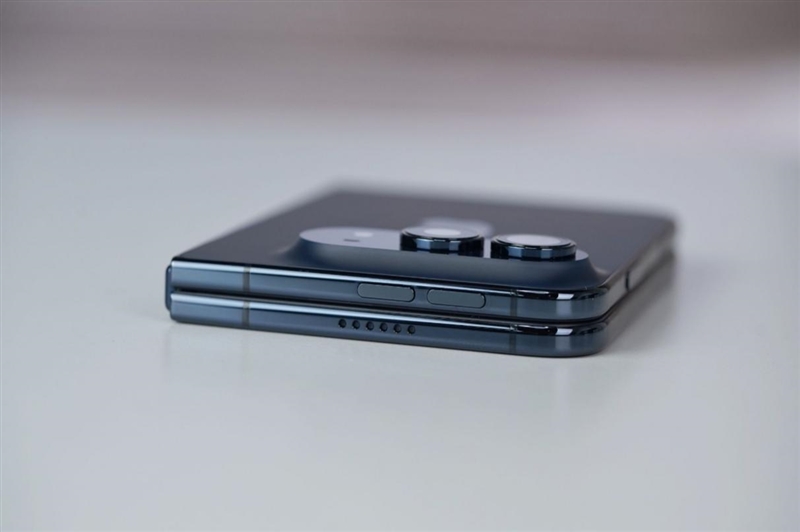
When you look at the numbers, the similarities are striking. Both devices share the exact same inner and outer aspect ratios, and their physical measurements are almost twins: the iPhone Duo sports a 7.6-inch main display and a 5.4-inch cover screen, right alongside Xiaomi’s 7.58-inch and 5.38-inch panels. Huawei’s Pura X Max sits in the same ballpark, though its slightly altered aspect ratio and massive 7.7-inch internal display push its folded width to a wider 85mm. Still, none of these devices are exactly built for effortless single-handed use; at 84.1mm wide for the iPhone Duo and 83.6mm for the Xiaomi 18 Fold, you can wrap your hand around them, but reaching across the screen takes effort.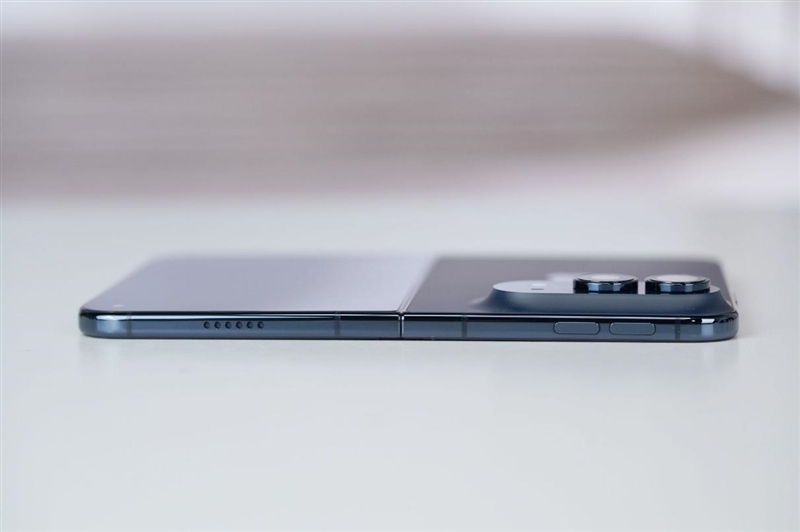
The Left-Handed Dilemma and “Jobs-Era” Stubbornness Foldable phones naturally feature a flat, squared-off hinge on one edge and rounded corners on the other. Nestling those rounded edges into your palm feels great, which makes the folded iPhone Duo a dream for right-handed users, especially since Apple anchored the new vertical Dock directly along the right border.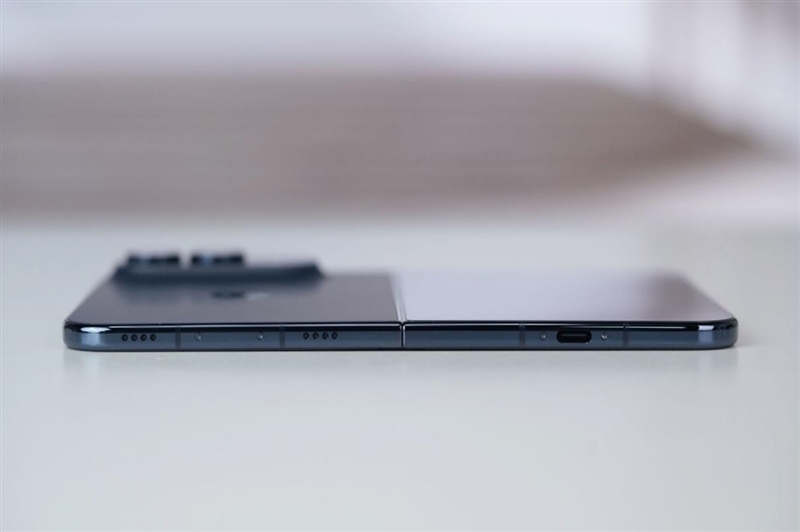
If you are left-handed, however, that ergonomic design quickly turns into a frustration. Not only does the sharper hinge edge dig into your palm, but your left thumb simply cannot stretch across to reach that right-aligned Dock. On competing Chinese foldables, the fix is trivial: just flip the phone upside down. Apple, however, baked an orientation lock into the iPhone Duo’s cover screen. While the inner tablet display rotates freely, the outer screen stays locked by default. Worse still, even if you force the cover display to rotate 180 degrees, the vertical Dock stubbornly stays glued to the right edge. Lefties are left with no choice but to trigger Apple’s new one-handed screen-panning gesture.
Honestly, realizing that Apple locked the Dock to the right side gave me a strong sense of déjà vu—it feels like the classic, uncompromising Apple of the Steve Jobs era has returned. Back in the late ’90s and early 2000s, Apple had a distinct habit of acknowledging design quirks while flatly refusing to budge on them. Think back to the infamous G3 “hockey puck” mouse: macOS already supported right-clicking and scroll wheels, and third-party multi-button mice worked fine, yet Apple stuck to a single circular button. The same went for the iPod’s mirror-finish stainless steel back. It scratched if you merely looked at it, yet Jobs famously defended the scuffs as a reflection of each owner’s personal journey, keeping that material around until the iPod line practically ended.
App Compatibility Goes Beyond Aspect Ratios Early app scaling issues are par for the course with any newly launched foldable, as seen on wide-format devices from Huawei and Xiaomi. Because Apple wields unmatched leverage over its developer ecosystem, and has already mandated full app redesigns by April 2027, software support will undoubtedly ramp up faster here than anywhere else. The App Store even features a dedicated spotlight for Duo-optimized software.
Yet, true optimization for the iPhone Duo involves far more than stretching an interface to fit a wider canvas; developers have to build around that permanent right-hand vertical Dock.
Take WeChat, for example. The team pushed out an update immediately after launch to match the new aspect ratio, but they didn’t integrate the vertical Dock. As a result, opening WeChat on the cover screen leaves a persistent dead zone, a black bar, running down the right side. The same wasted space appears on the inner display in landscape mode, and holding the unfolded phone vertically shifts that black bar to the top.
Put WeChat side-by-side with Apple’s native Photos app, and the contrast is jarring. When positioned on the right, WeChat loses screen real estate to the Dock. Swap them, and Apple’s Photos app dynamically absorbs that vertical Dock space to house navigation icons and tools. Achieving that level of polish requires developers to fundamentally rebuild their UI architecture rather than simply scaling assets. In fact, this interface logic feels so distinct from standard iOS and iPadOS that if Apple continues down this road, we might eventually see them spin off a dedicated “iDuoOS.”
Gaming and Media Playback Mobile games have a much easier time adapting. Even unoptimized titles can fill the 7.6-inch canvas through basic scaling, and iOS cleverly shifts the rendered image slightly upward rather than dead-center, keeping virtual controls comfortably within thumb’s reach. HoYoverse’s Zenless Zone Zero already supports the Duo natively, offering a dramatically more immersive full-screen experience.
Among everyday social apps we tested, Xiaohongshu (RedNote) leads the pack in software adaptation. Not only does it seamlessly integrate its interface into the right-side vertical Dock, but it also makes smart layout choices on the cover screen—retaining a standard two-column phone feed rather than forcing a cramped three-column tablet view, keeping text and thumbnails legible. Unfolded in portrait mode, it utilizes the full screen and Dock just like an iPad mini. Furthermore, watching 9:16 vertical videos in full screen on either display automatically crops the top and bottom edges to eliminate borders. By contrast, WeChat Channels leaves videos uncropped. Neither approach is objectively superior; it simply comes down to different design philosophies, though it remains to be seen if Apple will eventually enforce uniform video-scaling rules.
Dedicated video platforms fare well too. Bilibili takes full advantage of the upper-right Dock area and handles both portrait and landscape playback without hiccups, leaving minimal, unobtrusive letterboxing when watching standard 16:9 content on the 2:1 display.
The Nano-Texture Paradox You can also prop the iPhone Duo open halfway in “flex” mode, pushing video playback to the top half while dropping playback controls onto the bottom half. Strangely, though, the lower half of the screen renders a faint, simulated reflection of the video playing above it. While we haven’t tested this across every media app yet, in Bilibili, this reflection remains completely static rather than moving with the video.
It is an ironic design quirk: Apple engineered a specialized nano-textured layer for the inner panel specifically to kill glare, only to programmatically add a fake reflection during split-screen video playback. Whether that stems from a disconnect between Apple’s hardware and software teams or simply an excess of UI polish, it is an odd touch—though die-hard fans will likely embrace it anyway.
Testing that nano-textured finish indoors proved impressive. Looking at the display head-on, both the center crease and the under-display selfie camera vanish completely. Tilt the phone to catch ambient light at an angle, however, and both the crease and camera sensor become visible again.
When reviewers first realized this nano-textured layer could physically be peeled off by hand, we joked that Shenzhen’s Huaqiangbei electronics market would be scrambling to pump out cheap matte screen protectors for the Huawei Pura X Max and Xiaomi 18 Fold. Upon closer inspection, however, replicating Apple’s film won’t be easy. Standard matte protectors ruin front-facing camera clarity by diffusing light, yet leaving a cutout around the lens creates an eyesore of a glossy spot. Balancing glare reduction without ruining the under-display camera’s optics makes the iPhone Duo’s screen coating a serious piece of engineering.
Cameras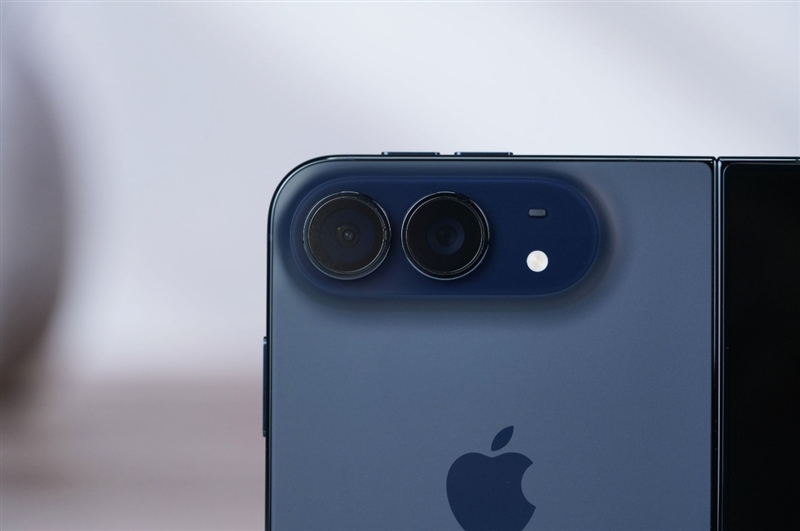
The dual-camera setup on the iPhone Duo is relatively modest, delivering photos that stick closely to Apple’s signature understated aesthetic.
Photography clearly isn’t the headline feature here. Apple opted for a 48-megapixel Fusion dual-camera array consisting of a primary wide lens and an ultra-wide lens, leaving out a dedicated telephoto shooter.






While framing a shot, you get a seamless transition from the 0.5x ultra-wide field of view up to a 2x sensor crop on the main lens. You can push the digital zoom all the way to 10x, though image sharpness and detail take a noticeable hit past that 2x mark.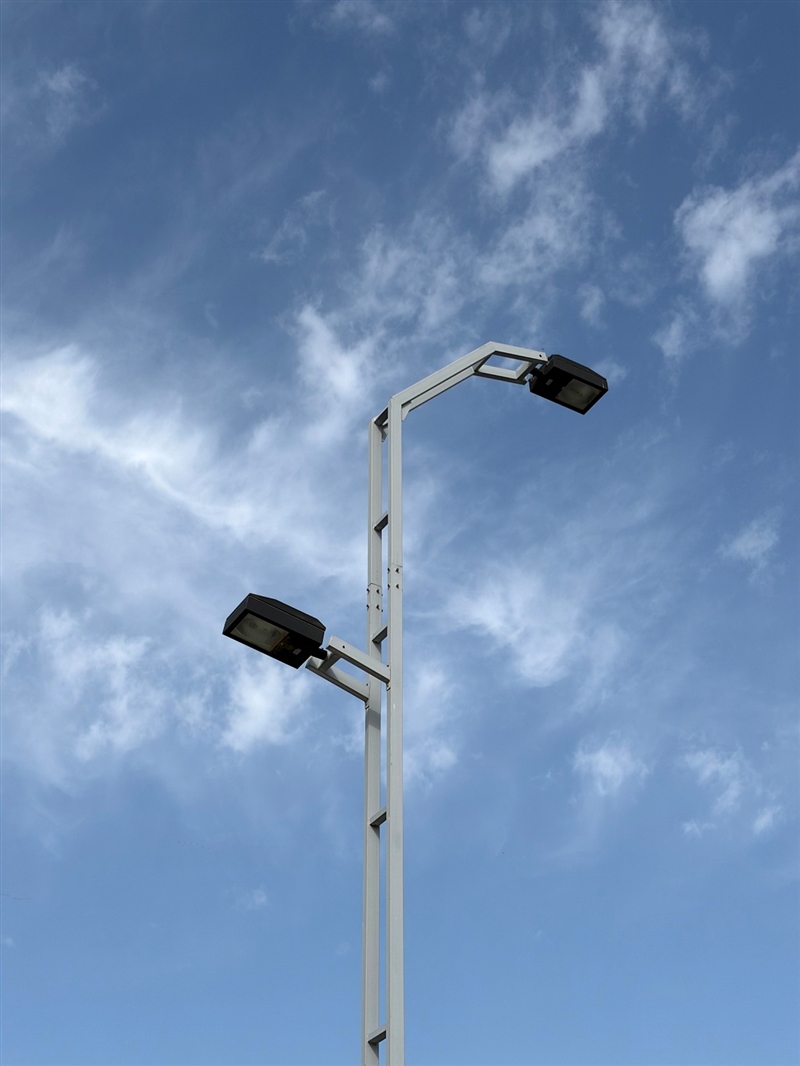
Beyond the stutter-free transitions between focal lengths, the Fusion system previews a bit of the environment outside the active crop frame, provided you aren’t using the ultra-wide lens. It is a subtle touch that makes lining up compositions much more intuitive.
If you are used to the punchy, heavily processed look of many domestic flagships, switching back to the iPhone Duo feels refreshing. The output is remarkably true-to-life, what you see in front of you is what you get, free from heavy-handed beauty filters or artificial retouching.
Think of it like a slow-simmered broth made without artificial flavorings, relying solely on the natural taste of its ingredients. At first glance, the images might seem plain or unassuming, but the longer you spend with them, the more you appreciate their depth. Unprocessed, authentic photography simply ages better.
Battery Life and Charging: A Modest 4883mAh Cell Backed by Stellar Efficiency
While a 4883mAh battery doesn’t sound massive on paper, Apple’s tight power management ensures you won’t constantly hunt for an outlet.
1. Real-World Battery Endurance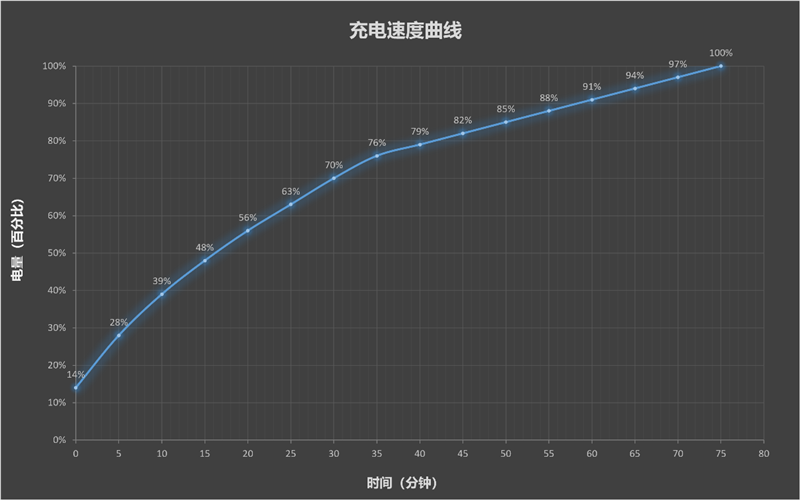
Like most foldables, the iPhone Duo splits its power across two separate cells, one rated at 2962mAh and the other at 1921mAh. Put together, the 4883mAh total lags well behind the bulky batteries packed into competing domestic foldables.
Raw capacity only tells half the story, though. Because Apple runs its own custom silicon and tightly integrated software, real-world endurance doesn’t drop off the way the spec sheet might suggest. Under the right conditions, it actually outlasts several Android rivals. Since cross-platform standardized testing has its limits, we measured power draw across everyday tasks to see how the phone holds up in practice.
-
4K Video Streaming: Playing a full-screen 4K documentary on Bilibili with subtitles turned on and the inner display set to roughly 50% brightness drained the battery from 97% to 88% over an hour—a 9% drop.
-
Heavy Gaming: Genshin Impact defaults to high graphics on the Duo and supports native refresh rates up to 120Hz. Exploring the open world for 1 hour and 20 minutes at high settings, 60fps, and 50% brightness took the charge from 82% down to 64%, using up 18% of the tank.
-
4K Video Recording: Shooting 4K 60fps Dolby Vision footage for a full hour pulled the battery down from 46% to 24%, a 22% drain.
-
Standby Clock Mode: Folding the device into a tent on a desk triggers a mini clock interface, which automatically shifts to a red-tinted eye-protection mode in dark rooms. Leaving this running overnight from 9:00 PM to 9:00 AM, 12 hours total, dropped the battery from 62% to 51%. Losing 11% just sitting idle is fairly steep, so this feature makes much more sense when the phone is plugged in on a nightstand.
Looking at the numbers, streaming video gives you just over 10 hours of continuous runtime, which puts the Duo squarely in the middle of the foldable pack. Where it pulls ahead of Android foldables is under heavy loads like gaming and 4K recording, proving how well Apple’s architecture handles sustained processing.
Thermal management tells a similar story. After an entire hour of 4K video capture, the phone’s surface temperature never crossed 40°C. Following the 80-minute Genshin Impact session, the exterior hovered just above 35°C, barely feeling warm in the hand. That kind of thermal efficiency is genuinely impressive.
Still, software optimization can’t bend the laws of physics. Leaving the screen lit overnight in clock mode quickly exposes the physical limits of a smaller battery. For normal daily routines, the iPhone Duo easily makes it from morning to night, though heavy gamers and mobile videographers should definitely pack a power bank.
2. Charging Speeds and Behavior
Apple hasn’t officially detailed the specs, but testing from ChargerLAB confirms the iPhone Duo, much like the iPhone 18 lineup, supports the USB PD 3.2 SPR AVS dynamic voltage protocol, pulling up to 15V at 2.4A to 2.6A.
Since there’s no power brick in the box, Apple recommends using a USB-PD adapter rated at 60W or higher. For our test, we paired a Apple-friendly 120W Cooltech GaN 10 charger with a full-featured USB 4.0 cable (rated for 240W PD, 40Gbps, and 8K 60Hz). Right after the initial handshake, power draw peaked at 39W (15V at 2.6A) before quickly settling into a steady, consistent 36W.
Early in the cycle, the Duo keeps pace surprisingly well with fast-charging Android competitors. Plugged in at 14%, it jumped to 28% in five minutes and hit 48% at the 15-minute mark, essentially matching Apple’s claim of reaching 50% in a quarter-hour.
The slowdown happens during the second half of the charge. While most domestic Android devices wait until 90% to throttle speeds, the iPhone Duo kicks into a protective trickle charge right at 75%. From that point on, it crawls forward at roughly 3% every five minutes, stretching out the total wait time. It’s a noticeably more conservative approach to long-term battery health than what you’ll find on rival foldables.
Verdict
Apple’s market pull remains unmatched, positioning the foldable smartphone sector for rapid mainstream adoption.
Whether the iPhone Duo stands as the ultimate foldable depends largely on your existing ecosystem. Longtime iOS users can carry over their apps, settings, and daily habits without friction. Trying a foldable within a familiar environment carries far less risk than migrating to Android, making the Duo an easy top pick for loyal Apple customers. Conversely, anyone already carrying a Huawei Pura X Max or a Xiaomi 18 Fold will find few compelling reasons to make the switch, especially since Apple held back on exclusive, signature features, a restraint that may leave even some dedicated fans wanting more.
Even so, the Duo’s real impact lies in how it reshapes the broader industry. Until now, wide-format foldables have suffered from a fragmented user base, leaving developers with little incentive to build custom interfaces instead of relying on stretched phone layouts or generic tablet views. Apple is changing that equation by mandating dedicated iPhone Duo display support for all app updates starting after April 2027. Once studios optimize their layouts for iOS, porting those wide-screen improvements over to Android becomes straightforward, which should lift app quality across both platforms.
Hardware standards are converging as well. Both the Xiaomi 18 Fold and the iPhone Duo use an A4-inspired 2:1 aspect ratio that keeps inner and outer displays consistent, simplifies split-screen multitasking, and makes document reading feel natural. Other brands are likely to follow suit next year, moving the market closer to a unified form factor.
Ultimately, the iPhone Duo gives Apple fans a seamless entry into foldables while raising software and design standards for Android users too, a welcome shift for the entire mobile landscape.
Read Also: iPhone Face ID Not Working During Setup? How to Fix Face ID Configuration Problems