










It’s cutthroat out there. Brands need to pack in solid specs without jacking up prices any further. Every new release walks a tightrope with costs, cameras, battery, display, performance, drop the ball on any of these and you’re done. To make things tougher, memory chip prices have been climbing since September 2025, with DRAM up 15-30% and NAND flash up 5-10%. Some manufacturers are dealing with this by either nudging prices up slightly or quietly downgrading storage specs.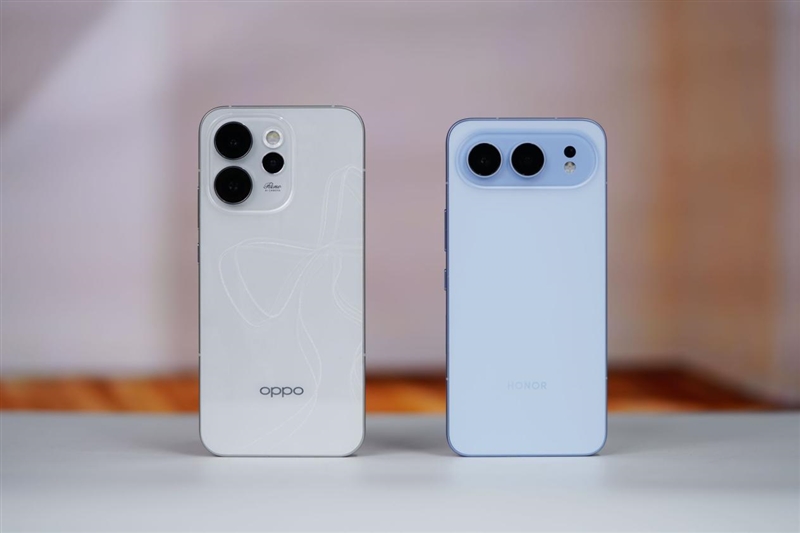
Enter the Honor 500 series, which takes a different approach. Their philosophy? Give people the best possible experience, period. They’re going all-in with what they call two “super” promises: a standard version that punches like a Pro model, and a Pro version that feels more like a flagship. It’s clear they want to deliver maximum tech value without compromise.
At the launch, Honor’s confidence was on full display. Fang Fei, who heads up their product line, put it bluntly: “The Honor 500 series won’t just listen to feedback – we’re actually acting on it.”
Sure, we’re past the days of obsessing over specs alone. What really matters isn’t how powerful something is on paper, but whether that power translates into something you’ll actually notice and appreciate. Peak performance is just the foundation, what counts is the experience it enables.
She talked about “setting a new benchmark for user experience in this segment” and stressed that both the standard and Pro models would “reset industry expectations” when it comes to design, build quality, video recording, battery life, and performance. The goal: deliver on those dual “super” promises.
Bold words from Honor. But can they back it up? Will these “super” features actually make a difference in daily use?
We’re putting the Honor 500 series through its paces, design, performance, cameras, battery, software, the whole package – to see if it really does raise the bar in the 2K-3K range like they claim. We’re particularly curious about that “Super Standard Edition” starting at 2,699 yuan.
To make this test meaningful, we’re also throwing in one of the toughest competitors in this space: the Reno 15 Pro, priced at 3,699 yuan and positioned as a premium option.
The Oppo Reno 15 Pro represents what’s currently considered strong in this price tier, making it the perfect benchmark to see where the Honor 500 series really stands on performance, battery life, cameras, and overall experience.
We’ve put together a detailed spec comparison to show exactly how the Honor 500 series stacks up against the Oppo Reno 15 Pro.
Design and Feel
The Honor 500 and Honor 500 Pro are pretty much twins when it comes to design. Both phones rock a horizontal camera strip across the back and come in this gorgeous “sea turquoise” color that’s kind of translucent. It’s this beautiful blue shade that feels both natural and calming—like looking at clear tropical waters.
There’s actually some clever thinking behind that horizontal camera layout. By arranging the cameras this way, Honor freed up space inside the phone for a bigger battery. Plus, it’s just more practical, your fingers won’t accidentally cover the lens when you’re snapping photos in portrait mode, and when you flip the phone sideways for gaming, it sits more comfortably in your hands.
Camera Setup
Hardware-wise, there’s one key difference: the standard Honor 500 drops the telephoto lens you’ll find on the 500 Pro. Everything else—the main camera and ultra-wide lens—stays the same between the two models.
Display and Dimensions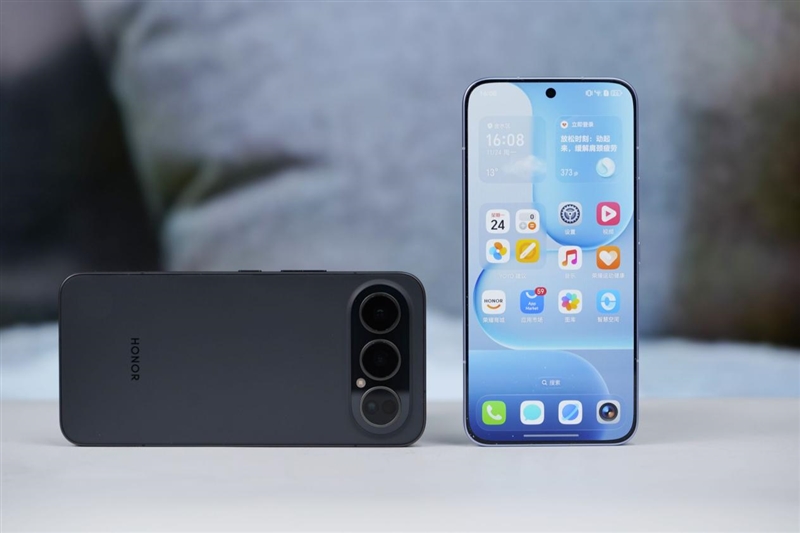
Up front, you’re getting a 6.55-inch display with incredibly slim bezels—just 1.1mm of black border around the screen. Combined with those smoothly curved corners, the display really does look premium and edge-to-edge.
The phone itself measures 155.8mm tall, 74.2mm wide, and 7.75mm thin. It’s definitely not one of those bulky, heavy phones that weighs down your pocket.
Charging
Both models ship with an 80W fast charger in the box—a nice touch that’s becoming less common these days.
Gaming Performance
The Honor 500 packs a Qualcomm Snapdragon 8s Gen4 chip, offering a significant leap in power compared to the older Snapdragon 7 series. Every model comes with features like rapid loading, OS Turbo X, and sliding load technology that make apps launch noticeably faster and smoother.
When it comes to gaming, the phone really shines. Honor’s Phantom Engine 3.0 and Phantom Frame Stabilization Technology work together to anticipate and smooth out those annoying moments when games start to stutter or drop frames, keeping everything running buttery smooth.
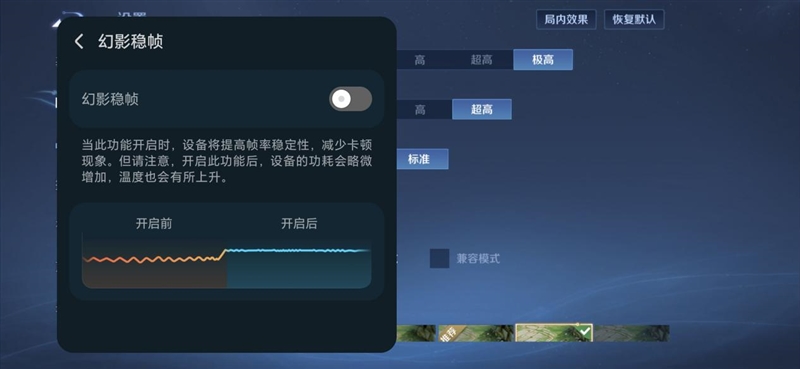
During our testing, we ran a game with Phantom Frame Stabilization turned on, and the Honor 500 series maintained an incredible average of over 120 FPS with a frame stability index of 0 basically perfect! Even the 1% low frame rate stayed above 115 FPS, which is honestly remarkable for consistent full-frame performance.
We put it up against the Reno 15 Pro running the same game, and the Honor 500 series clearly pulled ahead across the board, better average frame rates, more stable performance, and higher 1% lows.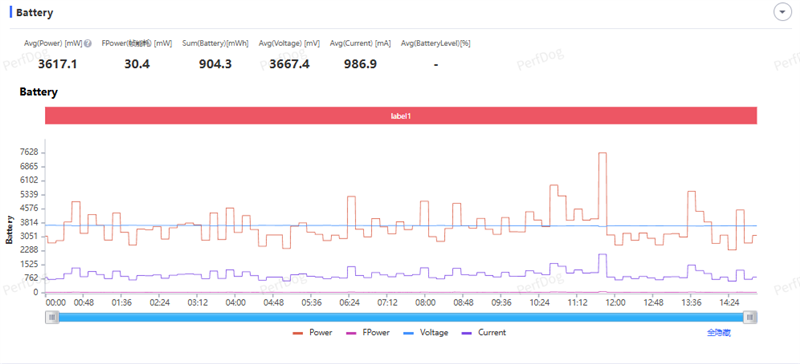
As for power consumption, the standard Honor 500 does draw a bit more power, while the Pro version manages energy much more efficiently. The Reno 15 Pro sits somewhere in the middle between these two.
Temperature-wise, the Honor 500’s back peaked at 37°C, while the Pro version stayed cooler at just 32°C. For reference, the Reno 15 Pro hit 35.6°C.
Testing Genshin Impact, we recorded an average of 60.1 FPS with a stability index of 0.2 and a 1% low of 47.9 FPS. There were a few frame drops toward the end, but the phone recovered quickly.
The Honor 500 Pro? Absolutely rock solid. I’ve honestly never seen anything like it—the average frame rate matched the 1% low perfectly, with a stability index of 0. That’s basically unheard of.
Meanwhile, the Reno 15 Pro started frame-locking after about 10 minutes, dropping to 50 FPS. It ended with an average of 56.8 FPS, a stability index of 2.3, and a 1% low of just 27.7 FPS.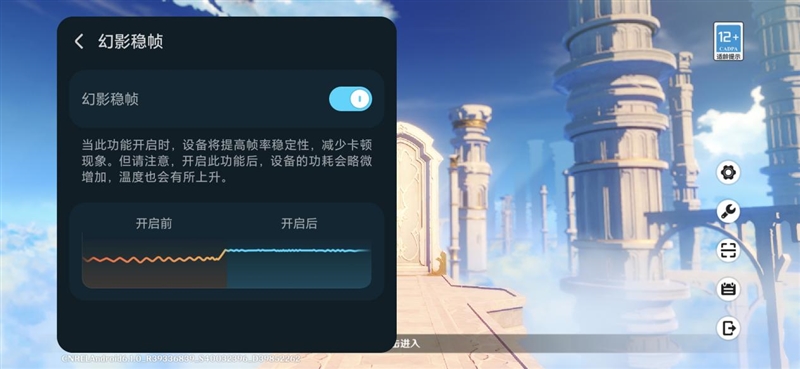
Power efficiency on the Honor 500 is solid at 6W average consumption. The Pro version does even better at just 3.9W, which works out to only 65.7mW per frame, seriously impressive optimization. And honestly, no exaggeration here: the standard Honor 500 actually outperfo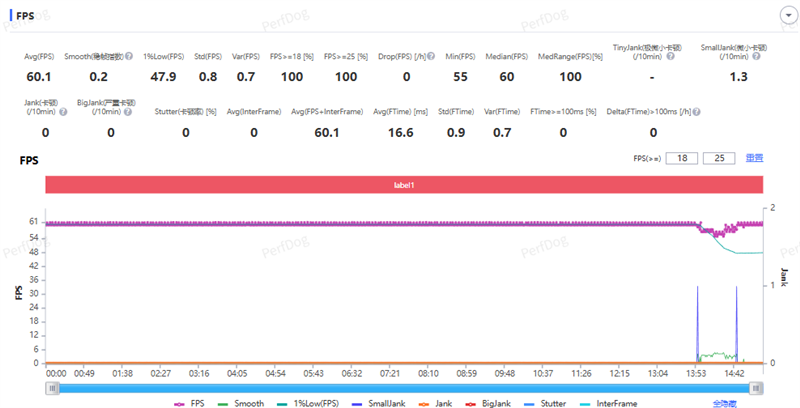 rms competitors’ Pro versions that cost 1000 yuan more. The Reno 15 Pro averaged 4.4W power consumption.
Heat management really tells the story though. The standard Honor 500 reached 43.7°C on the back without any frame-locking, while the Pro maxed out at a cool 36.2°C. The Reno 15 Pro, on the other hand, started locking frames once it hit 40.4°C.
Camera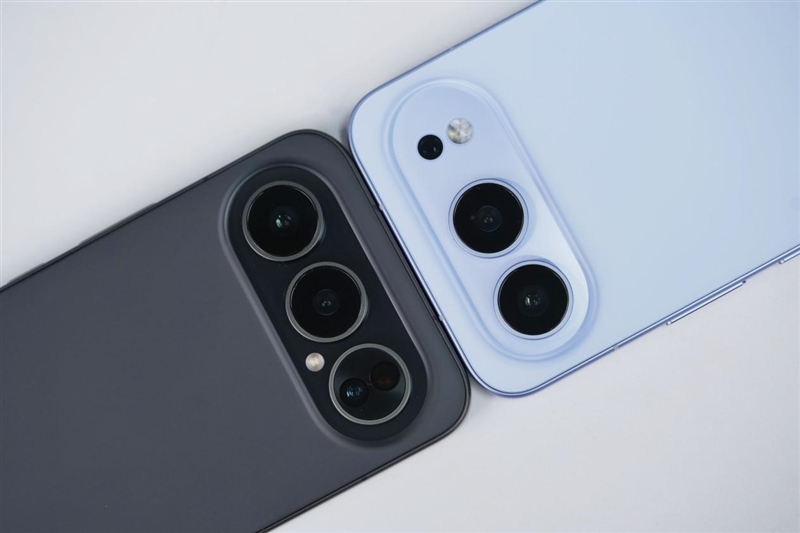
The Honor 500 packs a seriously impressive 200MP main camera that’s a step above what you’d typically find in this price range. When you stack it up against the Reno 15 Pro (which also has a 200MP shooter), the Honor 500’s sensor is noticeably bigger at 1/1.4 inches, about 11.4% larger than the Reno’s 1/1.56-inch sensor. Thanks to 16-in-1 pixel binning technology, you’re looking at an effective pixel size of 2.24μm.
What really makes this camera shine is Honor’s custom AI RAW processing model working behind the scenes. They’ve teamed up with Samsung to fine-tune this large sensor, and it shows in the results.
The Honor 500 Pro takes things further with an extra ultra-high-definition telephoto lens offering 3x optical zoom. Everything else stays the same as the regular model. So how do these three phones actually perform when you’re taking pictures? Let’s dive in.
Main Camera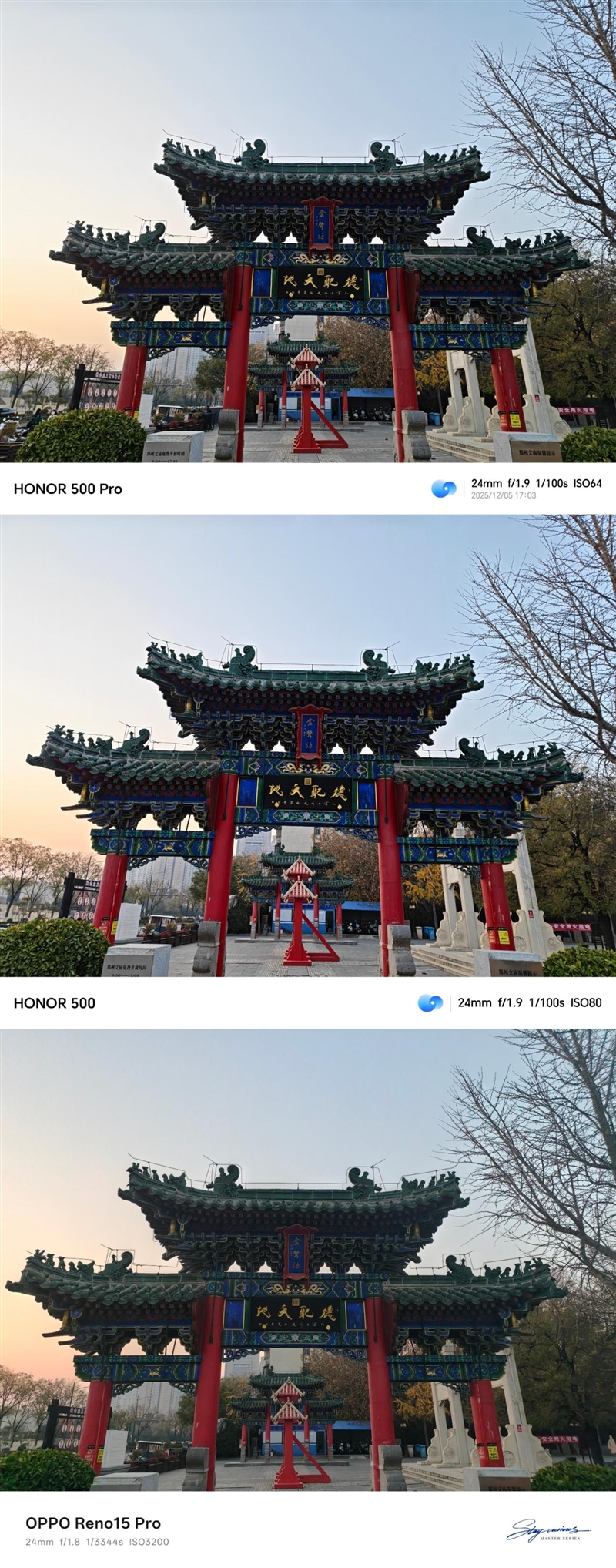
Right off the bat, you can see the Honor 500 series handles dynamic range better in both shots. Look at the darker areas, there’s way more detail compared to what the Reno captures.
Here’s another side-by-side crop from the same spot. With default settings, the Reno 15 Pro’s photo looks washed out and lacks punch. Meanwhile, both Honor 500 shots have rich texture and vibrant colors that really pop.
Zoom Capabilities
Now here’s where it gets interesting. The standard Honor 500 doesn’t actually have a dedicated telephoto lens—it uses digital zoom from the main camera to reach that 85mm focal length.
When you compare it to the actual telephoto lenses on the Reno 15 Pro and Honor 500 Pro, the detail differences aren’t huge. The Honor 500 Pro comes out on top with the sharpest image, but honestly? The regular Honor 500 holds its own surprisingly well.
Same story here. That 200-megapixel sensor on the Honor 500 is seriously impressive—even when you’re zoomed in to 85mm, the quality stays sharp.
At 2x zoom, all three are pretty comparable, though the Honor 500 produces the brightest image with the most vivid blue sky.
This sunset shot really highlights the gap. The Reno 15 Pro falls way behind the two Honor 500 models—you can barely make out the brick details on the building to the right.
Ultra-Wide Performance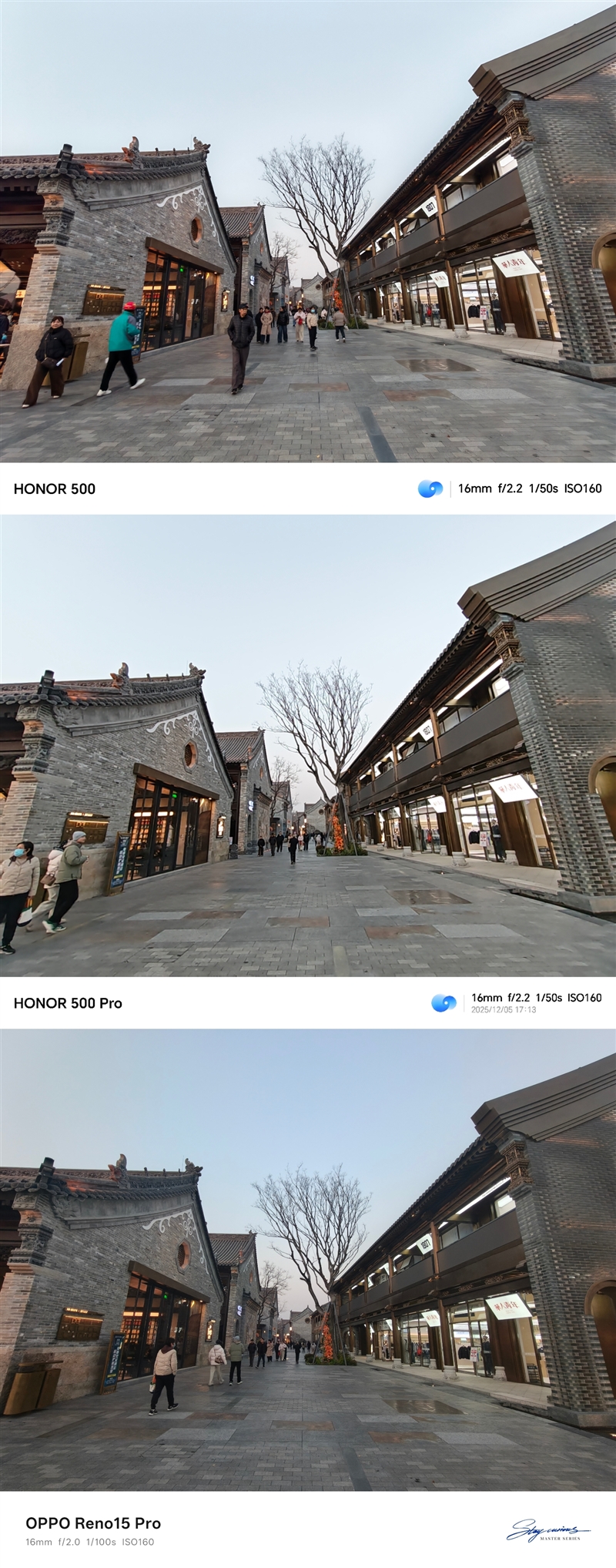
For ultra-wide shots, even though the Oppo Reno 15 Pro has a 50MP ultra-wide lens, its default 12MP output doesn’t really stand out from the Honor 500’s ultra-wide photos. If anything, the Honor 500 series images are a touch brighter.
Night Photography
In low-light situations, the Honor 500 series really nails it with billboard lighting—no blown-out highlights at all. The rabbit on the right shows clearer detail than the Reno 15 Pro, though the Reno’s slightly darker approach does have its own moody appeal.
Another nighttime shot follows the same trend: the Honor 500 series goes brighter, while the Reno keeps things darker with more of an atmospheric vibe.
Honestly, neither approach is objectively “better”—it comes down to what look you prefer.
Selfie Camera
To keep things fair and avoid inconsistencies from changing positions and poses, and since the Honor 500 and 500 Pro share the same front camera, we’re just comparing the Honor 500 against the Reno 15 Pro here.
Both pack 50MP selfie cameras, so performance is pretty similar across the board. That said, the Honor 500 edges ahead slightly with better background blur and more polished beautification effects.
Battery Life and Charging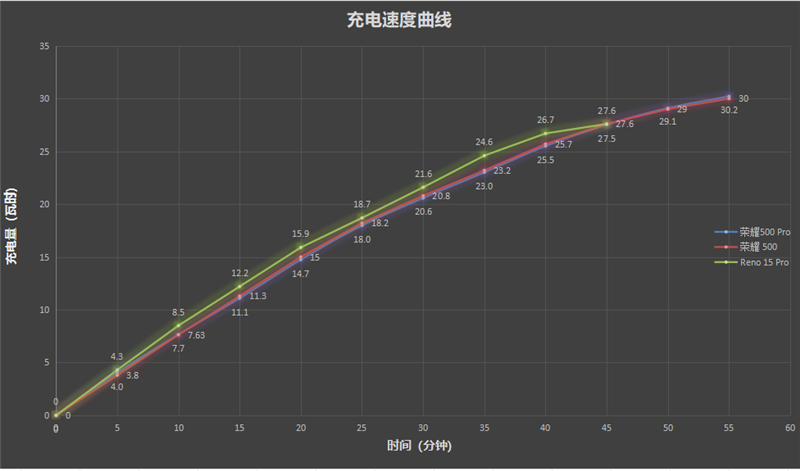
The entire Honor 500 lineup comes packed with a massive 8000mAh battery—the biggest you’ll find in its class for a phone with a 6.55-inch body. This impressive capacity is made possible by cutting-edge battery tech: 15% ultra-high silicon content and an energy density of 915Wh/L.
What really makes it shine, though, is the AI-driven smart power-saving feature. It’s been fine-tuned for everyday activities like scrolling through short videos or keeping WeChat running in the background, boosting battery life by over 10%. This means the Honor 500 series makes the most of that huge battery, easily lasting two full days on a single charge.
During our Battery Dog testing, the Honor 500 series ran for more than 12 hours before dropping from 100% to 20%. In theory, a full charge should give you around 15 hours of use. It genuinely lives up to the “two-day battery life” claim.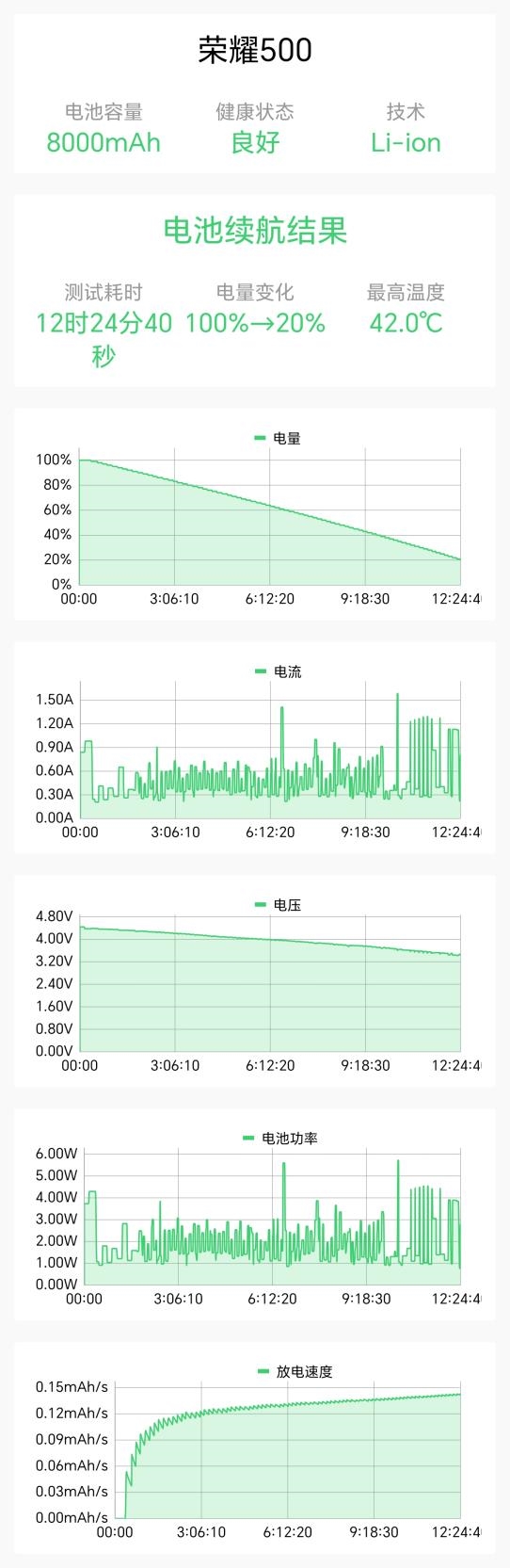
On the charging front, the Honor 500 supports 80W wired fast charging, and with that large battery, the overall charging experience feels smooth and reliable.
For comparison, the Reno 15 Pro packs a 6500mAh battery and also supports 80W fast charging. Let’s see how these two stack up.
Here’s how the Reno 15 Pro performed during charging. And here’s what we got from the Honor 500 series. Looking at the results, the Honor 500 series uses a higher voltage, lower current charging approach, while the Reno 15 Pro hits higher peak charging power.
We tracked the charging power curves and plotted the charging speeds using watt-hours for a fair comparison, since the battery sizes differ between the two. Just a heads-up: charging efficiency can vary from phone to phone, so take these numbers as a general reference.
From the graph, you can see that all three phones charge at similar rates, with the Reno 15 Pro being slightly faster. However, because of its smaller battery, it hit full charge at the 45-minute mark. The Honor 500 series charged a bit slower but stayed competitive throughout. By the 45-minute point, it had accumulated nearly the same total charge as the Reno 15 Pro, and reached 100% at around 55 minutes.
Verdict
After putting both phones through their paces, it’s clear the Honor 500 series really stands out in the $400-550 price bracket.
What’s impressive is how both modelsmanage to nail the fundamentals that actually matter—smooth performance, all-day (and then some) battery life, solid main camera quality, and generous storage. The Pro version even punches well above its weight class in several areas, delivering features you’d typically find on much pricier flagships.
Performance-wise, both phones hold their own impressively. Whether you’re looking at the standard version with its Snapdragon 8s Gen 4 chip or the Pro with the Snapdragon 8 Ultra, they both handled intense gaming sessions without breaking a sweat. Compared to the Reno15 Pro, they kept frame rates steadier, ran cooler, and sipped less power during extended play—that’s genuinely hard to find at this price point.
For photography, the main camera really shines thanks to its larger sensor. It handles tricky lighting situations better than the Reno15 Pro in most real-world shots. Sure, the ultra-wide and zoom cameras could use some work (the standard version especially relies on digital cropping), but the main shooter consistently delivers natural-looking colors and reliable everyday photos—which is what most people use 90% of the time anyway.
Battery life is where these phones absolutely crush it. Squeezing an 8000mAh battery into a phone that’s only 6.55 inches is no small feat, and Honor’s software optimizations mean you’re genuinely looking at two full days of use on a single charge, that’s not marketing hype, it’s real.
Yes, charging takes a bit longer than the Oppo Reno 15 Pro, but when your battery lasts this long, you’re not constantly hunting for outlets anyway.
The Reno15 Pro does have its moments—its ultra-wide camera is better, it stays a touch cooler under load, and it charges slightly faster. But honestly, these advantages feel minor when you consider what you’re giving up elsewhere, especially given the price difference.
Here’s the bottom line: In the roughly $400-550 space, the Honor 500 series gets the important stuff right. It’s not perfect at everything, but it invests heavily in the features that actually impact your daily experience—more so than most competitors at this price.
If you want flagship-caliber performance and incredible battery life without spending flagship money, the standard Honor 500 is genuinely worth considering at its current price.
But if you want the full package with fewer compromises and can stretch your budget a bit, the Honor 500 Pro delivers an experience that feels much more expensive than it actually is.
Read Also: OPPO Reno15 Pro Phone Specs Exposed: Dimensity 8450 Processor