










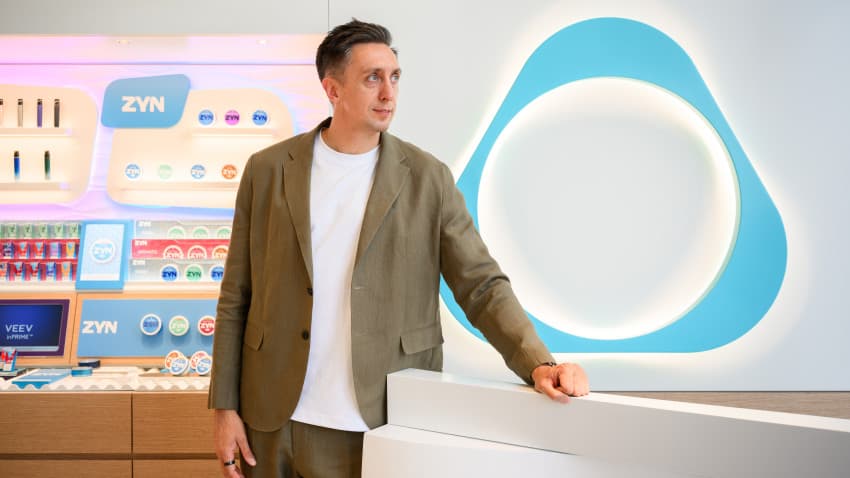
Philip Morris International (PMI) is repositioning its IQOS experience spaces as more than traditional retail outlets, with the company increasingly viewing physical locations as platforms for consumer engagement, product education, and brand interaction as the tobacco industry shifts toward smoke-free products.
In an interview with Romanian marketing publication IQads, Marek Gębski, who leads PMI Romania’s smoke-free product business, discussed the changing role of offline retail, the development of IQOS Boutiques, and the company’s broader approach to communicating with adult consumers.
According to Gębski, the transition from conventional tobacco products to smoke-free alternatives is changing not only product portfolios but also the way companies interact with consumers.
From Retail Outlet to Consumer Experience Platform
Traditional tobacco retail has largely centered on product availability and transactions. PMI believes that the emergence of smoke-free products requires a broader approach, with physical spaces providing opportunities for consumers to learn about and experience products.
Gębski said IQOS experience spaces are increasingly being developed as environments where adult consumers can interact with the brand, explore products, and obtain information.
One example is IQOS Boutique Victoriei in Bucharest, a physical location designed to showcase the IQOS brand and provide consumers with a dedicated smoke-free product experience.
Rather than functioning solely as a product-display and sales venue, the space incorporates elements of consumer interaction, product demonstrations, and brand engagement.
From PMI’s perspective, such environments can help adult consumers better understand smoke-free products while allowing the company to establish longer-term relationships with its audience.
IQOS Boutique Victoriei Connects Brand Design With Bucharest’s Urban Culture
Gębski also highlighted the role of local culture and design in the development of PMI’s physical brand spaces.
The IQOS Boutique Victoriei is located along Calea Victoriei, one of Bucharest’s prominent historic and commercial avenues. According to the executive, the space incorporates elements inspired by the surrounding urban environment and works with local artists to create a more locally relevant experience.
This approach reflects a broader shift in experiential retail, where companies increasingly attempt to integrate brand environments with the cultural and visual identity of the cities in which they operate.
For PMI, these locations therefore serve multiple purposes. In addition to supporting product-related activities, they form part of the company’s broader brand expression and consumer communication strategy.
Smoke-Free Product Competition Is Expanding Beyond Product Features
As smoke-free products become a larger part of the global tobacco industry’s business strategies, competition is increasingly extending beyond product specifications and distribution.
Companies operating in the category are exploring different approaches to consumer engagement, including:
- Consumer education
- Product experiences
- Brand building
- Digital and physical communication
- Community-oriented activities
Gębski emphasized innovation as an important component of PMI’s business strategy and said the company is exploring different ways of helping adult consumers understand its smoke-free product portfolio.
This reflects a broader industry trend in which tobacco companies are attempting to establish new forms of engagement around products that differ from traditional combustible cigarettes.
At the same time, the extent to which these strategies influence consumer behavior or market share remains a matter for independent market research rather than conclusions that can be drawn solely from company statements.
PMI Continues Its Smoke-Free Product Transformation
PMI has spent recent years promoting its transformation toward what it describes as a “smoke-free future.” Heated tobacco products, including IQOS, have become a central part of this strategy as the company seeks to reduce its reliance on conventional combustible tobacco products.
Across different markets, PMI has used a combination of retail locations, consumer services, product experiences, and brand activities to support its smoke-free portfolio.
The Romanian example illustrates how this strategy is extending beyond product development and distribution. Physical consumer spaces are increasingly being incorporated into the company’s approach to explaining products, facilitating experiences, and maintaining relationships with adult consumers.
What the IQOS Experience-Space Strategy Signals
The evolution of IQOS Boutiques highlights a broader change in the way major tobacco companies approach smoke-free products.
As the category develops, companies are not only competing through product technology, pricing, and distribution. They are also investing in consumer experience and brand environments designed to differentiate products and communicate their positioning.
For PMI, the IQOS Boutique model represents an effort to transform physical retail locations into more interactive environments.
The strategy also reflects the company’s belief that the transition to smoke-free products requires a different form of communication from the traditional cigarette business.
However, these conclusions should be viewed in context. The observations presented by Gębski represent PMI’s own strategic perspective and should not be interpreted as independent evidence of broader market trends or consumer behavior.
Conclusion
PMI Romania’s latest comments illustrate how the company’s smoke-free strategy is evolving beyond product development and sales channels.
With locations such as IQOS Boutique Victoriei, PMI is attempting to create physical environments where adult consumers can explore products, receive information, and interact with the brand.
Whether this approach will significantly influence the long-term development of the smoke-free tobacco market remains to be seen. What is clear is that experiential retail is becoming an increasingly visible component of the industry’s efforts to build new consumer relationships as tobacco companies continue their transition toward smoke-free products.