









July 7 – Igeekphone News
A trademark infringement ruling involving luxury fashion house Louis Vuitton (LV) and Chinese tea brand Jasmine White has sparked widespread debate across Chinese social media, with many netizens questioning whether an ancient Chinese decorative motif should be protected as an exclusive trademark.
The controversy erupted after the Suzhou Intermediate People’s Court ruled in favor of LV, ordering Jasmine White to pay 10.3 million yuan (approximately US$1.43 million) in damages for infringing seven of the company’s registered trademarks, including several of its iconic four-petal floral symbols. The award is reported to be the largest trademark infringement compensation ever granted in China’s tea beverage industry.
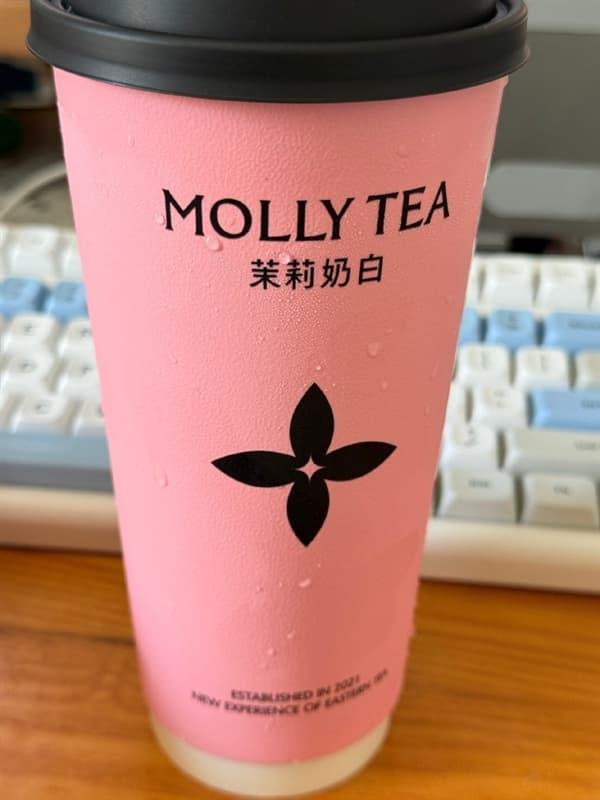
Ancient Chinese Pattern Becomes the Center of the Debate
Following the court’s decision, many social media users began sharing images of historical Chinese artifacts and architectural decorations featuring similar four-petal floral designs.
Examples cited included decorative motifs found on Tang Dynasty musical instruments, traditional lattice windows in Suzhou gardens, ancient bronze mirrors, lacquerware, silk fabrics, and jade carvings.
Many questioned how a decorative pattern that has appeared in Chinese art for more than two thousand years could become the exclusive trademark of an international luxury brand.
The Motif’s Origins Stretch Back More Than Two Millennia
Historians identify the design as the Shidi (Persimmon Calyx) pattern, one of the most significant ornamental motifs in traditional Chinese art.
The pattern is believed to have originated as early as the Shang and Zhou dynasties, became increasingly popular during the Spring and Autumn and Warring States periods, and reached its peak during the Han Dynasty.
It was widely used in decorative arts, appearing on bronze mirrors, lacquerware, textiles, jade artifacts, and even the decorative structures of Han Dynasty tombs. The motif traditionally symbolizes prosperity, harmony, and good fortune.
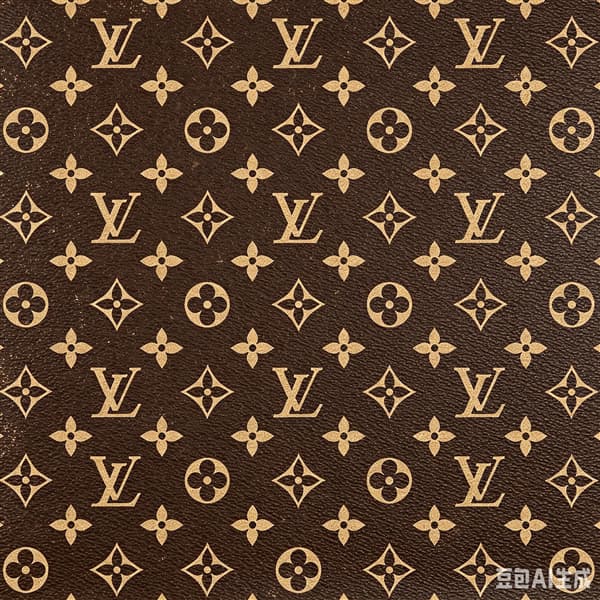
Researchers also note that its distinctive four-petal symmetrical form reflects ancient Chinese concepts of cosmology. The cross-shaped structure is thought to represent the four cardinal directions—east, south, west, and north—and symbolizes the movement of the sun as well as the order of the universe.
Some netizens even shared photographs of a Tang Dynasty five-stringed pipa preserved at Jōkō-in Temple in Japan, arguing that the decorative motif engraved on the instrument bears a striking resemblance to LV’s well-known floral emblem.
Why LV’s Trademark Remains Legally Protected
Despite the historical origins of the design, legal experts point out that trademark law focuses on registration rather than the earliest cultural source of a pattern.
LV’s combined logo trademark, registered under No. 241012, was officially approved in China on January 15, 1986. It has also been recognized as a well-known trademark in China for decades, giving it broad legal protection across multiple product categories.
Under China’s Trademark Law, the key issue is not who first created or historically used a particular decorative pattern, but who first registered a specific commercial trademark in accordance with the law and established brand recognition through its use.
Could LV’s Trademark Be Challenged?
The ruling also prompted discussion over whether LV’s trademarks could be invalidated on the grounds that their design was inspired by traditional Chinese cultural heritage.
According to intellectual property experts, such a challenge would face significant legal obstacles.
Although the logo may have drawn inspiration from ancient decorative motifs, no organization or individual had registered the design as a trademark before LV secured its rights more than 40 years ago. As a result, the company’s trademark protection is considered legally robust, making revocation highly unlikely under current trademark law.
A Broader Question About Protecting Traditional Culture
The case has reignited discussion about how traditional cultural symbols should be protected in modern intellectual property systems.
Many observers argue that China began developing its trademark and IP framework relatively late, leaving many traditional motifs without formal legal protection. As Chinese-style brands continue to incorporate centuries-old cultural elements into modern products, the challenge will be finding ways to preserve traditional artistic heritage while avoiding trademark conflicts with companies that have already secured exclusive commercial rights.
For many in the industry, the Jasmine White case highlights the growing need for a legal framework that better safeguards traditional cultural designs as shared public heritage while providing clearer guidance for businesses seeking to use them in contemporary branding.