









I spent time with the Epomaker Galaxy 100 earlier in 2025, and what impressed me most was how the company packed high-end features into a surprisingly affordable package. Quality construction materials, complete QMK compatibility, and that satisfying acoustic signature all came together in a full-sized board priced below the $100 mark. My main gripe? The keycap inconsistency between color options one shipped with MDA profile caps, the other with Cherry profile.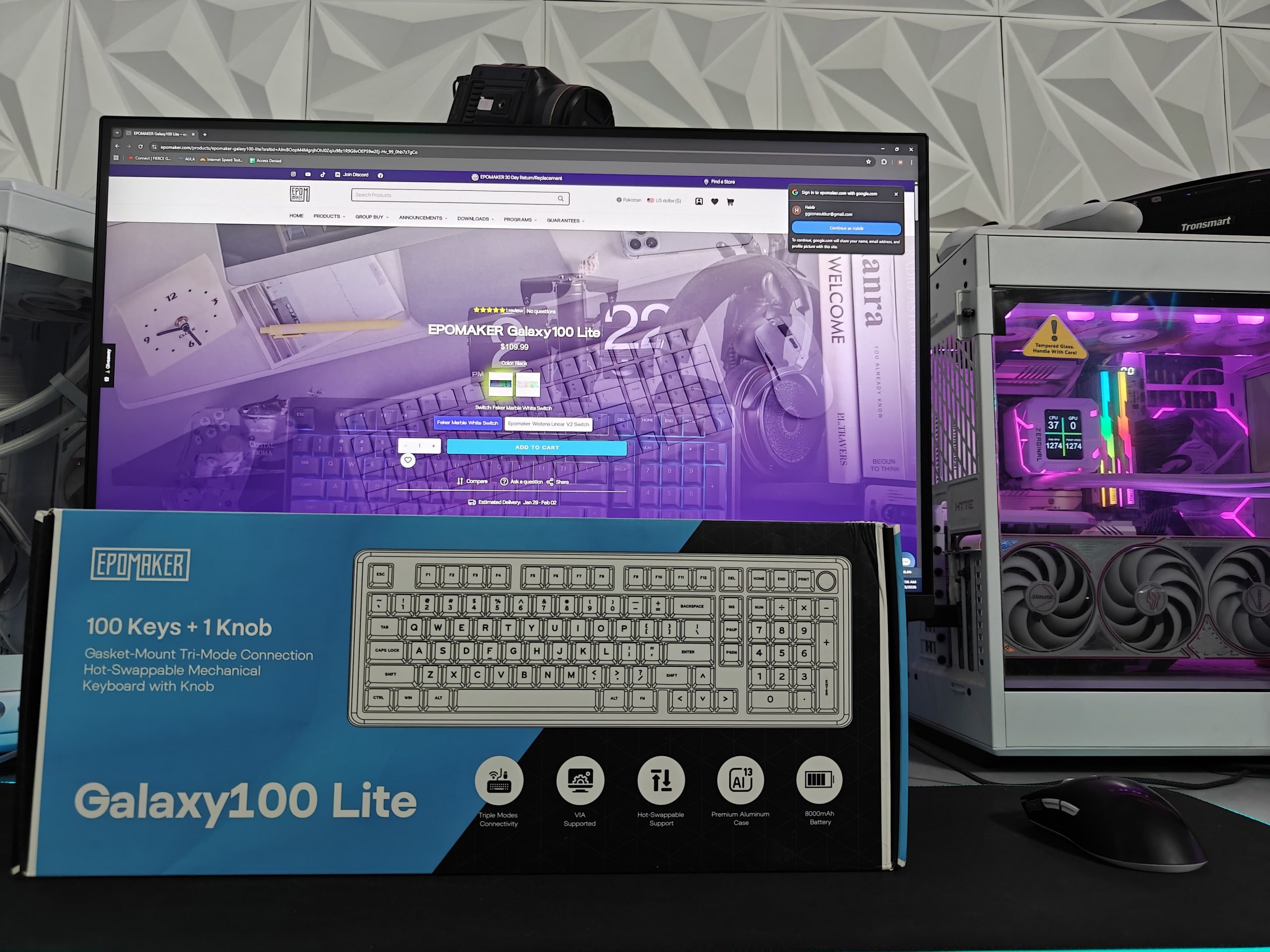
Epomaker apparently took that feedback to heart. Enter the Epomaker Galaxy 100 Lite: essentially the same keyboard at its core, but with a notable refinement. Both color variants now feature Cherry profile keycaps, creating a more cohesive product lineup.
Epomaker provided the Galaxy100 Lite as a review sample, allowing me complete editorial independence in testing the keyboard.
Unboxing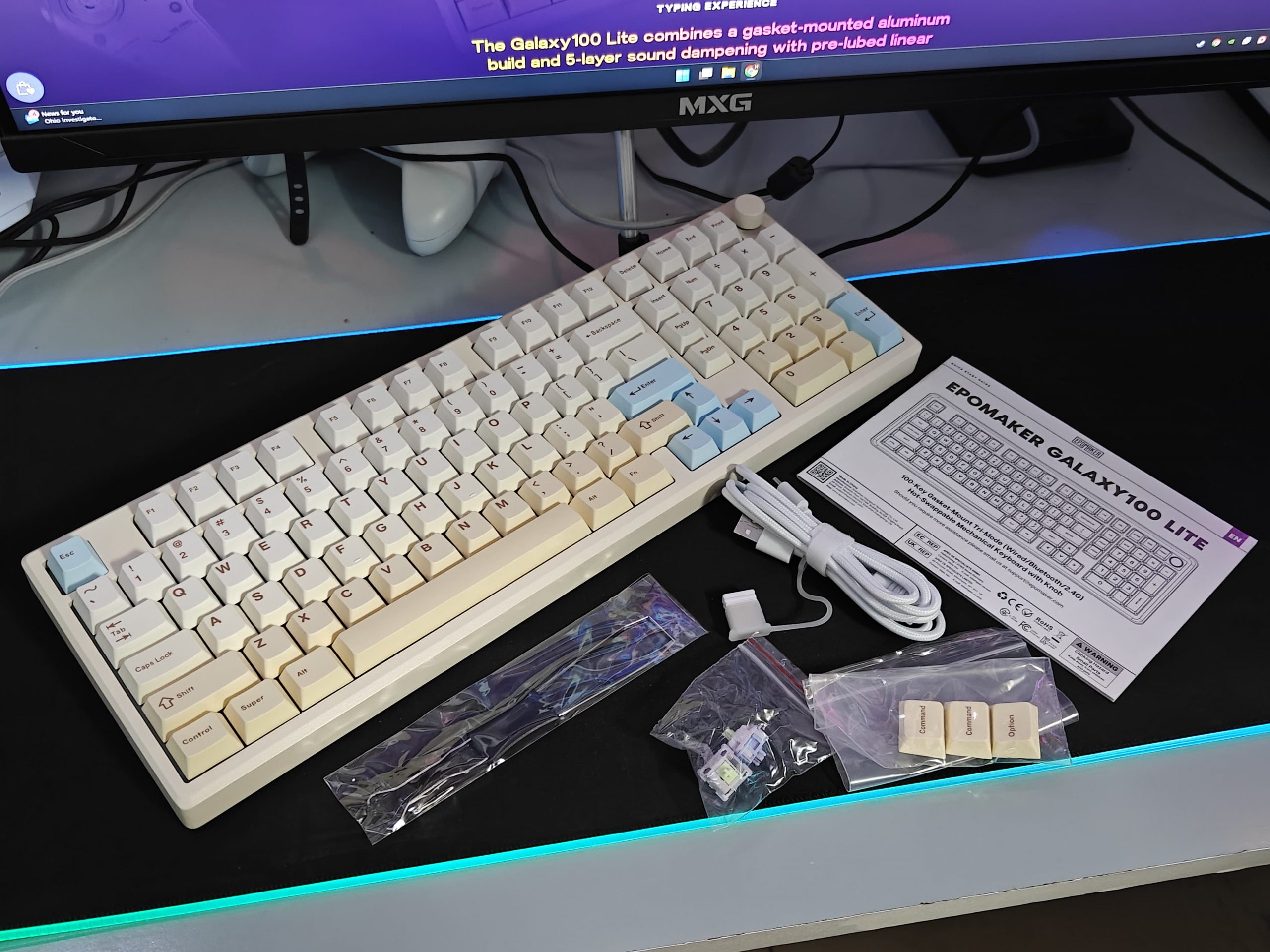
The package arrives with several components neatly organized. Initially, you’ll find the instruction booklet and an EPOMAKER business card, followed by the Galaxy100 Lite keyboard. An additional compartment holds the USB-C charging cable with its built-in 2.4GHz wireless dongle, three replacement keycaps, two Wisteria Lineare V2, and a removal tool for both keys and switches. The contents are thoughtfully packaged and represent the complete bundle.
Design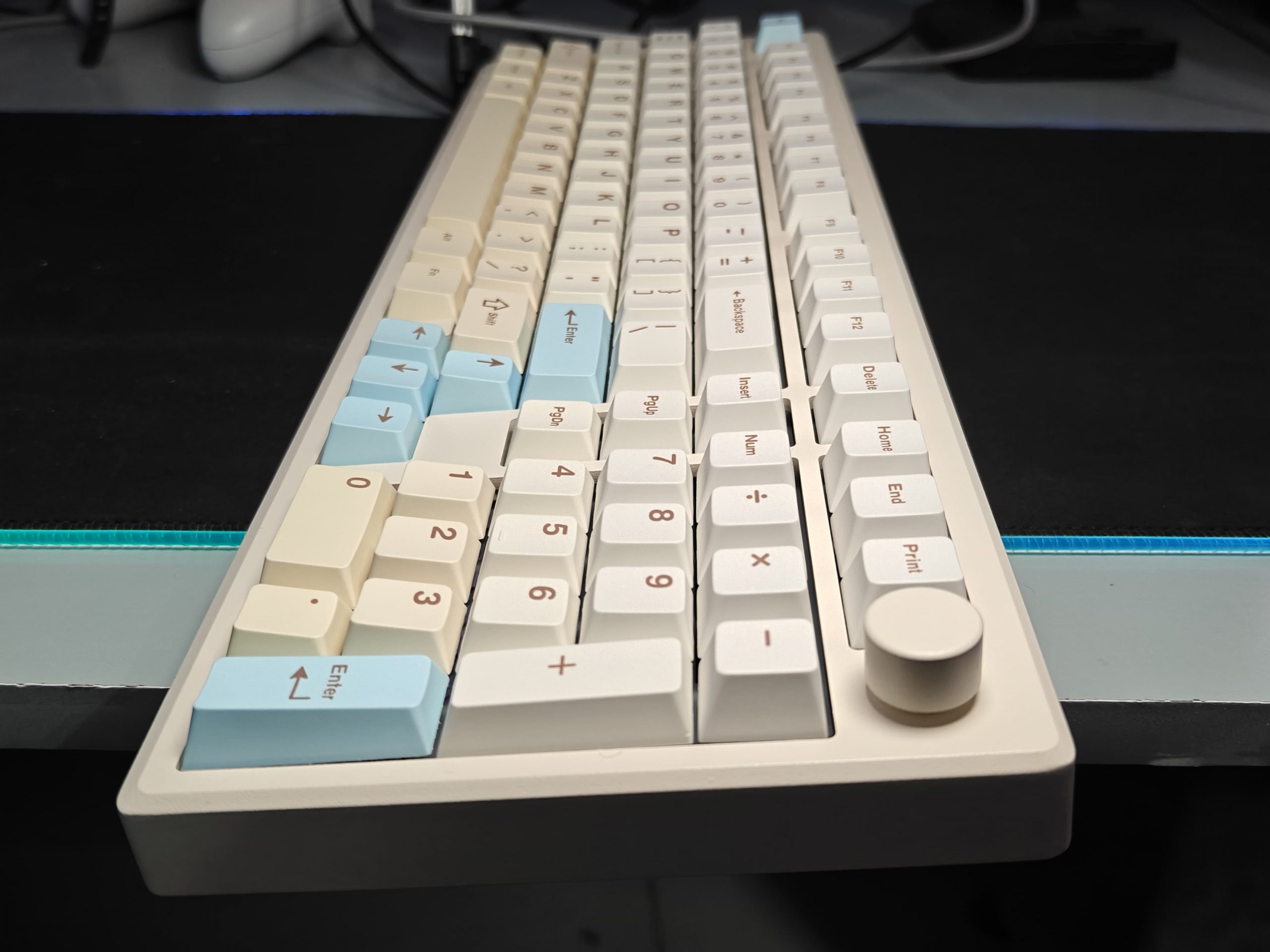
The EPOMAKER Galaxy100 Lite commands attention the moment it arrives on your workspace. Its aluminum construction delivers the substantial feel and steadiness that serious typists appreciate, creating a solid platform that directly improves both the tactile experience and long-term resilience of the keyboard.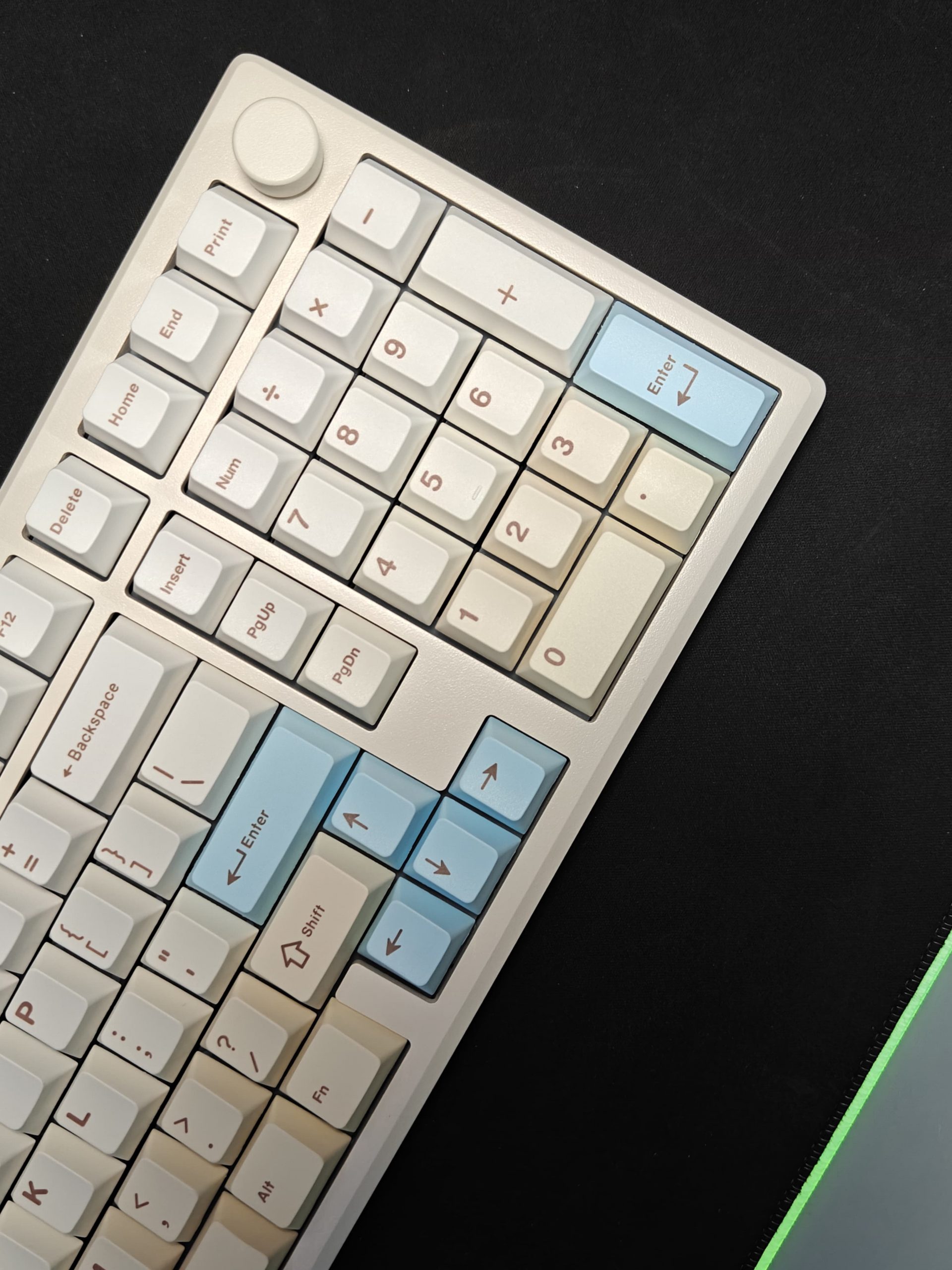
The design team has thoughtfully approached the color scheme, stepping away from standard options. The yellow gradient variant flows naturally from crisp white along the upper edge into a muted buttery tone across the main keys. Light blue accent caps are placed throughout, bringing visual interest that balances the warmth, think of clear skies meeting sunlight. Meanwhile, the Black Gradient alternative appeals to those wanting understated elegance, with its navy-to-gray transition working well in both corporate settings and personal studios where distraction-free work matters.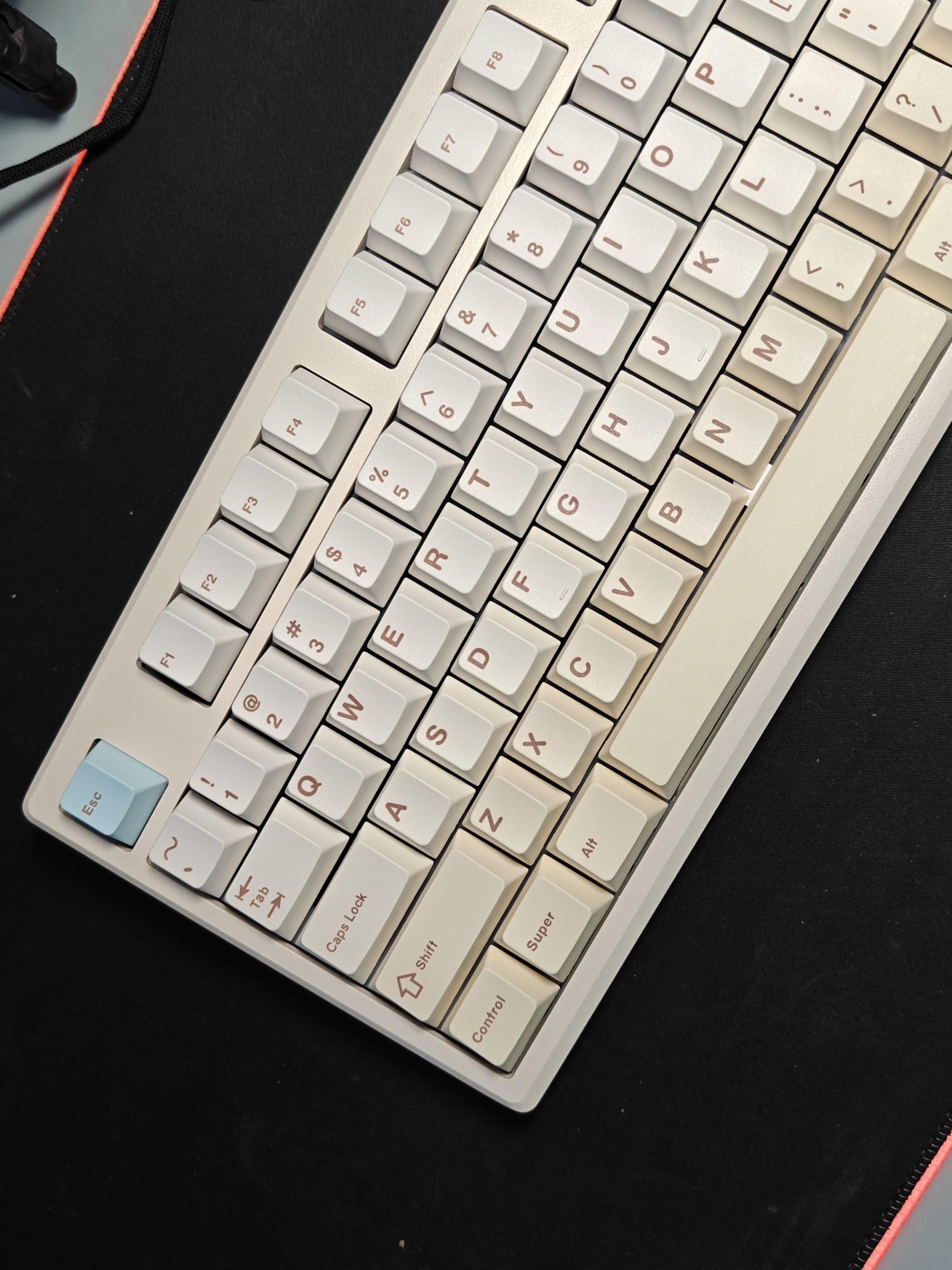
At the center of the front panel sits the command center: a selector switch that toggles between Bluetooth and 2.4GHz Wireless connections, alongside a USB-C port that handles both charging and wired connectivity. Flip the keyboard around, and you’ll discover a glass panel displaying both the Epomaker emblem and Galaxy100 Lite designation.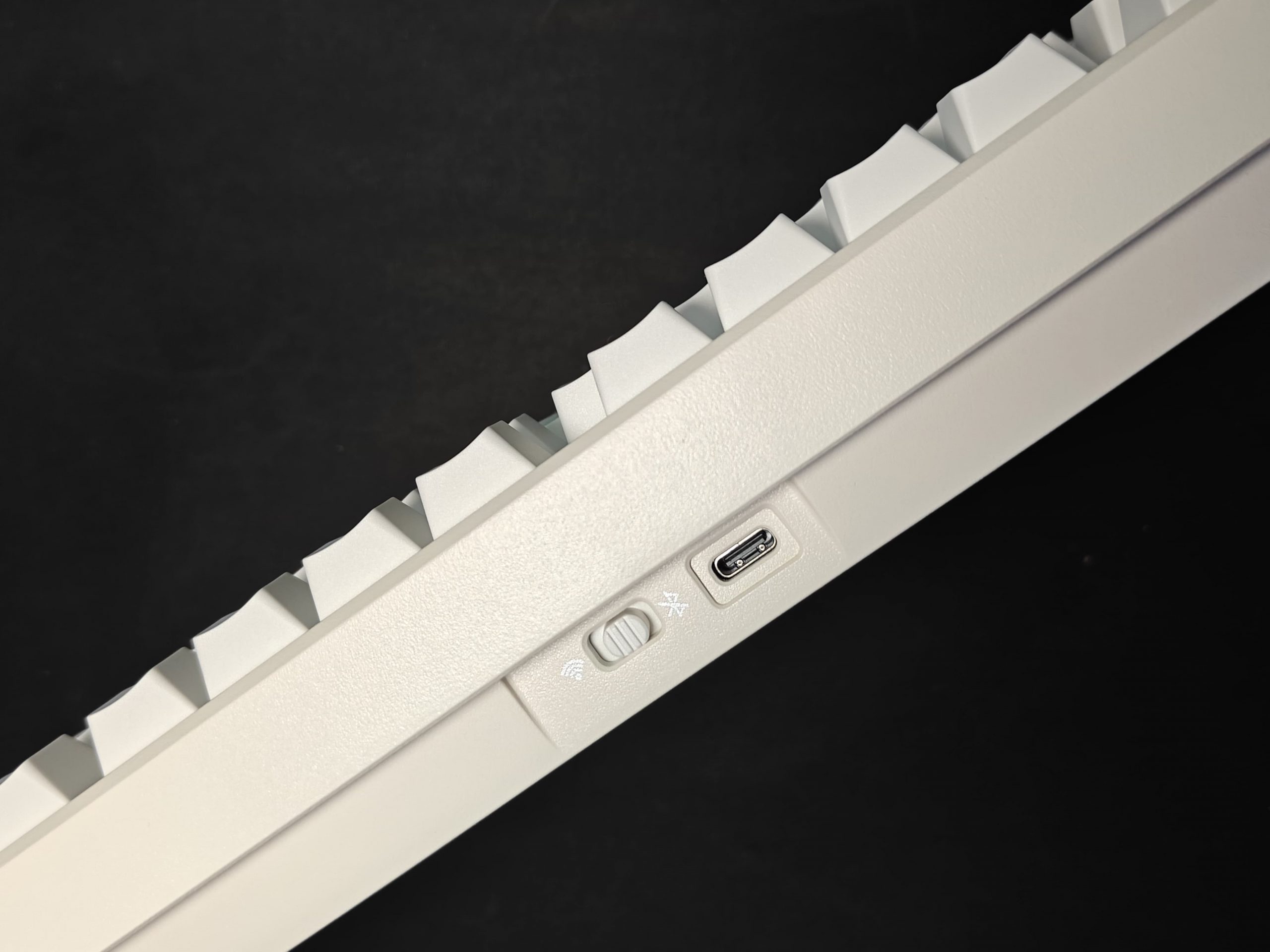
One thing you won’t find here is adjustable feet for height customization. That’s a deliberate decision, the aluminum construction already establishes a comfortable, fixed typing angle. Each corner comes with rubberized pads that lock the keyboard firmly in place, even during heavy typing sessions.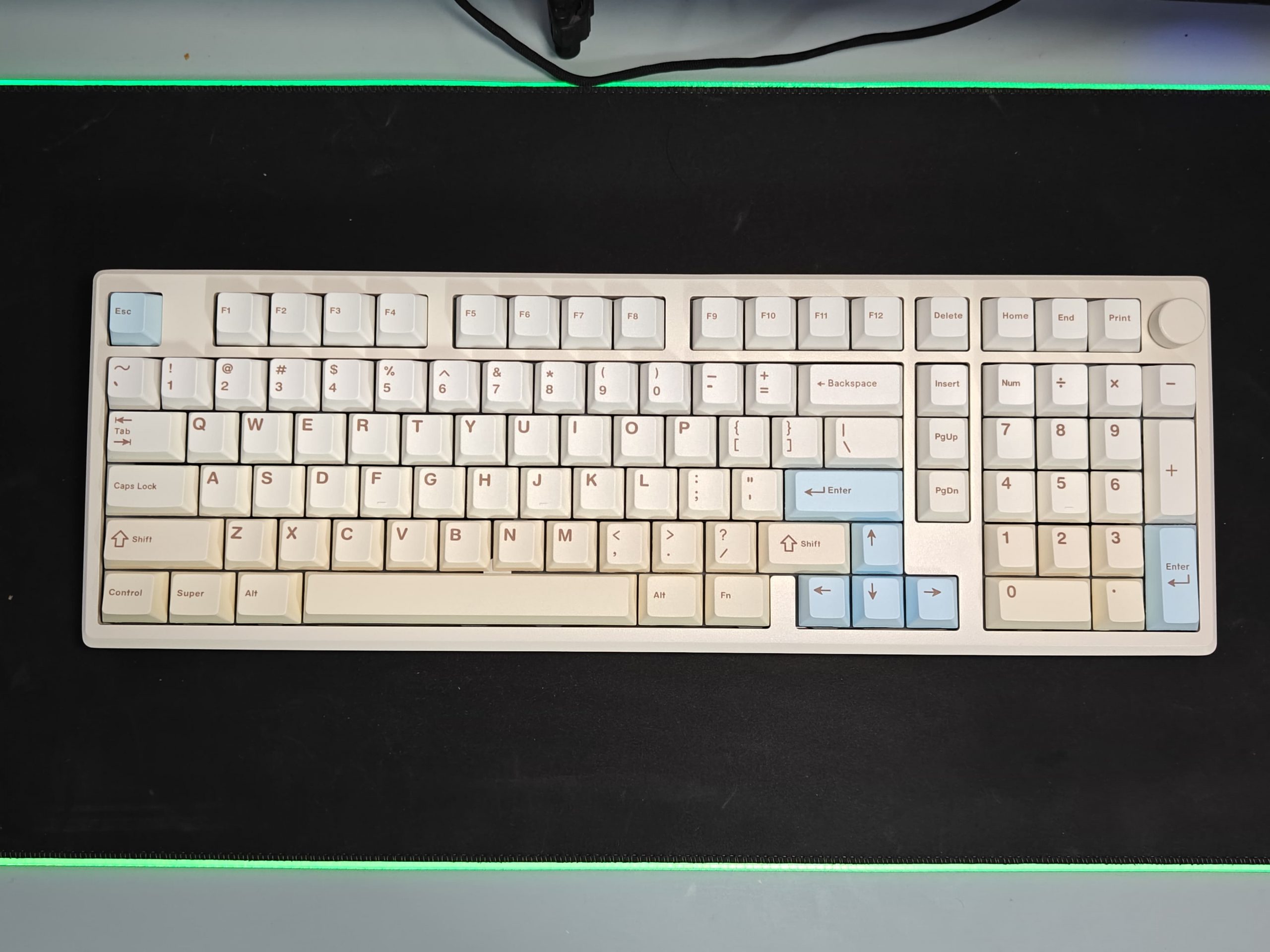
The CNC-machined aluminum chassis, combined with gasket-mounted stabilization, makes this more than just an attractive keyboard, it’s precision-engineered for superior tactile performance that distinguishes it from competitors. Yes, the 1.66kg weight is substantial, but this density reinforces the premium build quality and unwavering stability. The trade-off is absolutely justified, and I genuinely value how it enhances my workspace with its refined appearance.
Keycaps and Switches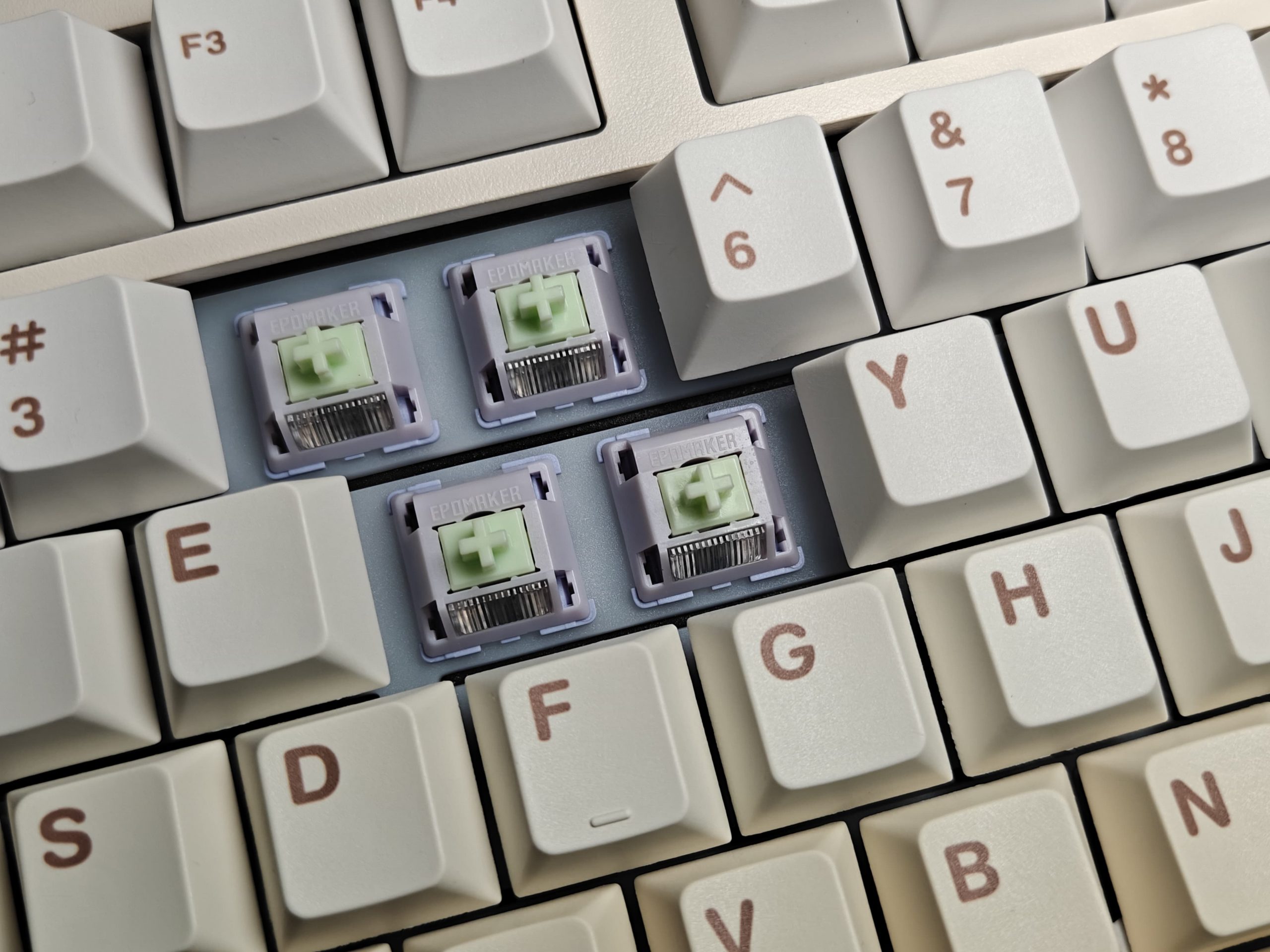
The EPOMAKER Galaxy100 Lite adopts the space-efficient 1800 layout, 100 keys paired with a single rotary encoder, delivering complete keyboard functionality while maintaining a reduced physical size compared to standard full-size models. Its Cherry profile keycaps are crafted from robust PBT material, providing a firm, responsive touch that avoids any spongy sensation during use.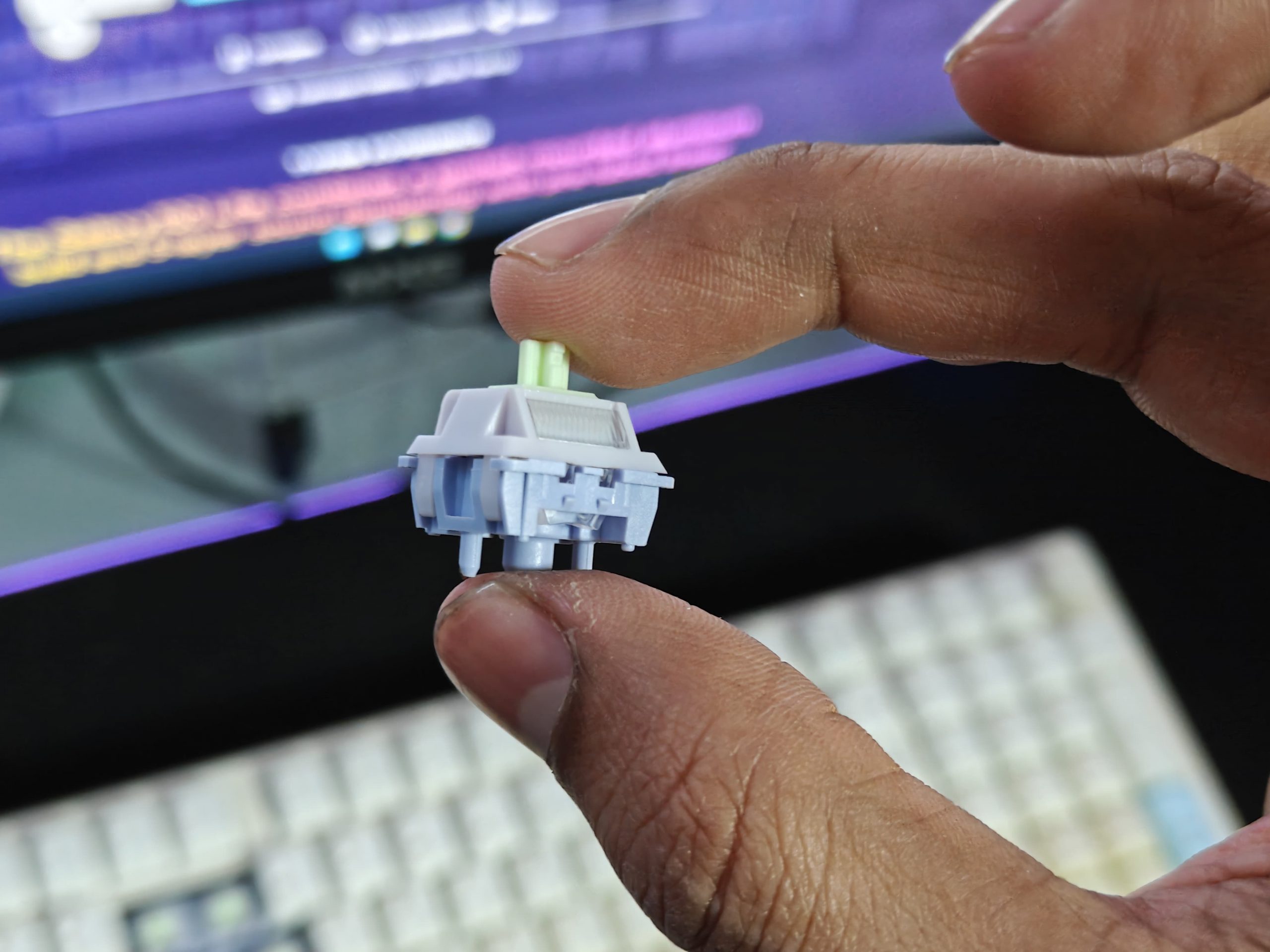
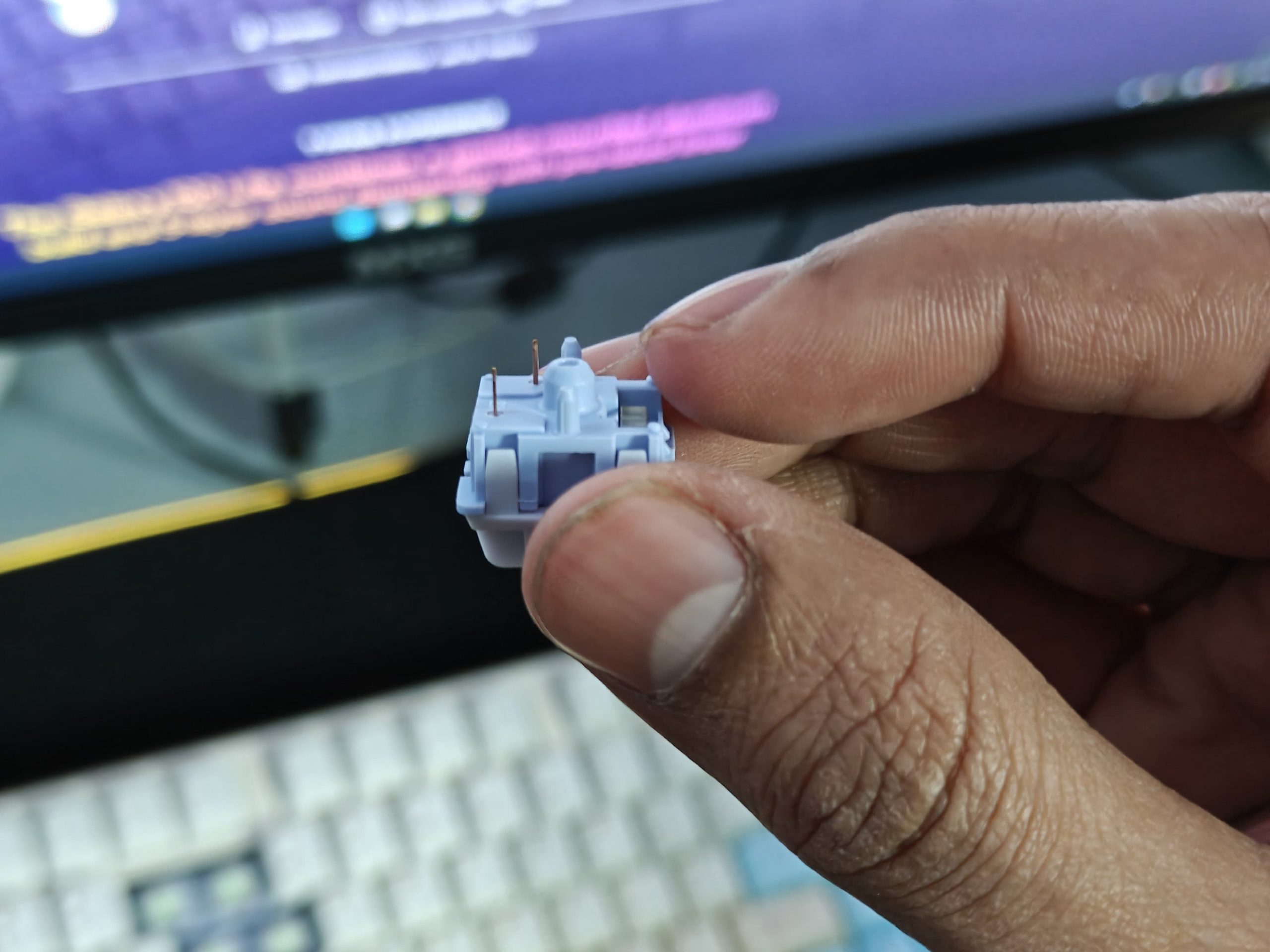
Available with two factory-lubricated hot-swappable linear switch options, the Feker Marble White or Creamy Wisteria Linear V2, I got the Wisteria Lineare V2. This keyboard produces fluid keystrokes alongside a deep, resonant acoustic character. The approximately 3.5mm actuation distance remains uniform throughout, which has notably enhanced my typing precision. Transitioning from smaller 75% models (such as the Mechlands Blade 75), where accidental double key presses were common, I’ve experienced markedly faster, error-free typing with this layout.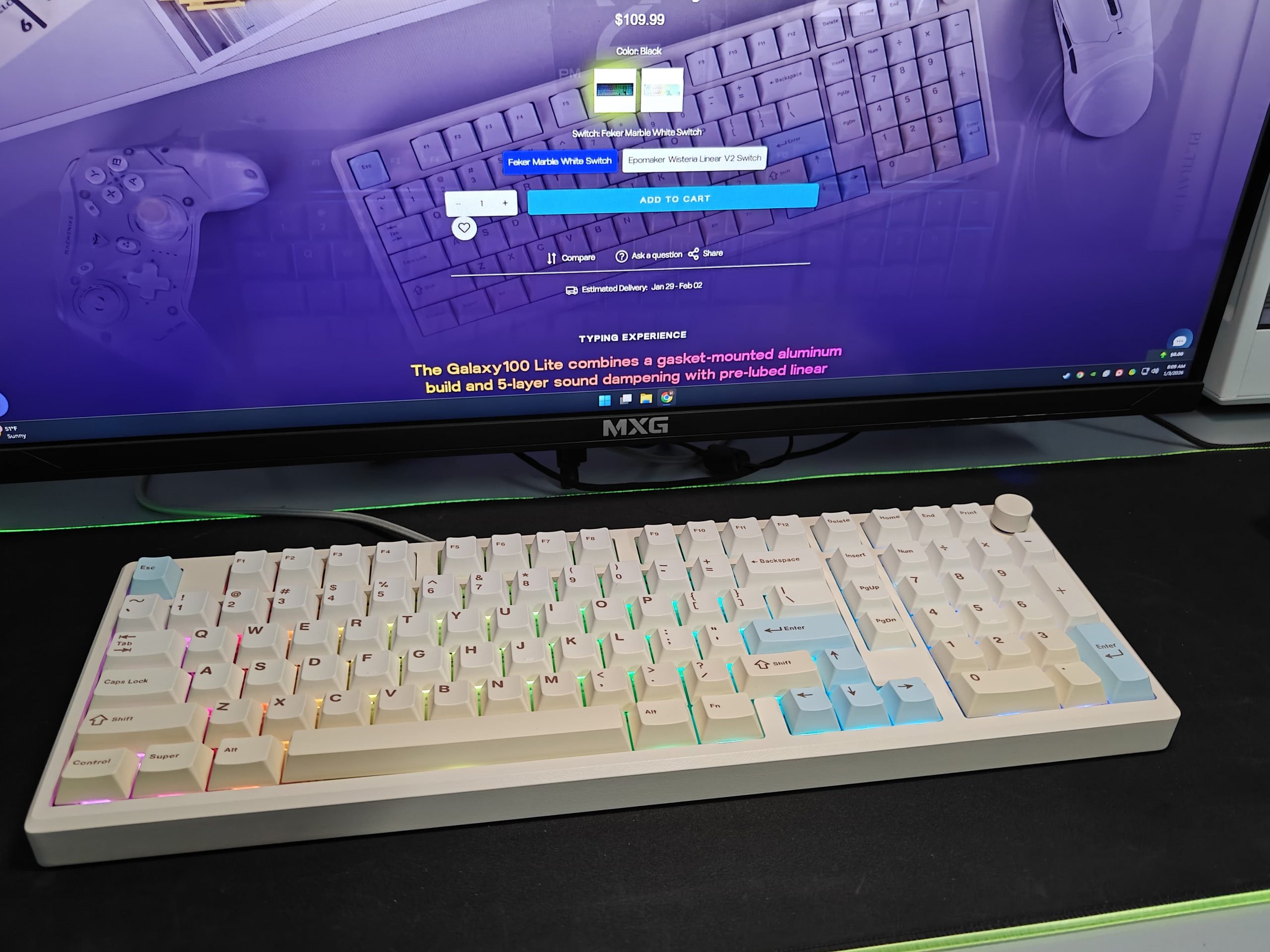
The Epomaker Galaxy 100 Lite employs a comprehensive five-layer dampening architecture incorporating Poron, IXPE, EMDP, and a PET Sound Enhancement Pad. This construction absorbs vibrations and isolates each keystroke’s signature low-pitched resonance while minimizing strain during extended typing sessions. A recording demonstrating the actual typing acoustics is included below for reference.
Tri-Mode Connectivity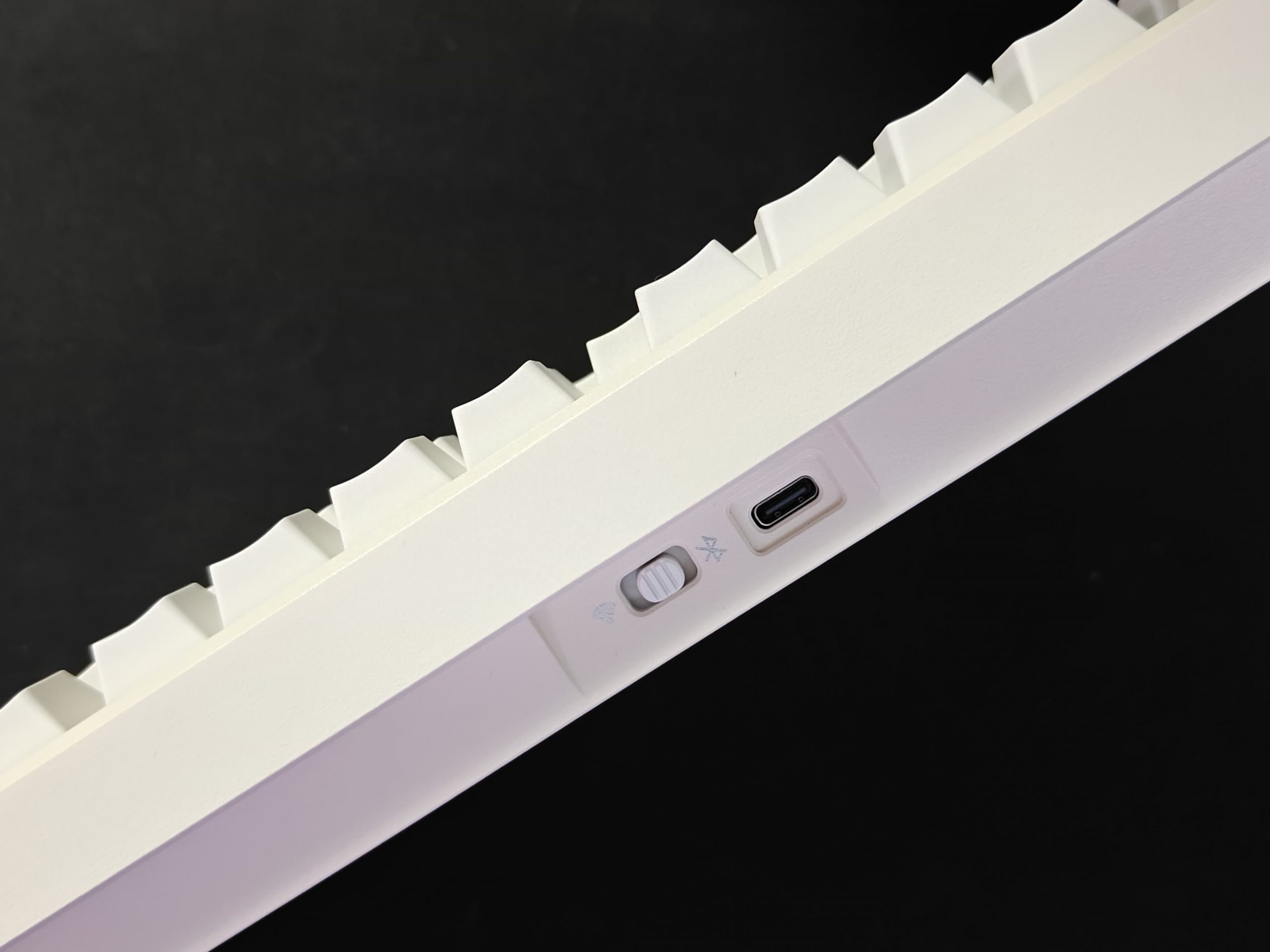
The EPOMAKER Galaxy100 Lite offers three connectivity options to suit different needs. The USB-C wired mode delivers 2.81ms latency, making it suitable for gaming. The 2.4GHz wireless connection achieves 4.72ms latency, providing smooth performance for casual gaming without noticeable lag. Bluetooth 5.0 operates at 15ms latency, which isn’t optimal for competitive gaming but performs well for general productivity tasks.
Throughout my week of testing, I experienced no connectivity issues. The keyboard handled extended work sessions without interruption. Once configured, Bluetooth mode reconnects to my PC instantly upon activation. The connection stability consistently delivers reliable performance across all three modes.
Battery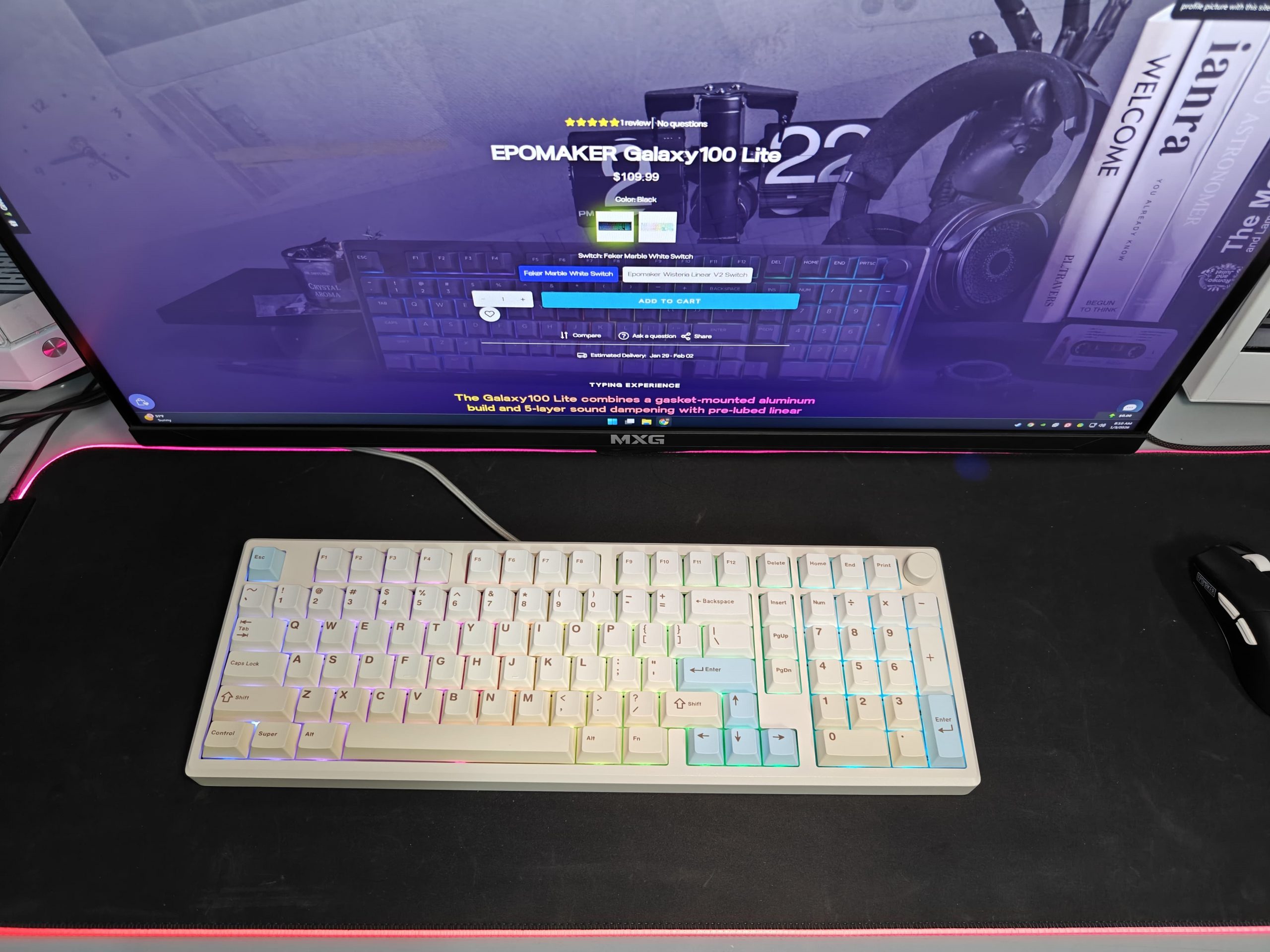
The Epomaker Galaxy 100 Lite features an 8000mAh battery, a substantial capacity for this device category. The manufacturer states 39 hours of operation with RGB lighting enabled and 512 hours with lighting disabled. My testing confirms these figures: after approximately 16 hours of use at maximum RGB brightness, the battery retained 52% charge. With RGB lighting turned off, the keyboard can operate for extended periods between charges.
Verdict
Our hands-on evaluation reveals the EPOMAKER Galaxy100 Lite as an exceptional performer in the sub-$95 mechanical keyboard segment. This board successfully merges hobbyist-level features with mainstream accessibility.
Its greatest asset is the construction quality and visual design. The CNC-machined aluminum chassis delivers substantial weight and stability, while the gasket-mount implementation represents engineering you’d expect from keyboards costing significantly more. Thoughtful colorways combined with durable PBT keycaps create a polished presence on any workspace.
The tactile experience benefits from a five-layer acoustic dampening approach that produces satisfying, muted keystrokes immediately upon use. Factor in the remarkable 8000mAh power cell and flexible three-mode connectivity, achieving low response times of 2.81ms wired and 4.72ms via 2.4GHz wireless, and you have a keyboard equally capable for professional tasks and light gaming sessions.
In my assessment, this represents the strongest combination of build integrity and visual refinement currently available at this price point. Superior materials, refined sound signature, extended battery capacity, and full QMK/VIA compatibility create compelling value. For anyone seeking premium characteristics without premium pricing, this keyboard deserves serious consideration.
Read Also: Why the Epomaker TH108 Full-Size Keyboard Still Dominates Desks