









Igeekphone News: Chinese artificial intelligence company Zhipu is reportedly exploring the development of its own AI chips, joining a growing number of AI developers seeking greater control over computing resources amid rising demand and ongoing restrictions on advanced semiconductor hardware.
According to recent reports, the company has begun discussing potential partnerships with domestic chip design firms to develop customized AI accelerators, although the project is still believed to be in its early stages.
Following a Growing Industry Trend
The move reflects a broader shift across the global AI industry.
Rather than relying exclusively on commercially available GPUs, leading AI companies are increasingly investing in custom hardware tailored to their own large language models and AI workloads. Google’s Tensor Processing Units (TPUs), Amazon’s Trainium chips, and other custom AI accelerators have demonstrated the advantages of specialized hardware for training and inference.
Reports suggest that Zhipu intends to adopt a similar strategy by working with established semiconductor partners instead of designing an entirely new processor independently.
Collaboration Instead of Building from Scratch
According to industry sources, Zhipu is not expected to create a chip entirely on its own.
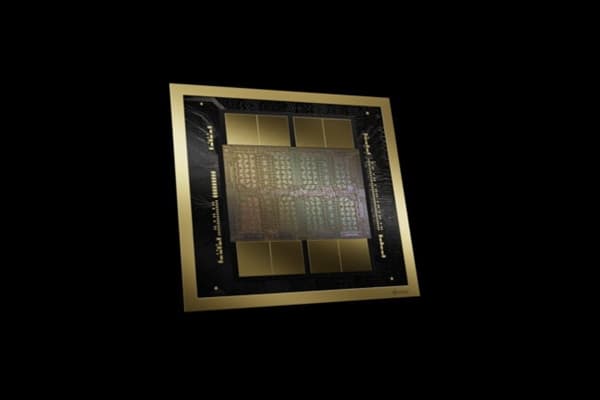
Instead, the company is reportedly evaluating a custom silicon approach, in which the chip architecture would be developed in collaboration with local semiconductor design companies before being manufactured by an external foundry.
This model mirrors strategies adopted by several leading AI organizations worldwide, enabling companies to optimize hardware for their own software while reducing development risks and costs.
Rising Demand Puts Pressure on Computing Resources
One of the primary drivers behind the reported initiative is Zhipu’s growing demand for AI computing capacity.
Following the launch of its latest large language model, GLM-5.2, the company has seen increased interest in its AI services. Reports indicate that demand for its coding-focused AI offerings has consistently exceeded available computing capacity, limiting the platform’s ability to serve additional users.
As AI models continue to grow in size and complexity, securing sufficient computing infrastructure has become a strategic priority for companies across the industry.
Hardware Restrictions Add to the Challenge
The company’s hardware strategy is also shaped by international export restrictions.
Zhipu has been included on the U.S. Entity List, making access to certain advanced U.S. technologies—including many of NVIDIA’s latest AI GPUs—significantly more difficult.
As a result, the company has increasingly turned to domestic alternatives to expand its AI infrastructure.
Huawei Ascend Platform Expected to Play a Key Role
Zhipu has previously indicated plans to deploy Huawei’s Ascend 950 AI computing platform as part of its infrastructure expansion.
The rollout is expected to improve the availability and performance of current and future generations of the company’s AI models, including GLM-5.2 and subsequent releases.
The adoption of domestic AI hardware reflects a broader trend among Chinese technology companies seeking to diversify their computing supply chains amid evolving geopolitical and trade conditions.
Custom AI Chips Remain a Long-Term Project
While reports indicate that discussions have already begun, a custom AI chip remains a long-term undertaking.
Industry analysts note that developing an AI accelerator typically involves several stages, including:
- Hardware architecture design
- Verification and testing
- Semiconductor manufacturing
- Packaging and validation
- Software optimization
- Large-scale deployment
Even under favorable conditions, bringing a custom AI chip from concept to commercial deployment generally takes at least two years, making any Zhipu-designed processor unlikely to arrive in the near future.
Growing Global Competition in AI Infrastructure
Zhipu’s reported plans highlight an increasingly important trend in artificial intelligence: the race is no longer focused solely on developing larger or more capable AI models, but also on securing the computing infrastructure required to support them.
As demand for AI services continues to grow worldwide, companies are investing heavily in custom silicon, diversified supply chains, and specialized hardware platforms to improve performance, reduce costs, and lessen dependence on third-party GPU suppliers.
Although Zhipu has not officially confirmed plans to develop its own AI chip, the reported initiative underscores how access to computing power has become one of the most critical strategic challenges facing AI developers around the world.